Birdr

Sora vs Purple Gallinule

Porzana carolina versus Porphyrio martinica

Play a quiz with Sora and Purple Gallinule
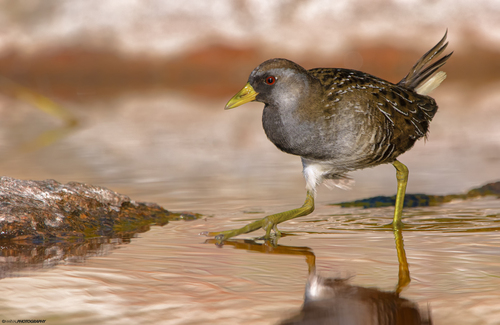
Sora (Porzana carolina) Sora
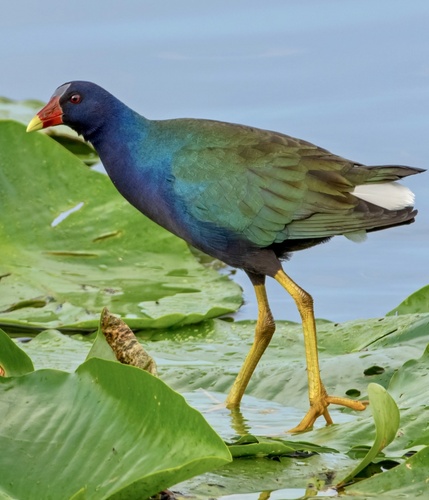
Purple Gallinule (Porphyrio martinica) Purple Gallinule

Media

Loading…

In short

The Sora and Purple Gallinule are both wetland birds, but they differ significantly in appearance and behavior. The Sora is a small, secretive rail with a short, stout bill, while the Purple Gallinule is larger and more colorful, with a striking combination of blues, purples, and greens. Their vocalizations and habitats also offer clues for identification.

Identification tips

1. Size and Shape: Note the smaller size and compact shape of the Sora compared to the larger, more robust Purple Gallinule. 2. Plumage: Look for the Sora's grayish-brown body with black face and throat versus the Purple Gallinule's vibrant blue, green, and purple plumage. 3. Bill: The Sora has a short, stout bill, while the Purple Gallinule has a red bill with a yellow tip. 4. Behavior: Observe the Sora's secretive behavior in dense vegetation compared to the more conspicuous Purple Gallinule. 5. Habitat: Consider the habitat, as Purple Gallinules are more likely to be found in modified wetlands.

Size

The Sora is smaller and more compact than the Purple Gallinule, which is larger and more robust.

Plumage

The Sora has a grayish-brown body with a distinctive black face and throat, and white barring on the flanks. In contrast, the Purple Gallinule is vividly colored with a mix of deep blue, green, and purple, and has a red bill with a yellow tip.

Behaviour

Soras are more secretive and often seen skulking in dense vegetation, while Purple Gallinules are more conspicuous, often seen walking on floating vegetation or swimming.

Habitat

Both species inhabit freshwater wetlands, but the Purple Gallinule is more adaptable to modified habitats like rice paddies and impoundments.

Voice

The Sora's call is a descending whinny, while the Purple Gallinule's vocalizations are less frequently described but include a variety of clucks and cackles.

Submit a better description

Use the same sections as the comparison. Your text is published immediately.

The Sora and Purple Gallinule are both wetland birds, but they differ significantly in appearance and behavior. The Sora is a small, secretive rail with a short, stout bill, while the Purple Gallinule is larger and more colorful, with a striking combination of blues, purples, and greens. Their vocalizations and habitats also offer clues for identification.

1. Size and Shape: Note the smaller size and compact shape of the Sora compared to the larger, more robust Purple Gallinule. 2. Plumage: Look for the Sora's grayish-brown body with black face and throat versus the Purple Gallinule's vibrant blue, green, and purple plumage. 3. Bill: The Sora has a short, stout bill, while the Purple Gallinule has a red bill with a yellow tip. 4. Behavior: Observe the Sora's secretive behavior in dense vegetation compared to the more conspicuous Purple Gallinule. 5. Habitat: Consider the habitat, as Purple Gallinules are more likely to be found in modified wetlands.

The Sora is smaller and more compact than the Purple Gallinule, which is larger and more robust.

The Sora has a grayish-brown body with a distinctive black face and throat, and white barring on the flanks. In contrast, the Purple Gallinule is vividly colored with a mix of deep blue, green, and purple, and has a red bill with a yellow tip.

Soras are more secretive and often seen skulking in dense vegetation, while Purple Gallinules are more conspicuous, often seen walking on floating vegetation or swimming.

Both species inhabit freshwater wetlands, but the Purple Gallinule is more adaptable to modified habitats like rice paddies and impoundments.

The Sora's call is a descending whinny, while the Purple Gallinule's vocalizations are less frequently described but include a variety of clucks and cackles.

Discard your changes?

You have unsaved edits. If you leave now, those changes will be lost.

Sora · Purple Gallinule · My Tricky Birds