Birdr

South African Shelduck vs African Pygmy-Goose

Tadorna cana versus Nettapus auritus

Play a quiz with South African Shelduck and African Pygmy-Goose
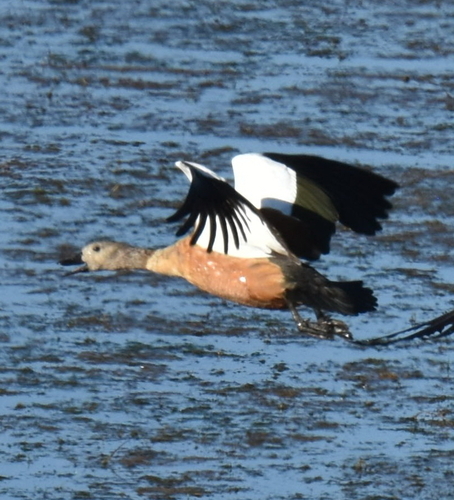
South African Shelduck (Tadorna cana) South African Shelduck
African Pygmy-Goose (Nettapus auritus) African Pygmy-Goose

Media

Loading…

In short

The South African Shelduck and African Pygmy-Goose are both waterfowl but differ significantly in size, plumage, and habitat. The shelduck is larger and more robust, while the pygmy-goose is small and compact. Key identifiers include the shelduck's white wing coverts visible in flight and the pygmy-goose's striking facial patterns.

Identification tips

Look for the white wing coverts in flight to identify the South African Shelduck. Note the small size and distinctive facial pattern of the African Pygmy-Goose. Consider habitat: open water for shelducks, vegetated wetlands for pygmy-geese. Listen for the honking of the shelduck versus the softer calls of the pygmy-goose.

Size

The South African Shelduck is significantly larger and more robust than the African Pygmy-Goose, which is small and compact.

Plumage

The South African Shelduck has a predominantly chestnut body with a gray head in males and a white face in females, and both sexes show conspicuous white wing coverts in flight. The African Pygmy-Goose features a distinctive green and white face pattern in males and a more subdued version in females, with a glossy green back.

Behaviour

South African Shelducks are often seen in pairs or small groups and exhibit territorial behavior, especially during breeding. African Pygmy-Geese are more likely to be seen in small flocks and are less territorial.

Habitat

South African Shelducks are found in open water bodies like lakes and dams in southern Africa. African Pygmy-Geese prefer well-vegetated wetlands and are more widespread across sub-Saharan Africa.

Voice

The South African Shelduck has a distinctive honking call, while the African Pygmy-Goose is generally quieter, with soft, whistling calls.

Submit a better description

Use the same sections as the comparison. Your text is published immediately.

The South African Shelduck and African Pygmy-Goose are both waterfowl but differ significantly in size, plumage, and habitat. The shelduck is larger and more robust, while the pygmy-goose is small and compact. Key identifiers include the shelduck's white wing coverts visible in flight and the pygmy-goose's striking facial patterns.

Look for the white wing coverts in flight to identify the South African Shelduck. Note the small size and distinctive facial pattern of the African Pygmy-Goose. Consider habitat: open water for shelducks, vegetated wetlands for pygmy-geese. Listen for the honking of the shelduck versus the softer calls of the pygmy-goose.

The South African Shelduck is significantly larger and more robust than the African Pygmy-Goose, which is small and compact.

The South African Shelduck has a predominantly chestnut body with a gray head in males and a white face in females, and both sexes show conspicuous white wing coverts in flight. The African Pygmy-Goose features a distinctive green and white face pattern in males and a more subdued version in females, with a glossy green back.

South African Shelducks are often seen in pairs or small groups and exhibit territorial behavior, especially during breeding. African Pygmy-Geese are more likely to be seen in small flocks and are less territorial.

South African Shelducks are found in open water bodies like lakes and dams in southern Africa. African Pygmy-Geese prefer well-vegetated wetlands and are more widespread across sub-Saharan Africa.

The South African Shelduck has a distinctive honking call, while the African Pygmy-Goose is generally quieter, with soft, whistling calls.

Discard your changes?

You have unsaved edits. If you leave now, those changes will be lost.

South African Shelduck · African Pygmy-Goose · My Tricky Birds