
Birdr

Southern Bristle-Tyrant vs Sao Paulo Bristle-Tyrant

Pogonotriccus eximius versus Pogonotriccus paulista

Play a quiz with Southern Bristle-Tyrant and Sao Paulo Bristle-Tyrant
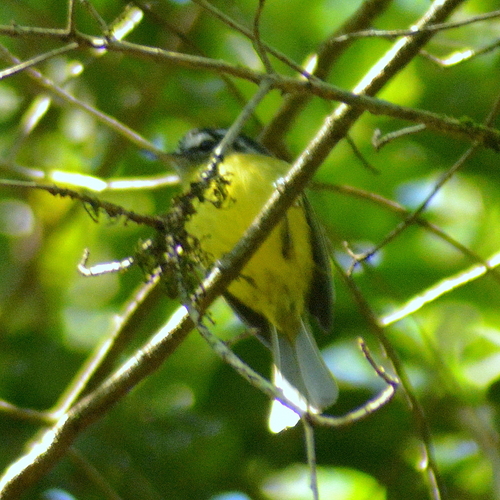
Southern Bristle-Tyrant (Pogonotriccus eximius) Southern Bristle-Tyrant
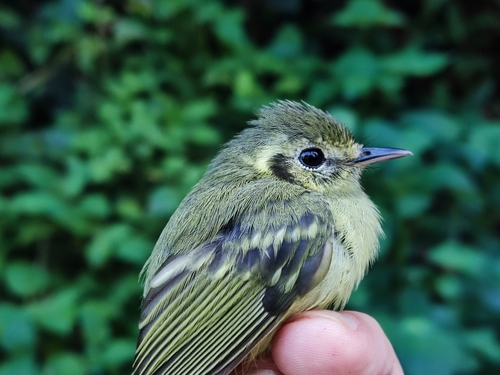
Sao Paulo Bristle-Tyrant (Pogonotriccus paulista) Sao Paulo Bristle-Tyrant

Media

Loading…

In short

The Southern Bristle-Tyrant and Sao Paulo Bristle-Tyrant are both small, elusive flycatchers of the genus Pogonotriccus. They are best distinguished by subtle differences in plumage and habitat preferences. Field identification can be challenging due to their similar size and behavior.

Identification tips

  1. Look for a more pronounced supercilium in the Southern Bristle-Tyrant. 2. Consider habitat: Southern Bristle-Tyrant may be in more open areas, while Sao Paulo Bristle-Tyrant prefers dense forests. 3. Observe behavior: both are active and join mixed flocks, but specific behaviors are not well-documented.

Size

Both species are similar in size, typical of small tyrant flycatchers.

Plumage

The Southern Bristle-Tyrant often shows a more distinct facial pattern with a noticeable supercilium, whereas the Sao Paulo Bristle-Tyrant may appear more uniformly colored. However, these differences can be subtle and vary with lighting conditions.

Behaviour

Both species exhibit typical Pogonotriccus behavior, being active and often found in mixed-species flocks. Specific foraging and breeding behaviors are not well-documented for the Sao Paulo Bristle-Tyrant.

Habitat

The Southern Bristle-Tyrant is generally found in more open forest edges and clearings, while the Sao Paulo Bristle-Tyrant prefers denser, humid forest interiors. Overlapping ranges can make habitat alone an unreliable differentiator.

Voice

Vocalizations are not well-documented for these species, making them unreliable for field identification.

Submit a better description

Use the same sections as the comparison. Your text is published immediately.

The Southern Bristle-Tyrant and Sao Paulo Bristle-Tyrant are both small, elusive flycatchers of the genus Pogonotriccus. They are best distinguished by subtle differences in plumage and habitat preferences. Field identification can be challenging due to their similar size and behavior.

  1. Look for a more pronounced supercilium in the Southern Bristle-Tyrant. 2. Consider habitat: Southern Bristle-Tyrant may be in more open areas, while Sao Paulo Bristle-Tyrant prefers dense forests. 3. Observe behavior: both are active and join mixed flocks, but specific behaviors are not well-documented.

Both species are similar in size, typical of small tyrant flycatchers.

The Southern Bristle-Tyrant often shows a more distinct facial pattern with a noticeable supercilium, whereas the Sao Paulo Bristle-Tyrant may appear more uniformly colored. However, these differences can be subtle and vary with lighting conditions.

Both species exhibit typical Pogonotriccus behavior, being active and often found in mixed-species flocks. Specific foraging and breeding behaviors are not well-documented for the Sao Paulo Bristle-Tyrant.

The Southern Bristle-Tyrant is generally found in more open forest edges and clearings, while the Sao Paulo Bristle-Tyrant prefers denser, humid forest interiors. Overlapping ranges can make habitat alone an unreliable differentiator.

Vocalizations are not well-documented for these species, making them unreliable for field identification.

Discard your changes?

You have unsaved edits. If you leave now, those changes will be lost.

Southern Bristle-Tyrant · Sao Paulo Bristle-Tyrant · My Tricky Birds