Birdr

Southern Yellowthroat vs Tropical Parula

Geothlypis velata versus Setophaga pitiayumi

Play a quiz with Southern Yellowthroat and Tropical Parula
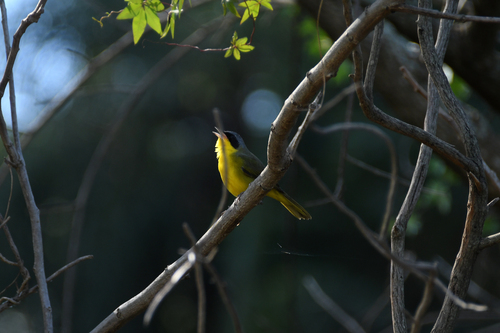
Southern Yellowthroat (Geothlypis velata) Southern Yellowthroat
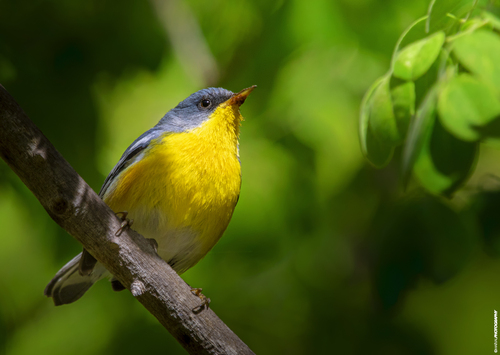
Tropical Parula (Setophaga pitiayumi) Tropical Parula

Media

Loading…

In short

The Southern Yellowthroat and Tropical Parula are both small, colorful warblers, but they differ in key features. The Southern Yellowthroat male is notable for its prominent black mask and gray crown, while the Tropical Parula has a blue-gray back and a yellow throat with a distinctive white eye-ring.

Identification tips

Size

Both species are small warblers, but the Tropical Parula is slightly smaller and more compact.

Plumage

The Southern Yellowthroat male has a black mask and gray crown extending to the neck, with olive upperparts and bright yellow underparts. The Tropical Parula has a blue-gray back, yellow throat and breast, and a white eye-ring. Females of both species are less vibrant but follow similar patterns.

Behaviour

Southern Yellowthroats often stay low in dense cover, while Tropical Parulas are more active and can be seen foraging higher in the canopy.

Habitat

Southern Yellowthroats prefer humid marshes, wet grasslands, and thickets along forest edges. Tropical Parulas are found in a variety of forested habitats, including edges and clearings, often near water.

Voice

Vocalizations are not well-documented here, but Southern Yellowthroats typically have a distinctive, repetitive song, while Tropical Parulas have a buzzy, rising trill.

Submit a better description

Use the same sections as the comparison. Your text is published immediately.

The Southern Yellowthroat and Tropical Parula are both small, colorful warblers, but they differ in key features. The Southern Yellowthroat male is notable for its prominent black mask and gray crown, while the Tropical Parula has a blue-gray back and a yellow throat with a distinctive white eye-ring.

  • Black mask and gray crown: Look for these in Southern Yellowthroat males.
  • White eye-ring: A key feature of the Tropical Parula.
  • Habitat: Southern Yellowthroats are more likely in marshy, dense areas; Tropical Parulas in forested areas.
  • Behavior: Note the Southern Yellowthroat's tendency to stay low, versus the more active Tropical Parula.

Both species are small warblers, but the Tropical Parula is slightly smaller and more compact.

The Southern Yellowthroat male has a black mask and gray crown extending to the neck, with olive upperparts and bright yellow underparts. The Tropical Parula has a blue-gray back, yellow throat and breast, and a white eye-ring. Females of both species are less vibrant but follow similar patterns.

Southern Yellowthroats often stay low in dense cover, while Tropical Parulas are more active and can be seen foraging higher in the canopy.

Southern Yellowthroats prefer humid marshes, wet grasslands, and thickets along forest edges. Tropical Parulas are found in a variety of forested habitats, including edges and clearings, often near water.

Vocalizations are not well-documented here, but Southern Yellowthroats typically have a distinctive, repetitive song, while Tropical Parulas have a buzzy, rising trill.

Discard your changes?

You have unsaved edits. If you leave now, those changes will be lost.

Southern Yellowthroat · Tropical Parula · My Tricky Birds