Birdr

Spoon-billed Sandpiper vs Western Sandpiper

Calidris pygmaea versus Calidris mauri

Play a quiz with Spoon-billed Sandpiper and Western Sandpiper
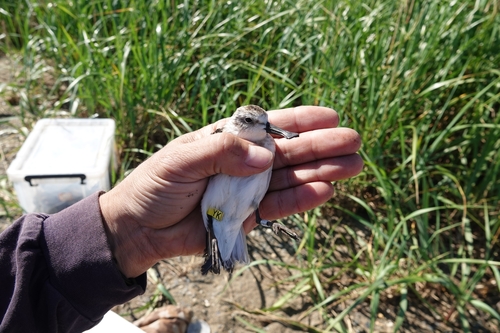
Spoon-billed Sandpiper (Calidris pygmaea) Spoon-billed Sandpiper
Western Sandpiper (Calidris mauri) Western Sandpiper

Media

Loading…

In short

The Spoon-billed Sandpiper and Western Sandpiper are both small shorebirds, but the Spoon-billed Sandpiper is notable for its unique spatulate bill. In contrast, the Western Sandpiper has a more typical pointed sandpiper bill. Both species can be found in similar habitats during migration, but their breeding and wintering ranges differ significantly.

Identification tips

  1. Bill Shape: Look for the Spoon-billed Sandpiper's distinctive spatulate bill. 2. Breeding Plumage: Note the vibrant rufous tones on the Spoon-billed Sandpiper's face and upperparts. 3. Range: Consider the geographic location; Spoon-billed Sandpipers are found in Asia, while Western Sandpipers are in the Americas. 4. Plumage Details: In non-breeding plumage, check for more white on the face of the Spoon-billed Sandpiper.

Size

Both species are similar in size, with the Spoon-billed Sandpiper being slightly smaller.

Plumage

Breeding Spoon-billed Sandpipers have vibrant rufous tones on the face and upperparts, while Western Sandpipers have more subtle rufous tones on the head and back. In non-breeding plumage, both species appear grayish, but the Spoon-billed Sandpiper may show more white on the face.

Behaviour

Both species forage by probing mudflats but the Spoon-billed Sandpiper's unique bill shape may lead to slightly different foraging techniques.

Habitat

Both species utilize mudflats and coastal areas during migration, but the Spoon-billed Sandpiper breeds in northeastern Russia and winters in Southeast Asia, while the Western Sandpiper breeds in Alaska and winters along the Pacific and Atlantic coasts of the Americas.

Voice

Vocalizations are not a primary distinguishing feature in the field for these species.

Submit a better description

Use the same sections as the comparison. Your text is published immediately.

The Spoon-billed Sandpiper and Western Sandpiper are both small shorebirds, but the Spoon-billed Sandpiper is notable for its unique spatulate bill. In contrast, the Western Sandpiper has a more typical pointed sandpiper bill. Both species can be found in similar habitats during migration, but their breeding and wintering ranges differ significantly.

  1. Bill Shape: Look for the Spoon-billed Sandpiper's distinctive spatulate bill. 2. Breeding Plumage: Note the vibrant rufous tones on the Spoon-billed Sandpiper's face and upperparts. 3. Range: Consider the geographic location; Spoon-billed Sandpipers are found in Asia, while Western Sandpipers are in the Americas. 4. Plumage Details: In non-breeding plumage, check for more white on the face of the Spoon-billed Sandpiper.

Both species are similar in size, with the Spoon-billed Sandpiper being slightly smaller.

Breeding Spoon-billed Sandpipers have vibrant rufous tones on the face and upperparts, while Western Sandpipers have more subtle rufous tones on the head and back. In non-breeding plumage, both species appear grayish, but the Spoon-billed Sandpiper may show more white on the face.

Both species forage by probing mudflats but the Spoon-billed Sandpiper's unique bill shape may lead to slightly different foraging techniques.

Both species utilize mudflats and coastal areas during migration, but the Spoon-billed Sandpiper breeds in northeastern Russia and winters in Southeast Asia, while the Western Sandpiper breeds in Alaska and winters along the Pacific and Atlantic coasts of the Americas.

Vocalizations are not a primary distinguishing feature in the field for these species.

Discard your changes?

You have unsaved edits. If you leave now, those changes will be lost.

Spoon-billed Sandpiper · Western Sandpiper · My Tricky Birds