Birdr

Spot-tailed Nightjar vs Scissor-tailed Nightjar

Antiurus maculicaudus versus Hydropsalis torquata

Play a quiz with Spot-tailed Nightjar and Scissor-tailed Nightjar
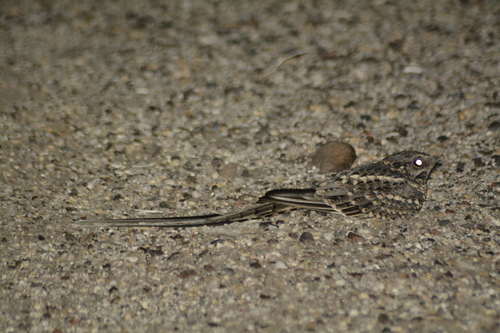
Spot-tailed Nightjar (Antiurus maculicaudus) Spot-tailed Nightjar
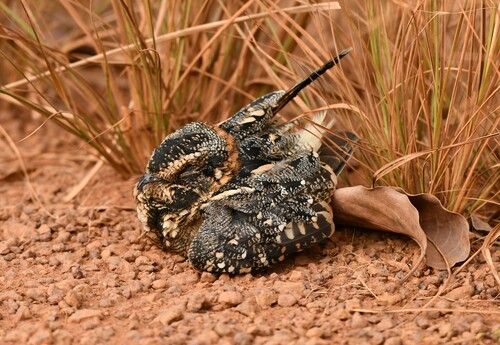
Scissor-tailed Nightjar (Hydropsalis torquata) Scissor-tailed Nightjar

Media

Loading…

In short

The Spot-tailed Nightjar and Scissor-tailed Nightjar can be distinguished primarily by their tail patterns and structure. Spot-tailed Nightjar has a shorter, rounded tail with distinctive white spots, while the Scissor-tailed Nightjar features a long, deeply forked tail, often with white outer edges. Both species are nightjars and share similar habitats and behaviors, making tail structure the most reliable field mark.

Identification tips

1. Tail Structure: Look for the short, rounded tail with white spots on the Spot-tailed Nightjar versus the long, deeply forked tail of the Scissor-tailed Nightjar. 2. Habitat: Consider geographic location; Spot-tailed Nightjar is found in northern and central South America and parts of Mexico and Central America. 3. Behavior: Both species exhibit typical nightjar behaviors, so focus on tail characteristics for identification.

Size

Both species are similar in size, typical of nightjars, but the Scissor-tailed Nightjar appears longer due to its extended tail.

Plumage

Spot-tailed Nightjar has a more uniform plumage with white spots on the tail, whereas Scissor-tailed Nightjar may show white on the outer edges of its long, forked tail.

Behaviour

Both species feed on flying insects by sallying from perches and nest on the ground. Their behaviors are typical of nightjars and not significantly different.

Habitat

Both species inhabit open areas such as grasslands and savannas. Spot-tailed Nightjar is found locally in northern and central South America and as a breeding visitor in parts of southeastern Mexico and Central America.

Voice

Vocalizations are not detailed in the sources, and differences are not highlighted as key identification features.

Submit a better description

Use the same sections as the comparison. Your text is published immediately.

The Spot-tailed Nightjar and Scissor-tailed Nightjar can be distinguished primarily by their tail patterns and structure. Spot-tailed Nightjar has a shorter, rounded tail with distinctive white spots, while the Scissor-tailed Nightjar features a long, deeply forked tail, often with white outer edges. Both species are nightjars and share similar habitats and behaviors, making tail structure the most reliable field mark.

1. Tail Structure: Look for the short, rounded tail with white spots on the Spot-tailed Nightjar versus the long, deeply forked tail of the Scissor-tailed Nightjar. 2. Habitat: Consider geographic location; Spot-tailed Nightjar is found in northern and central South America and parts of Mexico and Central America. 3. Behavior: Both species exhibit typical nightjar behaviors, so focus on tail characteristics for identification.

Both species are similar in size, typical of nightjars, but the Scissor-tailed Nightjar appears longer due to its extended tail.

Spot-tailed Nightjar has a more uniform plumage with white spots on the tail, whereas Scissor-tailed Nightjar may show white on the outer edges of its long, forked tail.

Both species feed on flying insects by sallying from perches and nest on the ground. Their behaviors are typical of nightjars and not significantly different.

Both species inhabit open areas such as grasslands and savannas. Spot-tailed Nightjar is found locally in northern and central South America and as a breeding visitor in parts of southeastern Mexico and Central America.

Vocalizations are not detailed in the sources, and differences are not highlighted as key identification features.

Discard your changes?

You have unsaved edits. If you leave now, those changes will be lost.

Spot-tailed Nightjar · Scissor-tailed Nightjar · My Tricky Birds