Birdr

Spotted Barbtail vs Red-faced Spinetail

Premnoplex brunnescens versus Cranioleuca erythrops

Play a quiz with Spotted Barbtail and Red-faced Spinetail
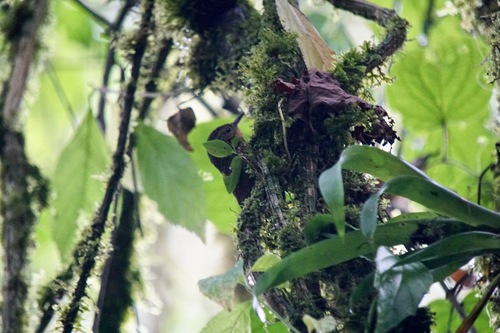
Spotted Barbtail (Premnoplex brunnescens) Spotted Barbtail
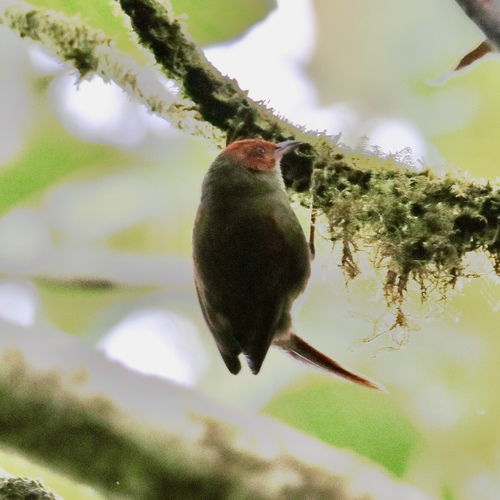
Red-faced Spinetail (Cranioleuca erythrops) Red-faced Spinetail

Media

Loading…

In short

The Spotted Barbtail and Red-faced Spinetail are both small, active birds often found in mixed-species flocks, but they can be distinguished by their plumage and head markings. The Spotted Barbtail has a more uniform brown appearance with subtle spotting, while the Red-faced Spinetail is notable for its contrasting rufous head and gray body.

Identification tips

  1. Look for the rufous head and gray body of the Red-faced Spinetail. 2. Note the brown plumage with spotting on the Spotted Barbtail. 3. Listen for the excited chipping series of the Red-faced Spinetail. 4. Observe behavior: both species are active, but the Red-faced Spinetail's vocalization can be a key differentiator.

Size

Both species are small and similar in size, typical of the Furnariidae family.

Plumage

The Spotted Barbtail has a brown plumage with fine spotting on the underparts, whereas the Red-faced Spinetail features a distinctive rufous head and contrasting gray body, with rufous wings and tail.

Behaviour

Both species are active foragers, often seen creeping along branches and rummaging in bark and epiphytes for invertebrates. They frequently join mixed-species foraging flocks.

Habitat

Both species inhabit forested areas and are often found in similar environments, making habitat less useful for differentiation.

Voice

The Red-faced Spinetail has an excited, accelerating chipping series, which can be a useful auditory cue if heard. The Spotted Barbtail's vocalizations are less distinctive in comparison.

Submit a better description

Use the same sections as the comparison. Your text is published immediately.

The Spotted Barbtail and Red-faced Spinetail are both small, active birds often found in mixed-species flocks, but they can be distinguished by their plumage and head markings. The Spotted Barbtail has a more uniform brown appearance with subtle spotting, while the Red-faced Spinetail is notable for its contrasting rufous head and gray body.

  1. Look for the rufous head and gray body of the Red-faced Spinetail. 2. Note the brown plumage with spotting on the Spotted Barbtail. 3. Listen for the excited chipping series of the Red-faced Spinetail. 4. Observe behavior: both species are active, but the Red-faced Spinetail's vocalization can be a key differentiator.

Both species are small and similar in size, typical of the Furnariidae family.

The Spotted Barbtail has a brown plumage with fine spotting on the underparts, whereas the Red-faced Spinetail features a distinctive rufous head and contrasting gray body, with rufous wings and tail.

Both species are active foragers, often seen creeping along branches and rummaging in bark and epiphytes for invertebrates. They frequently join mixed-species foraging flocks.

Both species inhabit forested areas and are often found in similar environments, making habitat less useful for differentiation.

The Red-faced Spinetail has an excited, accelerating chipping series, which can be a useful auditory cue if heard. The Spotted Barbtail's vocalizations are less distinctive in comparison.

Discard your changes?

You have unsaved edits. If you leave now, those changes will be lost.

Spotted Barbtail · Red-faced Spinetail · My Tricky Birds