Birdr

Spotted Barbtail vs Ruddy Treerunner

Premnoplex brunnescens versus Margarornis rubiginosus

Play a quiz with Spotted Barbtail and Ruddy Treerunner
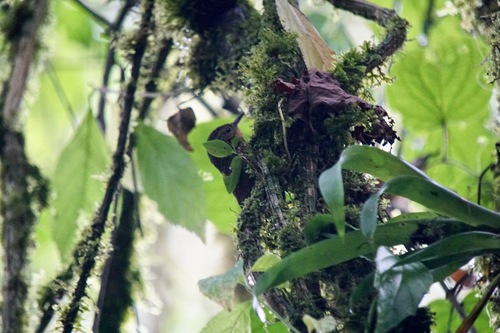
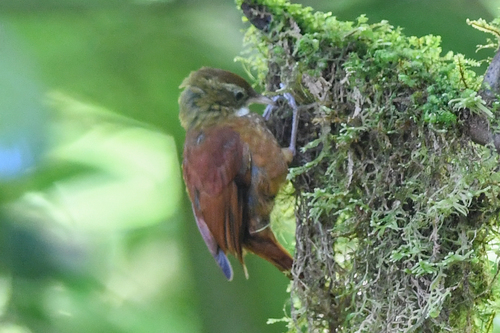
Spotted Barbtail (Premnoplex brunnescens) Spotted Barbtail
Ruddy Treerunner (Margarornis rubiginosus) Ruddy Treerunner

Media

Loading…

In short

To distinguish the Spotted Barbtail from the Ruddy Treerunner, focus on the tail and plumage patterns. The Spotted Barbtail has a distinctive spotted pattern on its back and wings, while the Ruddy Treerunner is more uniformly rufous with a slightly streaked appearance. Both species belong to the same family, so structural differences are subtle.

Identification tips

  1. Look for the spotted pattern on the Spotted Barbtail's back and wings. 2. Note the uniform rufous tone of the Ruddy Treerunner. 3. Observe behavior: the Ruddy Treerunner may climb tree trunks more frequently. 4. Consider habitat: Spotted Barbtail in denser undergrowth, Ruddy Treerunner in more open areas.

Size

Both species are similar in size, but the Ruddy Treerunner may appear slightly more elongated due to its tail.

Plumage

The Spotted Barbtail features a brown back with white spots and a streaked throat, whereas the Ruddy Treerunner is more uniformly rufous with faint streaking on the underparts.

Behaviour

Both species forage actively in the mid-levels of the forest, often in mixed-species flocks, but the Ruddy Treerunner may be more likely to ascend tree trunks.

Habitat

Both are found in montane forests, but the Spotted Barbtail may prefer denser undergrowth, while the Ruddy Treerunner is often seen in more open forest areas.

Voice

Vocalizations are not a primary distinguishing feature; both have high-pitched calls, but specifics are not well-documented.

Submit a better description

Use the same sections as the comparison. Your text is published immediately.

To distinguish the Spotted Barbtail from the Ruddy Treerunner, focus on the tail and plumage patterns. The Spotted Barbtail has a distinctive spotted pattern on its back and wings, while the Ruddy Treerunner is more uniformly rufous with a slightly streaked appearance. Both species belong to the same family, so structural differences are subtle.

  1. Look for the spotted pattern on the Spotted Barbtail's back and wings. 2. Note the uniform rufous tone of the Ruddy Treerunner. 3. Observe behavior: the Ruddy Treerunner may climb tree trunks more frequently. 4. Consider habitat: Spotted Barbtail in denser undergrowth, Ruddy Treerunner in more open areas.

Both species are similar in size, but the Ruddy Treerunner may appear slightly more elongated due to its tail.

The Spotted Barbtail features a brown back with white spots and a streaked throat, whereas the Ruddy Treerunner is more uniformly rufous with faint streaking on the underparts.

Both species forage actively in the mid-levels of the forest, often in mixed-species flocks, but the Ruddy Treerunner may be more likely to ascend tree trunks.

Both are found in montane forests, but the Spotted Barbtail may prefer denser undergrowth, while the Ruddy Treerunner is often seen in more open forest areas.

Vocalizations are not a primary distinguishing feature; both have high-pitched calls, but specifics are not well-documented.

Discard your changes?

You have unsaved edits. If you leave now, those changes will be lost.

Spotted Barbtail · Ruddy Treerunner · My Tricky Birds