Birdr

Spotted Crake vs Little Crake

Porzana porzana versus Zapornia parva

Play a quiz with Spotted Crake and Little Crake
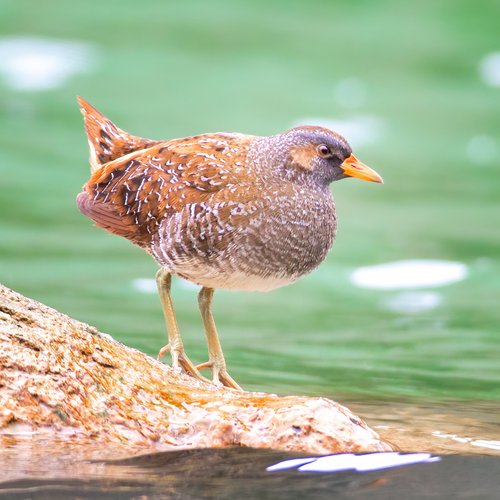
Spotted Crake (Porzana porzana) Spotted Crake
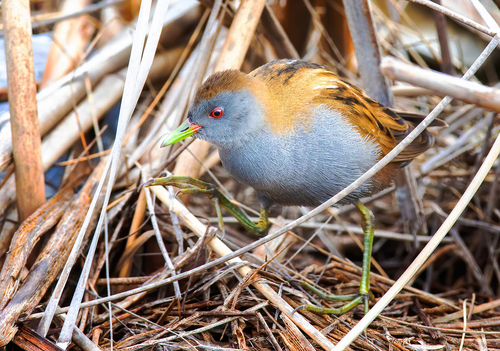
Little Crake (Zapornia parva) Little Crake

Media

Loading…

In short

The Spotted Crake and Little Crake are both small rails, but the Spotted Crake is slightly larger and more robust. The most reliable field mark is the bill color: Spotted Crake has a greenish-yellow bill with a red base, while Little Crake has a more uniformly greenish bill. Both species have spotted plumage, but the Spotted Crake's spots are more prominent.

Identification tips

  1. Bill color: Look for the red base on Spotted Crake's bill. 2. Size and structure: Note the slightly larger size and more robust build of Spotted Crake. 3. Spotting: Check for more prominent spots on Spotted Crake. 4. Vocalizations: Listen for the 'whiplash' call of Spotted Crake versus the 'kek' notes of Little Crake. 5. Habitat: Consider the habitat; Spotted Crake may be in slightly more open wetlands.

Size

Spotted Crake is slightly larger and more robust than Little Crake.

Plumage

Both species have spotted plumage, but Spotted Crake's spots are more prominent and evenly distributed. Little Crake tends to have a more uniform appearance with less distinct spotting.

Behaviour

Both species are secretive and often seen skulking in dense vegetation. Little Crake may appear more agile and quick-moving.

Habitat

Both prefer wetlands with dense vegetation, but Spotted Crake is more likely to be found in slightly larger and more open wetland areas.

Voice

Spotted Crake has a distinctive 'whiplash' call, while Little Crake's call is a series of soft 'kek' notes. Vocalizations are a reliable way to distinguish them if heard.

Submit a better description

Use the same sections as the comparison. Your text is published immediately.

The Spotted Crake and Little Crake are both small rails, but the Spotted Crake is slightly larger and more robust. The most reliable field mark is the bill color: Spotted Crake has a greenish-yellow bill with a red base, while Little Crake has a more uniformly greenish bill. Both species have spotted plumage, but the Spotted Crake's spots are more prominent.

  1. Bill color: Look for the red base on Spotted Crake's bill. 2. Size and structure: Note the slightly larger size and more robust build of Spotted Crake. 3. Spotting: Check for more prominent spots on Spotted Crake. 4. Vocalizations: Listen for the 'whiplash' call of Spotted Crake versus the 'kek' notes of Little Crake. 5. Habitat: Consider the habitat; Spotted Crake may be in slightly more open wetlands.

Spotted Crake is slightly larger and more robust than Little Crake.

Both species have spotted plumage, but Spotted Crake's spots are more prominent and evenly distributed. Little Crake tends to have a more uniform appearance with less distinct spotting.

Both species are secretive and often seen skulking in dense vegetation. Little Crake may appear more agile and quick-moving.

Both prefer wetlands with dense vegetation, but Spotted Crake is more likely to be found in slightly larger and more open wetland areas.

Spotted Crake has a distinctive 'whiplash' call, while Little Crake's call is a series of soft 'kek' notes. Vocalizations are a reliable way to distinguish them if heard.

Discard your changes?

You have unsaved edits. If you leave now, those changes will be lost.

Spotted Crake · Little Crake · My Tricky Birds