Birdr

Spotted Flycatcher vs Chat Flycatcher

Muscicapa striata versus Agricola infuscatus

Play a quiz with Spotted Flycatcher and Chat Flycatcher
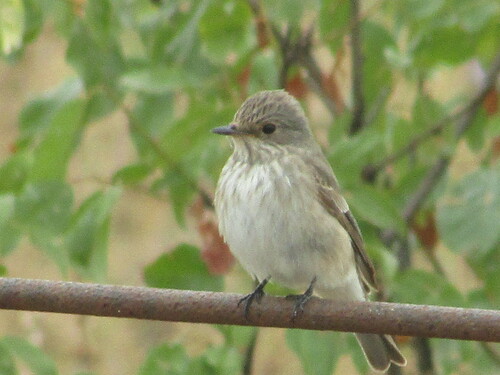
Spotted Flycatcher (Muscicapa striata) Spotted Flycatcher
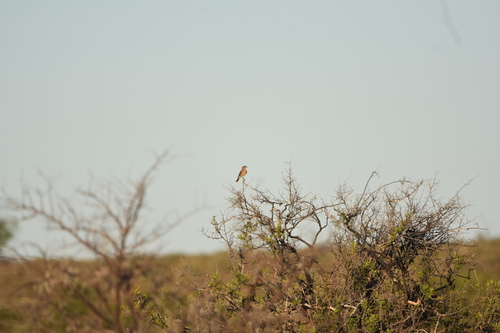
Chat Flycatcher (Agricola infuscatus) Chat Flycatcher

Media

Loading…

In short

The Spotted Flycatcher and Chat Flycatcher can be distinguished by their structure and habitat preferences. The Spotted Flycatcher has a more slender build with a longer primary projection, while the Chat Flycatcher is more robust with a shorter tail. Habitat is also a key difference: Spotted Flycatchers are often found in open woodlands, whereas Chat Flycatchers prefer arid, open areas.

Identification tips

  1. Check the habitat: Spotted Flycatchers are usually in wooded areas; Chat Flycatchers are in open, dry habitats. 2. Look at the structure: Spotted Flycatchers have longer primary projections and a more slender build. 3. Observe behavior: Spotted Flycatchers often sally for insects, while Chat Flycatchers may be on the ground. 4. Listen for calls: Spotted Flycatchers have soft calls; Chat Flycatchers have harsher, varied calls.

Size

Both species are similar in size, but the Chat Flycatcher appears slightly bulkier due to its more robust build.

Plumage

Spotted Flycatchers have a more muted, streaked appearance with subtle spots on the breast, while Chat Flycatchers are generally plainer and more uniform in color.

Behaviour

Spotted Flycatchers are more likely to be seen sallying from perches to catch insects, whereas Chat Flycatchers often forage on the ground or low in bushes.

Habitat

Spotted Flycatchers prefer open woodlands and gardens, while Chat Flycatchers are found in arid, open areas such as savannas and semi-deserts.

Voice

The vocalizations of these species differ, with the Spotted Flycatcher having a soft, high-pitched call, while the Chat Flycatcher's call is more varied and includes harsher notes.

Submit a better description

Use the same sections as the comparison. Your text is published immediately.

The Spotted Flycatcher and Chat Flycatcher can be distinguished by their structure and habitat preferences. The Spotted Flycatcher has a more slender build with a longer primary projection, while the Chat Flycatcher is more robust with a shorter tail. Habitat is also a key difference: Spotted Flycatchers are often found in open woodlands, whereas Chat Flycatchers prefer arid, open areas.

  1. Check the habitat: Spotted Flycatchers are usually in wooded areas; Chat Flycatchers are in open, dry habitats. 2. Look at the structure: Spotted Flycatchers have longer primary projections and a more slender build. 3. Observe behavior: Spotted Flycatchers often sally for insects, while Chat Flycatchers may be on the ground. 4. Listen for calls: Spotted Flycatchers have soft calls; Chat Flycatchers have harsher, varied calls.

Both species are similar in size, but the Chat Flycatcher appears slightly bulkier due to its more robust build.

Spotted Flycatchers have a more muted, streaked appearance with subtle spots on the breast, while Chat Flycatchers are generally plainer and more uniform in color.

Spotted Flycatchers are more likely to be seen sallying from perches to catch insects, whereas Chat Flycatchers often forage on the ground or low in bushes.

Spotted Flycatchers prefer open woodlands and gardens, while Chat Flycatchers are found in arid, open areas such as savannas and semi-deserts.

The vocalizations of these species differ, with the Spotted Flycatcher having a soft, high-pitched call, while the Chat Flycatcher's call is more varied and includes harsher notes.

Discard your changes?

You have unsaved edits. If you leave now, those changes will be lost.

Spotted Flycatcher · Chat Flycatcher · My Tricky Birds