Birdr

Spotted Flycatcher vs European Pied Flycatcher

Muscicapa striata versus Ficedula hypoleuca

Play a quiz with Spotted Flycatcher and European Pied Flycatcher
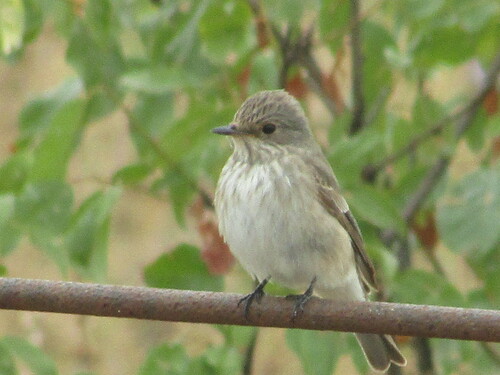
Spotted Flycatcher (Muscicapa striata) Spotted Flycatcher
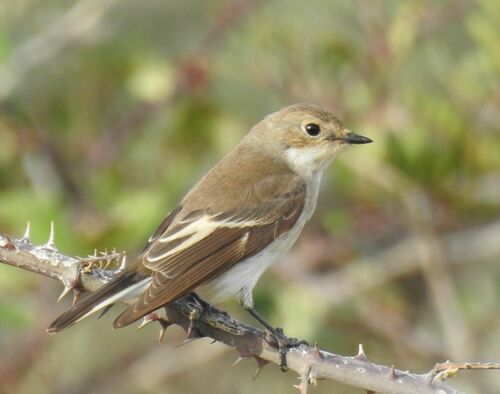
European Pied Flycatcher (Ficedula hypoleuca) European Pied Flycatcher

Media

Loading…

In short

The Spotted Flycatcher and European Pied Flycatcher can be distinguished by their structure and plumage. The Spotted Flycatcher has a more slender build with a longer tail and less contrasting plumage, while the European Pied Flycatcher, especially males, shows a more compact shape with bold black-and-white contrasts.

Identification tips

1. Structure: Look for the Spotted Flycatcher's longer tail and slender build compared to the more compact European Pied Flycatcher. 2. Plumage: Note the Spotted Flycatcher's subtle streaks and overall brownish-grey tone versus the male European Pied Flycatcher's bold black-and-white contrast. 3. Behavior: Observe the flycatching behavior; both species sally for insects, but the Spotted Flycatcher may seem more deliberate. 4. Habitat: Consider the habitat; Spotted Flycatchers are more common in open woodlands and gardens, while European Pied Flycatchers favor mature forests. 5. Vocalization: Listen for the song; the Spotted Flycatcher has a simpler, repetitive song, while the European Pied Flycatcher sings a more varied melody.

Size

Both species are similar in size, but the Spotted Flycatcher appears more slender with a longer tail.

Plumage

The Spotted Flycatcher has a generally brownish-grey plumage with subtle streaks and lacks bold markings. In contrast, the male European Pied Flycatcher is striking with black upperparts and a white belly, while females are browner but still show more contrast than Spotted Flycatchers.

Behaviour

Both species are active flycatchers, often seen sallying from perches to catch insects. The Spotted Flycatcher may appear more deliberate in its movements.

Habitat

Both species can be found in wooded areas, but the Spotted Flycatcher is more often seen in open woodlands and gardens, while the European Pied Flycatcher prefers mature deciduous forests.

Voice

The Spotted Flycatcher's song is a simple, repetitive series of high-pitched notes, while the European Pied Flycatcher has a more varied and melodic song. Calls are less distinct but can be useful if known.

Submit a better description

Use the same sections as the comparison. Your text is published immediately.

The Spotted Flycatcher and European Pied Flycatcher can be distinguished by their structure and plumage. The Spotted Flycatcher has a more slender build with a longer tail and less contrasting plumage, while the European Pied Flycatcher, especially males, shows a more compact shape with bold black-and-white contrasts.

1. Structure: Look for the Spotted Flycatcher's longer tail and slender build compared to the more compact European Pied Flycatcher. 2. Plumage: Note the Spotted Flycatcher's subtle streaks and overall brownish-grey tone versus the male European Pied Flycatcher's bold black-and-white contrast. 3. Behavior: Observe the flycatching behavior; both species sally for insects, but the Spotted Flycatcher may seem more deliberate. 4. Habitat: Consider the habitat; Spotted Flycatchers are more common in open woodlands and gardens, while European Pied Flycatchers favor mature forests. 5. Vocalization: Listen for the song; the Spotted Flycatcher has a simpler, repetitive song, while the European Pied Flycatcher sings a more varied melody.

Both species are similar in size, but the Spotted Flycatcher appears more slender with a longer tail.

The Spotted Flycatcher has a generally brownish-grey plumage with subtle streaks and lacks bold markings. In contrast, the male European Pied Flycatcher is striking with black upperparts and a white belly, while females are browner but still show more contrast than Spotted Flycatchers.

Both species are active flycatchers, often seen sallying from perches to catch insects. The Spotted Flycatcher may appear more deliberate in its movements.

Both species can be found in wooded areas, but the Spotted Flycatcher is more often seen in open woodlands and gardens, while the European Pied Flycatcher prefers mature deciduous forests.

The Spotted Flycatcher's song is a simple, repetitive series of high-pitched notes, while the European Pied Flycatcher has a more varied and melodic song. Calls are less distinct but can be useful if known.

Discard your changes?

You have unsaved edits. If you leave now, those changes will be lost.

Spotted Flycatcher · European Pied Flycatcher · My Tricky Birds