Birdr

Spotted Nutcracker vs Eurasian Jackdaw

Nucifraga caryocatactes versus Coloeus monedula

Play a quiz with Spotted Nutcracker and Eurasian Jackdaw
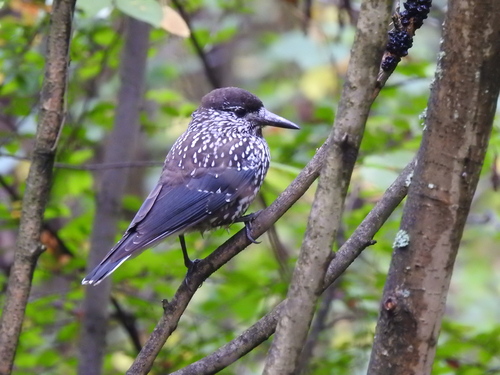
Spotted Nutcracker (Nucifraga caryocatactes) Spotted Nutcracker
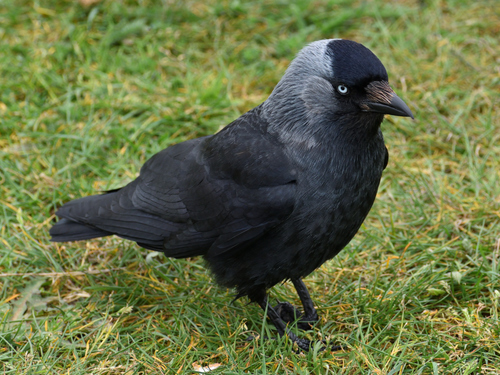
Eurasian Jackdaw (Coloeus monedula) Eurasian Jackdaw

Media

Loading…

In short

The most reliable field mark to separate Spotted Nutcracker from Eurasian Jackdaw is the nutcracker’s dense white spotting on a chocolate-brown body, with a large, sharply pointed bill, versus the jackdaw’s clean black-and-grey plumage, pale silvery eyes, and short, stout bill. In flight, the nutcracker shows broad, rounded wings, a short tail with white corners, and a striking white vent, while the jackdaw is more compact, with narrower, less fingered wings and a uniform dark underwing. Juvenile jackdaws may look duller but never show the nutcracker’s heavy spotting or white vent. Bill shape, head pattern, and eye color are also key: nutcrackers have a long, dagger-like black bill and dark eyes; jackdaws have a short bill and pale eyes as adults. Both are corvids, but their structure, flight style, and plumage are distinct with careful observation.

Identification tips

  1. White spotting vs. clean grey: Spotted Nutcracker always shows dense white spots on the face, neck, and underparts, while Eurasian Jackdaw is clean black and grey, never spotted.
  2. Bill shape: Nutcracker’s bill is long, sharply pointed, and black; jackdaw’s is short, stout, and black. Bill length is especially obvious when seen in profile.
  3. Eye color: Adult jackdaws have pale silvery or whitish eyes, juveniles light blue, always contrasting with the nutcracker’s dark brown eye.
  4. Head pattern: Nutcracker has a dark cap and white loral spot; jackdaw has a pale grey nape and cheeks, giving a capped-and-collared look.
  5. Flight silhouette: Nutcracker has broad, rounded wings and a short tail with white corners; jackdaw is more compact, with narrower wings, shorter tail, and no white in the tail.
  6. White vent and tail corners: In flight, nutcracker shows a conspicuous white vent and white corners to the tail, absent in jackdaw.
  7. Plumage gloss: Nutcracker’s wings and tail have a greenish-blue gloss; jackdaw’s crown and secondaries have a purple or blue sheen, but the body is never brown or spotted.
  8. Juvenile confusion: Young jackdaws are duller but never show white spotting or a white vent. Young nutcrackers are similar to adults in pattern.
  9. Social behavior: Jackdaws are usually in flocks, especially in flight or feeding; nutcrackers are solitary or in pairs.
  10. Habitat: Nutcracker is almost always in coniferous forest; jackdaw is common in open country, farmland, towns, and cities.
  11. Perched posture: Nutcracker perches upright, often high in trees; jackdaw is more upright on the ground, strutting briskly.
  12. Feeding behavior: Nutcracker uses its bill to hammer open nuts, sometimes holding them with its feet; jackdaw forages on the ground, probing and picking.
  13. Vocalizations: Jackdaw gives sharp, metallic calls in flocks; nutcracker’s call is harsher and less social.
  14. Seasonal variation: Jackdaw’s plumage gloss is brightest after molt (late summer–autumn); nutcracker’s spotting and white marks are present year-round.
  15. Common pitfalls: At a distance, a perched nutcracker may look dark and crow-like, but the bill, white spotting, and vent are always diagnostic. Jackdaw’s pale eye is a clincher at close range, and its grey nape is never matched by nutcracker.

Size

Both species are similar in length, with Spotted Nutcracker ranging from 32–38 cm and Eurasian Jackdaw from 34–39 cm. However, the nutcracker appears bulkier and more robust, with a noticeably longer and heavier bill, while the jackdaw is more compact, with a shorter neck and bill. The nutcracker’s wingspan (49–53 cm) is slightly less than or similar to the jackdaw’s, but the nutcracker’s wings are broader and the tail is shorter and more squared. Jackdaws are lighter in build, with a brisker, more upright stance on the ground.

Plumage

Juvenile and immature plumage is not a major source of confusion here, as neither species shows age-specific upperwing patterns that mimic the other. Spotted Nutcracker of all ages is dark chocolate brown with heavy white spotting on the face, neck, mantle, and underparts, a white loral spot, white eye-ring, and a white vent and tail corners in flight. Its wings and tail are blackish with a greenish-blue gloss. Eurasian Jackdaw adults are mostly shiny black with a purple or blue sheen on the crown and secondaries, and a green-blue sheen on the throat, primaries, and tail. The cheeks, nape, and neck are pale grey to silvery, and the underparts are slate-grey. Juveniles are duller, with sooty black heads and less distinct grey necks, but never show white spotting or a white vent. The jackdaw’s eye is pale silvery in adults, light blue in juveniles, always contrasting with the dark eye of the nutcracker. The jackdaw’s bill is short and stout; the nutcracker’s is long and sharply pointed.

Behaviour

Spotted Nutcracker is typically solitary or in pairs, moving deliberately and often seen perched high in conifers or flying with slow, undulating wingbeats. It uses its strong bill to hammer open nuts, sometimes holding them with its feet. The Eurasian Jackdaw is highly social, often in flocks, and moves with a brisk, upright gait on the ground. In flight, jackdaws are agile, with rapid, deep wingbeats, and often wheel and tumble in tight groups. Nutcrackers are more methodical, less acrobatic, and rarely flock in the same way.

Habitat

Spotted Nutcracker is almost always found in or near coniferous forests, especially where pines or spruces are present, often at higher elevations or in northern forests. It is rarely seen in open country or urban areas. Eurasian Jackdaw prefers open woodlands, farmland, parks, and urban environments, often nesting in buildings or chimneys, and is much more likely to be seen in towns and cities. If you are in dense coniferous woodland, nutcracker is more likely; in open or urban settings, jackdaw dominates.

Voice

No direct comparison is available in the notes, but both are vocal corvids. Jackdaw is known for its sharp, metallic "jack" or "kya" calls, often given in flocks. Nutcracker has a harsher, rasping call, less likely to be mistaken for jackdaw’s chattering. If you hear a flock calling noisily, jackdaw is more likely; nutcracker is quieter and more solitary.

Submit a better description

Use the same sections as the comparison. Your text is published immediately.

The most reliable field mark to separate Spotted Nutcracker from Eurasian Jackdaw is the nutcracker’s dense white spotting on a chocolate-brown body, with a large, sharply pointed bill, versus the jackdaw’s clean black-and-grey plumage, pale silvery eyes, and short, stout bill. In flight, the nutcracker shows broad, rounded wings, a short tail with white corners, and a striking white vent, while the jackdaw is more compact, with narrower, less fingered wings and a uniform dark underwing. Juvenile jackdaws may look duller but never show the nutcracker’s heavy spotting or white vent. Bill shape, head pattern, and eye color are also key: nutcrackers have a long, dagger-like black bill and dark eyes; jackdaws have a short bill and pale eyes as adults. Both are corvids, but their structure, flight style, and plumage are distinct with careful observation.

  1. White spotting vs. clean grey: Spotted Nutcracker always shows dense white spots on the face, neck, and underparts, while Eurasian Jackdaw is clean black and grey, never spotted.
  2. Bill shape: Nutcracker’s bill is long, sharply pointed, and black; jackdaw’s is short, stout, and black. Bill length is especially obvious when seen in profile.
  3. Eye color: Adult jackdaws have pale silvery or whitish eyes, juveniles light blue, always contrasting with the nutcracker’s dark brown eye.
  4. Head pattern: Nutcracker has a dark cap and white loral spot; jackdaw has a pale grey nape and cheeks, giving a capped-and-collared look.
  5. Flight silhouette: Nutcracker has broad, rounded wings and a short tail with white corners; jackdaw is more compact, with narrower wings, shorter tail, and no white in the tail.
  6. White vent and tail corners: In flight, nutcracker shows a conspicuous white vent and white corners to the tail, absent in jackdaw.
  7. Plumage gloss: Nutcracker’s wings and tail have a greenish-blue gloss; jackdaw’s crown and secondaries have a purple or blue sheen, but the body is never brown or spotted.
  8. Juvenile confusion: Young jackdaws are duller but never show white spotting or a white vent. Young nutcrackers are similar to adults in pattern.
  9. Social behavior: Jackdaws are usually in flocks, especially in flight or feeding; nutcrackers are solitary or in pairs.
  10. Habitat: Nutcracker is almost always in coniferous forest; jackdaw is common in open country, farmland, towns, and cities.
  11. Perched posture: Nutcracker perches upright, often high in trees; jackdaw is more upright on the ground, strutting briskly.
  12. Feeding behavior: Nutcracker uses its bill to hammer open nuts, sometimes holding them with its feet; jackdaw forages on the ground, probing and picking.
  13. Vocalizations: Jackdaw gives sharp, metallic calls in flocks; nutcracker’s call is harsher and less social.
  14. Seasonal variation: Jackdaw’s plumage gloss is brightest after molt (late summer–autumn); nutcracker’s spotting and white marks are present year-round.
  15. Common pitfalls: At a distance, a perched nutcracker may look dark and crow-like, but the bill, white spotting, and vent are always diagnostic. Jackdaw’s pale eye is a clincher at close range, and its grey nape is never matched by nutcracker.

Both species are similar in length, with Spotted Nutcracker ranging from 32–38 cm and Eurasian Jackdaw from 34–39 cm. However, the nutcracker appears bulkier and more robust, with a noticeably longer and heavier bill, while the jackdaw is more compact, with a shorter neck and bill. The nutcracker’s wingspan (49–53 cm) is slightly less than or similar to the jackdaw’s, but the nutcracker’s wings are broader and the tail is shorter and more squared. Jackdaws are lighter in build, with a brisker, more upright stance on the ground.

Juvenile and immature plumage is not a major source of confusion here, as neither species shows age-specific upperwing patterns that mimic the other. Spotted Nutcracker of all ages is dark chocolate brown with heavy white spotting on the face, neck, mantle, and underparts, a white loral spot, white eye-ring, and a white vent and tail corners in flight. Its wings and tail are blackish with a greenish-blue gloss. Eurasian Jackdaw adults are mostly shiny black with a purple or blue sheen on the crown and secondaries, and a green-blue sheen on the throat, primaries, and tail. The cheeks, nape, and neck are pale grey to silvery, and the underparts are slate-grey. Juveniles are duller, with sooty black heads and less distinct grey necks, but never show white spotting or a white vent. The jackdaw’s eye is pale silvery in adults, light blue in juveniles, always contrasting with the dark eye of the nutcracker. The jackdaw’s bill is short and stout; the nutcracker’s is long and sharply pointed.

Spotted Nutcracker is typically solitary or in pairs, moving deliberately and often seen perched high in conifers or flying with slow, undulating wingbeats. It uses its strong bill to hammer open nuts, sometimes holding them with its feet. The Eurasian Jackdaw is highly social, often in flocks, and moves with a brisk, upright gait on the ground. In flight, jackdaws are agile, with rapid, deep wingbeats, and often wheel and tumble in tight groups. Nutcrackers are more methodical, less acrobatic, and rarely flock in the same way.

Spotted Nutcracker is almost always found in or near coniferous forests, especially where pines or spruces are present, often at higher elevations or in northern forests. It is rarely seen in open country or urban areas. Eurasian Jackdaw prefers open woodlands, farmland, parks, and urban environments, often nesting in buildings or chimneys, and is much more likely to be seen in towns and cities. If you are in dense coniferous woodland, nutcracker is more likely; in open or urban settings, jackdaw dominates.

No direct comparison is available in the notes, but both are vocal corvids. Jackdaw is known for its sharp, metallic "jack" or "kya" calls, often given in flocks. Nutcracker has a harsher, rasping call, less likely to be mistaken for jackdaw’s chattering. If you hear a flock calling noisily, jackdaw is more likely; nutcracker is quieter and more solitary.

Discard your changes?

You have unsaved edits. If you leave now, those changes will be lost.

Spotted Nutcracker · Eurasian Jackdaw · My Tricky Birds