Birdr

Spotted Owl vs Barred Owl

Strix occidentalis versus Strix varia

Play a quiz with Spotted Owl and Barred Owl
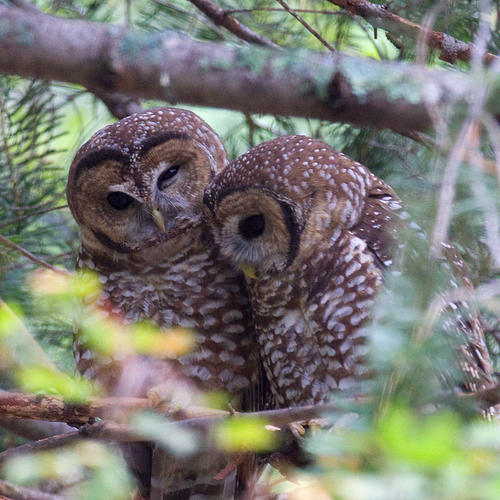
Spotted Owl (Strix occidentalis) Spotted Owl
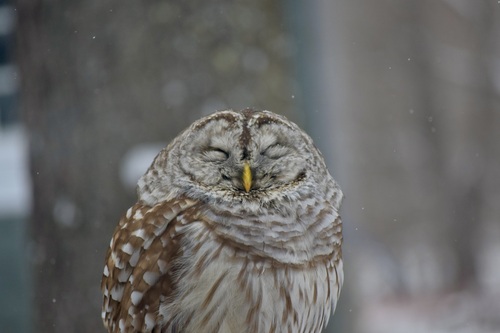
Barred Owl (Strix varia) Barred Owl

Media

Loading…

In short

To distinguish between the Spotted Owl and the Barred Owl, focus on the pattern of their underparts: the Spotted Owl has spots below the ruff on the upper breast, while the Barred Owl features streaks. Additionally, the Spotted Owl has whitish spots on the head, back, and wing coverts, contrasting with the Barred Owl's barred pattern.

Identification tips

1. Look for spotting vs. streaking on the underparts: Spotted Owl has spots, Barred Owl has streaks. 2. Check the head and back: Spotted Owl has whitish spots, Barred Owl has bars. 3. Listen for calls: Barred Owl's call is more frequent and distinctive. 4. Consider habitat: Spotted Owls prefer old-growth forests, while Barred Owls are more adaptable. 5. Be aware of hybridization in overlapping ranges, which can complicate visual identification.

Size

Both species are similar in size, but the Barred Owl can be slightly larger in mass.

Plumage

The Spotted Owl is characterized by spots on the breast and whitish spots on the head, back, and wing coverts. In contrast, the Barred Owl has a barred pattern across the upper breast and streaked underparts, with a brownish-gray head and back featuring whitish to buff bars.

Behaviour

Both species can be found in similar forest habitats and may hybridize in areas of overlap, complicating identification.

Habitat

Both owls inhabit dense forests, but the Barred Owl is more adaptable to various woodland environments, while the Spotted Owl is often found in old-growth forests.

Voice

The Barred Owl is more vocal, with a distinctive call often described as 'Who cooks for you? Who cooks for you all?' The Spotted Owl's call is less vocal but distinct, typically a four-note call.

Submit a better description

Use the same sections as the comparison. Your text is published immediately.

To distinguish between the Spotted Owl and the Barred Owl, focus on the pattern of their underparts: the Spotted Owl has spots below the ruff on the upper breast, while the Barred Owl features streaks. Additionally, the Spotted Owl has whitish spots on the head, back, and wing coverts, contrasting with the Barred Owl's barred pattern.

1. Look for spotting vs. streaking on the underparts: Spotted Owl has spots, Barred Owl has streaks. 2. Check the head and back: Spotted Owl has whitish spots, Barred Owl has bars. 3. Listen for calls: Barred Owl's call is more frequent and distinctive. 4. Consider habitat: Spotted Owls prefer old-growth forests, while Barred Owls are more adaptable. 5. Be aware of hybridization in overlapping ranges, which can complicate visual identification.

Both species are similar in size, but the Barred Owl can be slightly larger in mass.

The Spotted Owl is characterized by spots on the breast and whitish spots on the head, back, and wing coverts. In contrast, the Barred Owl has a barred pattern across the upper breast and streaked underparts, with a brownish-gray head and back featuring whitish to buff bars.

Both species can be found in similar forest habitats and may hybridize in areas of overlap, complicating identification.

Both owls inhabit dense forests, but the Barred Owl is more adaptable to various woodland environments, while the Spotted Owl is often found in old-growth forests.

The Barred Owl is more vocal, with a distinctive call often described as 'Who cooks for you? Who cooks for you all?' The Spotted Owl's call is less vocal but distinct, typically a four-note call.

Discard your changes?

You have unsaved edits. If you leave now, those changes will be lost.

Spotted Owl · Barred Owl · My Tricky Birds