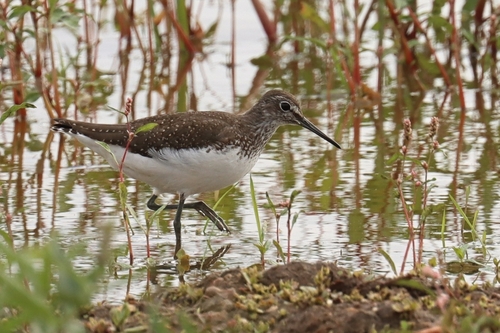
Spotted Sandpiper vs Green Sandpiper
Actitis macularius versus Tringa ochropus
Play a quiz with Spotted Sandpiper and Green Sandpiper
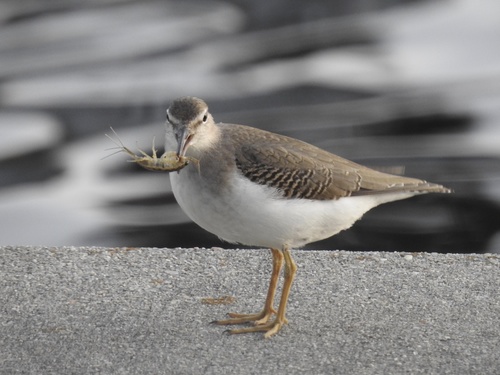
Spotted Sandpiper
Green Sandpiper
In short
The Spotted Sandpiper (Actitis macularius) and Green Sandpiper (Tringa ochropus) can be distinguished by their plumage and behavior. The Spotted Sandpiper shows bold black spotting on its white underparts in breeding plumage, while the Green Sandpiper is darker with a more uniform appearance. Behaviorally, the Spotted Sandpiper exhibits a distinctive teetering motion.
Identification tips
- Plumage: Look for bold black spotting on the Spotted Sandpiper's underparts during breeding season; Green Sandpipers have a more uniform, darker appearance.
- Behavior: Note the frequent teetering motion of the Spotted Sandpiper.
- Vocalization: Listen for the Spotted Sandpiper's 'peet-weet' versus the Green Sandpiper's 'dee-dee-dee'.
- Habitat: Consider the geographic location; Spotted Sandpipers are more common in North America, while Green Sandpipers are found in Eurasia.
Size
Both species are medium-sized sandpipers, but the Green Sandpiper is generally larger than the Spotted Sandpiper.
Plumage
The Spotted Sandpiper has bold black spots on its white underparts during the breeding season, while the Green Sandpiper is darker overall with a more uniform plumage. The Spotted Sandpiper's upperparts are brownish to olive-gray, whereas the Green Sandpiper is darker with a greenish tinge.
Behaviour
The Spotted Sandpiper is known for its distinctive teetering behavior, which is more frequent and obvious than in the Green Sandpiper. Both species exhibit similar flight styles, but the Spotted Sandpiper's wing-beats are stiff and shallow.
Habitat
Spotted Sandpipers are often found near freshwater bodies across North America, while Green Sandpipers are typically found in Eurasia near wooded wetlands and marshes.
Voice
The Spotted Sandpiper's flight call is a shrill 'peet-weet', while the Green Sandpiper's call is a more descending 'dee-dee-dee'.