Birdr

Spotted Sandpiper vs Marsh Sandpiper

Actitis macularius versus Tringa stagnatilis

Play a quiz with Spotted Sandpiper and Marsh Sandpiper
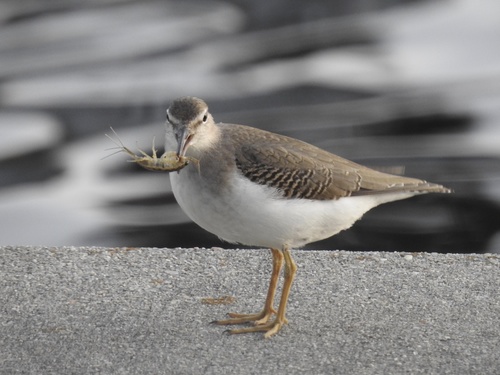
Spotted Sandpiper (Actitis macularius) Spotted Sandpiper
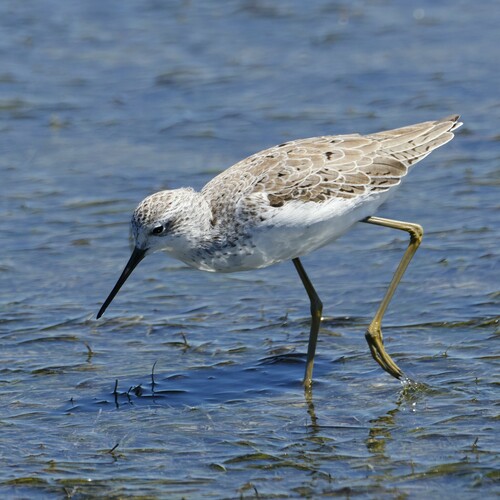
Marsh Sandpiper (Tringa stagnatilis) Marsh Sandpiper

Media

Loading…

In short

The Spotted Sandpiper and Marsh Sandpiper can be distinguished by their size, plumage, and behavior. The Spotted Sandpiper is smaller and exhibits a distinctive teetering behavior, while the Marsh Sandpiper is larger with longer legs and a more slender appearance.

Identification tips

  1. Size and Shape: Look for the smaller, stockier build of the Spotted Sandpiper compared to the taller, more slender Marsh Sandpiper. 2. Plumage: Check for spotting on the underparts of the Spotted Sandpiper during the breeding season. 3. Behavior: Note the teetering motion of the Spotted Sandpiper. 4. Habitat: Consider the habitat; Spotted Sandpipers prefer freshwater shorelines, while Marsh Sandpipers are found in marshes. 5. Vocalization: Listen for the distinct calls; Spotted Sandpipers have a sharp 'peet-weet', whereas Marsh Sandpipers have a softer call.

Size

The Spotted Sandpiper is medium-sized (18–20 cm), whereas the Marsh Sandpiper is larger and more slender.

Plumage

Spotted Sandpipers have bold black spotting on their underparts during the breeding season, which is absent in Marsh Sandpipers. Marsh Sandpipers have a more uniform grayish or brownish plumage with a white belly.

Behaviour

Spotted Sandpipers are known for their distinctive teetering motion. Marsh Sandpipers are more likely to be seen wading in deeper water.

Habitat

Spotted Sandpipers are often found along freshwater shorelines, while Marsh Sandpipers prefer marshes and shallow wetlands.

Voice

Spotted Sandpipers have a shrill 'peet-weet' call, while Marsh Sandpipers have a softer, more melodious call.

Submit a better description

Use the same sections as the comparison. Your text is published immediately.

The Spotted Sandpiper and Marsh Sandpiper can be distinguished by their size, plumage, and behavior. The Spotted Sandpiper is smaller and exhibits a distinctive teetering behavior, while the Marsh Sandpiper is larger with longer legs and a more slender appearance.

  1. Size and Shape: Look for the smaller, stockier build of the Spotted Sandpiper compared to the taller, more slender Marsh Sandpiper. 2. Plumage: Check for spotting on the underparts of the Spotted Sandpiper during the breeding season. 3. Behavior: Note the teetering motion of the Spotted Sandpiper. 4. Habitat: Consider the habitat; Spotted Sandpipers prefer freshwater shorelines, while Marsh Sandpipers are found in marshes. 5. Vocalization: Listen for the distinct calls; Spotted Sandpipers have a sharp 'peet-weet', whereas Marsh Sandpipers have a softer call.

The Spotted Sandpiper is medium-sized (18–20 cm), whereas the Marsh Sandpiper is larger and more slender.

Spotted Sandpipers have bold black spotting on their underparts during the breeding season, which is absent in Marsh Sandpipers. Marsh Sandpipers have a more uniform grayish or brownish plumage with a white belly.

Spotted Sandpipers are known for their distinctive teetering motion. Marsh Sandpipers are more likely to be seen wading in deeper water.

Spotted Sandpipers are often found along freshwater shorelines, while Marsh Sandpipers prefer marshes and shallow wetlands.

Spotted Sandpipers have a shrill 'peet-weet' call, while Marsh Sandpipers have a softer, more melodious call.

Discard your changes?

You have unsaved edits. If you leave now, those changes will be lost.

Spotted Sandpiper · Marsh Sandpiper · My Tricky Birds