Birdr

Stark's Lark vs Botha's Lark

Spizocorys starki versus Spizocorys fringillaris

Play a quiz with Stark's Lark and Botha's Lark
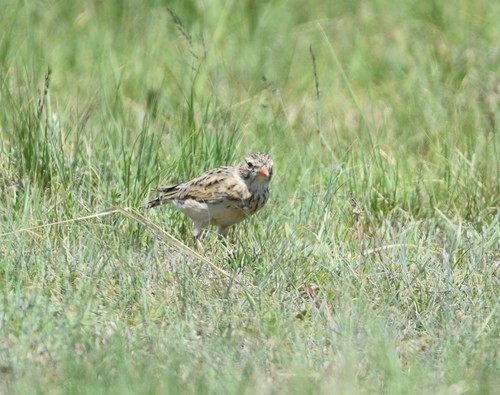
Stark's Lark (Spizocorys starki) Stark's Lark
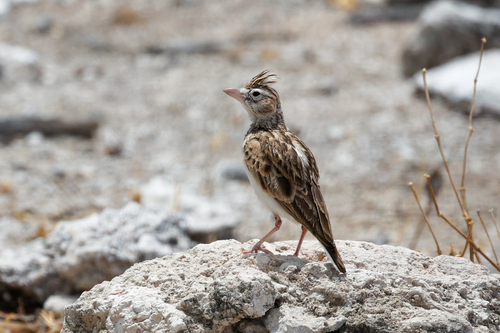
Botha's Lark (Spizocorys fringillaris) Botha's Lark

Media

Loading…

In short

Stark's Lark and Botha's Lark can be challenging to differentiate, but bill shape and size are key: Stark's Lark has a more robust bill, while Botha's Lark's bill is finer. Both species are small larks with similar plumage, so focus on structural differences and habitat preferences for identification.

Identification tips

Size

Both species are similar in size, typical of small larks, making size an unreliable differentiator.

Plumage

Plumage is similar in both species, with subtle variations that are not reliable in the field. Both have streaked upperparts and paler underparts.

Behaviour

Behavior is generally similar, with both species foraging on the ground and exhibiting typical lark-like movements.

Habitat

Stark's Lark is more often found in arid, open habitats, while Botha's Lark prefers grasslands, particularly those with short grass.

Voice

Vocalizations are not distinctly different enough to be a reliable field mark without extensive experience.

Submit a better description

Use the same sections as the comparison. Your text is published immediately.

Stark's Lark and Botha's Lark can be challenging to differentiate, but bill shape and size are key: Stark's Lark has a more robust bill, while Botha's Lark's bill is finer. Both species are small larks with similar plumage, so focus on structural differences and habitat preferences for identification.

  • Bill shape and size: Stark's Lark has a more robust bill compared to the finer bill of Botha's Lark.
  • Habitat preference: Note the habitat; Stark's Lark is more likely in arid areas, while Botha's Lark prefers grasslands.
  • Observe behavior: Both species forage on the ground, but habitat context can aid identification.

Both species are similar in size, typical of small larks, making size an unreliable differentiator.

Plumage is similar in both species, with subtle variations that are not reliable in the field. Both have streaked upperparts and paler underparts.

Behavior is generally similar, with both species foraging on the ground and exhibiting typical lark-like movements.

Stark's Lark is more often found in arid, open habitats, while Botha's Lark prefers grasslands, particularly those with short grass.

Vocalizations are not distinctly different enough to be a reliable field mark without extensive experience.

Discard your changes?

You have unsaved edits. If you leave now, those changes will be lost.

Stark's Lark · Botha's Lark · My Tricky Birds