Stejneger's Scoter vs Black Scoter
Melanitta stejnegeri versus Melanitta americana
Play a quiz with Stejneger's Scoter and Black Scoter
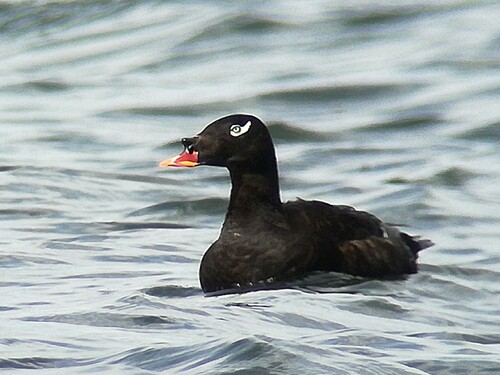
Stejneger's Scoter
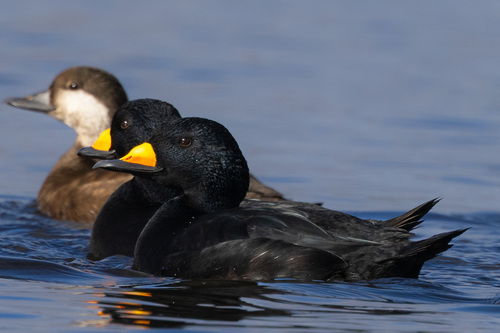
Black Scoter
In short
Stejneger's Scoter and Black Scoter are both sea ducks with similar dark plumage but can be distinguished by bill shape and vocalizations. Stejneger's Scoter has a more pronounced, knobbed bill, while Black Scoter males are known for their distinctive whistling calls.
Identification tips
1. Bill Shape: Look for the more pronounced, knobbed bill of Stejneger's Scoter compared to the smoother bill of Black Scoter. 2. Vocalizations: Listen for the distinctive whistling of Black Scoter males. 3. Location: Consider the geographic range; Stejneger's is more common in the North Pacific, while Black Scoter is found in the North Atlantic and parts of the Pacific. 4. Flock Behavior: Observe flock composition; Black Scoter often feeds in monospecific flocks.
Size
Both species are similar in size, typical of medium-sized sea ducks.
Plumage
Adult males of both species are predominantly black. Female Stejneger's Scoter has a dark brown plumage with a contrasting dark cap and lighter cheeks, similar to the female Black Scoter, making females harder to distinguish by plumage alone.
Behaviour
Both species often form large flocks, particularly in winter and during molting. Black Scoter tends to feed in monospecific flocks.
Habitat
Both species are found in coastal waters, with Stejneger's Scoter primarily in the North Pacific and Black Scoter in the North Atlantic and parts of the Pacific.
Voice
Black Scoter males are notably vocal, producing a mellow, plaintive whistling sound, which can help differentiate them from the generally quieter Stejneger's Scoter.