Birdr

Steppe Eagle vs Bald Eagle

Aquila nipalensis versus Haliaeetus leucocephalus

Play a quiz with Steppe Eagle and Bald Eagle
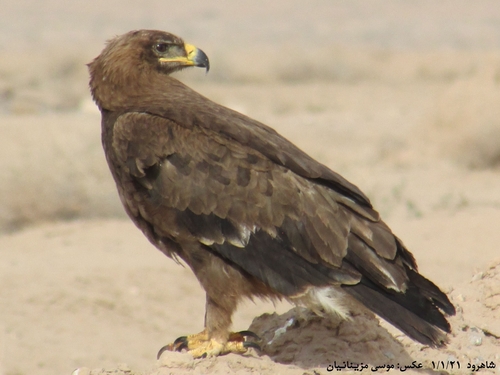
Steppe Eagle (Aquila nipalensis) Steppe Eagle
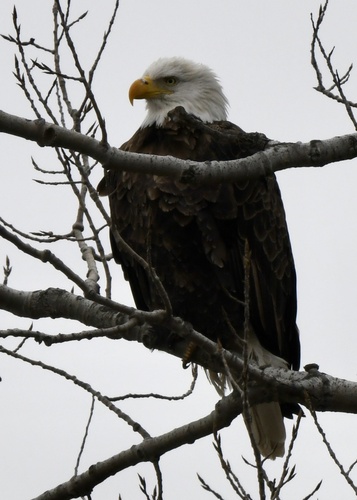
Bald Eagle (Haliaeetus leucocephalus) Bald Eagle

Media

Loading…

In short

The Steppe Eagle and Bald Eagle can be distinguished by their size and plumage differences. The Steppe Eagle is generally smaller with a more uniform brown plumage, while the Bald Eagle is larger with a distinctive white head and tail in adults. Both species have similar habitats and behaviors, but their vocalizations differ.

Identification tips

  1. Look for the white head and tail: Adult Bald Eagles have these features, while Steppe Eagles do not. 2. Consider the habitat: Bald Eagles are near water; Steppe Eagles are in open, dry areas. 3. Listen for calls: Bald Eagles have a recognizable call, unlike the quieter Steppe Eagle. 4. Check size and shape: Bald Eagles are larger with broader wings.

Size

The Bald Eagle is larger than the Steppe Eagle, with a wingspan that can exceed 2 meters, compared to the Steppe Eagle's maximum wingspan of about 1.8 meters.

Plumage

Adult Bald Eagles have a striking white head and tail contrasting with their dark brown body and wings, while Steppe Eagles are uniformly brown with a slightly paler head. Immature Bald Eagles are mottled brown and white, which can cause confusion with Steppe Eagles.

Behaviour

Both species are often seen soaring in the sky, but Bald Eagles are more frequently observed near water bodies as they primarily hunt fish. Steppe Eagles are more terrestrial, often seen in open steppes and grasslands.

Habitat

Bald Eagles are typically found near large bodies of open water with abundant fish, such as lakes, rivers, and coastal regions. Steppe Eagles prefer open landscapes like steppes and semi-deserts, often far from water.

Voice

Bald Eagles have a distinctive, high-pitched whistling call, while Steppe Eagles are generally quieter, with calls that are less frequently heard and not as distinctive.

Submit a better description

Use the same sections as the comparison. Your text is published immediately.

The Steppe Eagle and Bald Eagle can be distinguished by their size and plumage differences. The Steppe Eagle is generally smaller with a more uniform brown plumage, while the Bald Eagle is larger with a distinctive white head and tail in adults. Both species have similar habitats and behaviors, but their vocalizations differ.

  1. Look for the white head and tail: Adult Bald Eagles have these features, while Steppe Eagles do not. 2. Consider the habitat: Bald Eagles are near water; Steppe Eagles are in open, dry areas. 3. Listen for calls: Bald Eagles have a recognizable call, unlike the quieter Steppe Eagle. 4. Check size and shape: Bald Eagles are larger with broader wings.

The Bald Eagle is larger than the Steppe Eagle, with a wingspan that can exceed 2 meters, compared to the Steppe Eagle's maximum wingspan of about 1.8 meters.

Adult Bald Eagles have a striking white head and tail contrasting with their dark brown body and wings, while Steppe Eagles are uniformly brown with a slightly paler head. Immature Bald Eagles are mottled brown and white, which can cause confusion with Steppe Eagles.

Both species are often seen soaring in the sky, but Bald Eagles are more frequently observed near water bodies as they primarily hunt fish. Steppe Eagles are more terrestrial, often seen in open steppes and grasslands.

Bald Eagles are typically found near large bodies of open water with abundant fish, such as lakes, rivers, and coastal regions. Steppe Eagles prefer open landscapes like steppes and semi-deserts, often far from water.

Bald Eagles have a distinctive, high-pitched whistling call, while Steppe Eagles are generally quieter, with calls that are less frequently heard and not as distinctive.

Discard your changes?

You have unsaved edits. If you leave now, those changes will be lost.

Steppe Eagle · Bald Eagle · My Tricky Birds