Birdr

Stilt Sandpiper vs Temminck's Stint

Calidris himantopus versus Calidris temminckii

Play a quiz with Stilt Sandpiper and Temminck's Stint
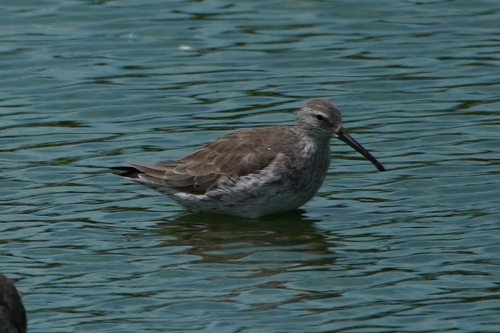
Stilt Sandpiper (Calidris himantopus) Stilt Sandpiper
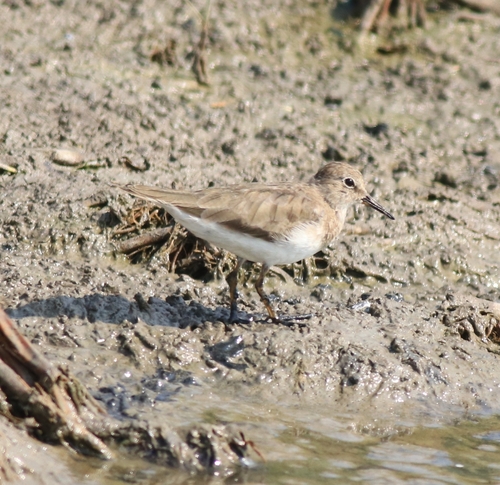
Temminck's Stint (Calidris temminckii) Temminck's Stint

Media

Loading…

In short

The Stilt Sandpiper and Temminck's Stint can be distinguished by their size and habitat preferences. Stilt Sandpipers are larger and prefer foraging in deeper water, while Temminck's Stints are smaller and often found in shallower habitats. Both species have distinct plumage patterns that aid in identification.

Identification tips

1. Size and Structure: Look for the larger size and longer legs of the Stilt Sandpiper. 2. Plumage: Note the white supercilium and uniform grey-brown plumage of the Stilt Sandpiper versus the streaked breast and white rump of the Temminck's Stint. 3. Habitat: Observe the habitat; Stilt Sandpipers prefer deeper water, while Temminck's Stints are found in shallower areas. 4. Behavior: Stilt Sandpipers forage in deeper water, which can be a useful behavioral clue.

Size

Stilt Sandpiper is larger, measuring around 19-24 cm in length, while Temminck's Stint is smaller, at 13-15 cm.

Plumage

Stilt Sandpipers have a more uniform grey-brown plumage with a white supercilium and long legs. Temminck's Stints have a heavily streaked brown breast, white chin, throat, and belly, and distinctive broad white sides to the tail and rump.

Behaviour

Stilt Sandpipers forage in belly-deep water, often in pools or lagoons, while Temminck's Stints are more likely to be seen pecking at prey in shallower waters or mudflats.

Habitat

Stilt Sandpipers prefer pools or lagoons, avoiding tidal mudflats, whereas Temminck's Stints are found in a variety of habitats, including coastal areas and inland wetlands.

Voice

Temminck's Stint gives a short, hard 'tirr' or 'trrrrit' call, and a trilling display flight song, while Stilt Sandpiper vocalizations are less documented in the provided sources.

Submit a better description

Use the same sections as the comparison. Your text is published immediately.

The Stilt Sandpiper and Temminck's Stint can be distinguished by their size and habitat preferences. Stilt Sandpipers are larger and prefer foraging in deeper water, while Temminck's Stints are smaller and often found in shallower habitats. Both species have distinct plumage patterns that aid in identification.

1. Size and Structure: Look for the larger size and longer legs of the Stilt Sandpiper. 2. Plumage: Note the white supercilium and uniform grey-brown plumage of the Stilt Sandpiper versus the streaked breast and white rump of the Temminck's Stint. 3. Habitat: Observe the habitat; Stilt Sandpipers prefer deeper water, while Temminck's Stints are found in shallower areas. 4. Behavior: Stilt Sandpipers forage in deeper water, which can be a useful behavioral clue.

Stilt Sandpiper is larger, measuring around 19-24 cm in length, while Temminck's Stint is smaller, at 13-15 cm.

Stilt Sandpipers have a more uniform grey-brown plumage with a white supercilium and long legs. Temminck's Stints have a heavily streaked brown breast, white chin, throat, and belly, and distinctive broad white sides to the tail and rump.

Stilt Sandpipers forage in belly-deep water, often in pools or lagoons, while Temminck's Stints are more likely to be seen pecking at prey in shallower waters or mudflats.

Stilt Sandpipers prefer pools or lagoons, avoiding tidal mudflats, whereas Temminck's Stints are found in a variety of habitats, including coastal areas and inland wetlands.

Temminck's Stint gives a short, hard 'tirr' or 'trrrrit' call, and a trilling display flight song, while Stilt Sandpiper vocalizations are less documented in the provided sources.

Discard your changes?

You have unsaved edits. If you leave now, those changes will be lost.

Stilt Sandpiper · Temminck's Stint · My Tricky Birds