Birdr

Stock Dove vs Common Woodpigeon

Columba oenas versus Columba palumbus

Play a quiz with Stock Dove and Common Woodpigeon
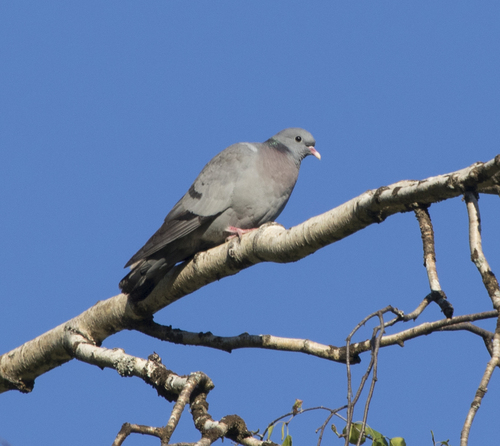
Stock Dove (Columba oenas) Stock Dove
Common Woodpigeon (Columba palumbus) Common Woodpigeon

Media

Loading…

In short

To differentiate between the Stock Dove and the Common Woodpigeon, focus on the presence of white markings. The Common Woodpigeon displays prominent white neck and shoulder patches, especially visible in flight, which are absent in the Stock Dove. Additionally, the Stock Dove is generally smaller and lacks the pinkish breast flush of the Woodpigeon.

Identification tips

  1. Look for white neck and shoulder patches on the Common Woodpigeon, especially in flight. 2. Note the size difference; the Stock Dove is smaller and more compact. 3. Observe the breast color; the Common Woodpigeon has a pinkish flush, absent in the Stock Dove. 4. Listen for the Common Woodpigeon's distinctive cooing song, which is not present in the Stock Dove.

Size

The Stock Dove is smaller and more compact compared to the larger and bulkier Common Woodpigeon.

Plumage

The Common Woodpigeon has distinct white patches on its neck and shoulders, and a pinkish flush on the breast. The Stock Dove lacks these white patches and has a more uniform grey plumage.

Habitat

Both species can be found in similar habitats, but the Common Woodpigeon is more often seen in urban areas and is more abundant across a wider range.

Voice

The Common Woodpigeon is known for its distinctive cooing song, 'rhu-rhoooh-rhoo-rhu-rhu,' which is a familiar sound in Europe. The Stock Dove's vocalizations are less prominent and not as easily recognized.

Submit a better description

Use the same sections as the comparison. Your text is published immediately.

To differentiate between the Stock Dove and the Common Woodpigeon, focus on the presence of white markings. The Common Woodpigeon displays prominent white neck and shoulder patches, especially visible in flight, which are absent in the Stock Dove. Additionally, the Stock Dove is generally smaller and lacks the pinkish breast flush of the Woodpigeon.

  1. Look for white neck and shoulder patches on the Common Woodpigeon, especially in flight. 2. Note the size difference; the Stock Dove is smaller and more compact. 3. Observe the breast color; the Common Woodpigeon has a pinkish flush, absent in the Stock Dove. 4. Listen for the Common Woodpigeon's distinctive cooing song, which is not present in the Stock Dove.

The Stock Dove is smaller and more compact compared to the larger and bulkier Common Woodpigeon.

The Common Woodpigeon has distinct white patches on its neck and shoulders, and a pinkish flush on the breast. The Stock Dove lacks these white patches and has a more uniform grey plumage.

Both species can be found in similar habitats, but the Common Woodpigeon is more often seen in urban areas and is more abundant across a wider range.

The Common Woodpigeon is known for its distinctive cooing song, 'rhu-rhoooh-rhoo-rhu-rhu,' which is a familiar sound in Europe. The Stock Dove's vocalizations are less prominent and not as easily recognized.

Discard your changes?

You have unsaved edits. If you leave now, those changes will be lost.

Stock Dove · Common Woodpigeon · My Tricky Birds