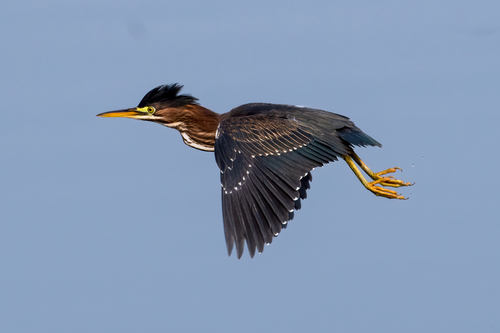
Striated Heron vs Green Heron
Butorides striata versus Butorides virescens
Play a quiz with Striated Heron and Green Heron
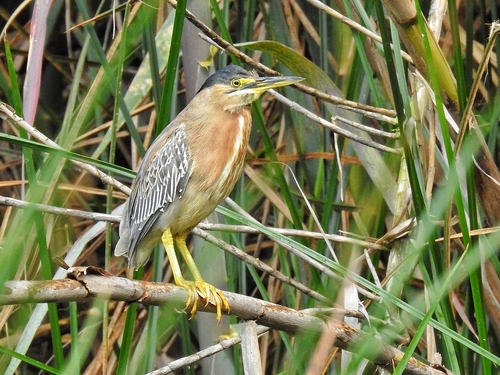
Striated Heron
Green Heron
In short
The Green Heron (Butorides virescens) and the Striated Heron (Butorides striata) are closely related species with overlapping habitats and foraging behaviors. Key differences lie in their geographic distribution, subtle plumage variations, and some behavioral traits. Notably, the Green Heron is primarily found in North America, while the Striated Heron is widespread in Africa, Asia, and Oceania.
Identification tips
- Birds of the World Similar-Species Diagnostics:
-
"It is very similar in appearance to, and also very closely related to, the Green Heron (Butorides virescens) of North and Central America... Together, these have previously been considered a single species." (From the Striated Heron section)
-
AI Field Diagnostics:
- Size & Shape: Pay attention to the stockiness of the Striated Heron compared to the more slender Green Heron. The Green Heron may also appear slightly smaller due to its more elongated neck when in a relaxed stance.
- Plumage Patterns: Look for the vibrant green and chestnut colors of the Green Heron, especially on the neck and back. If the heron appears more uniformly gray with clear streaks, it is likely a Striated Heron.
- Behavior: If you observe a heron using tools (like dropping bait to catch fish), you are likely seeing a Green Heron. The Striated Heron will be more active and less patient, often moving through denser vegetation.
- Habitat Preferences: While both may inhabit similar areas, the Green Heron is more likely to be found in North American ponds and marshes, while the Striated Heron can be found along a wider variety of water bodies globally.
- Vocalization: Listen for the harsher, scolding calls of the Green Heron versus the softer, more varied sounds of the Striated Heron.
Using these identification tips, birdwatchers can more effectively distinguish between the Green Heron and the Striated Heron in the field.
Size
- Green Heron: Typically measures about 16-18 inches (40-46 cm) in length with a wingspan of approximately 26-29 inches (66-74 cm).
- Striated Heron: Similar in length, ranging from 16-20 inches (40-51 cm), but can appear more compact due to a stockier build.
Plumage
- Green Heron: Characterized by dark greenish-black upperparts with a striking chestnut-brown neck and a white throat, featuring streaks on the sides. The belly is typically pale.
- Striated Heron: Exhibits more overall grayish plumage with a white throat and neck streaks, and a more pronounced striped pattern across the chest and neck. The upperparts are less vibrant and appear more uniform.
Behaviour
- Green Heron: Known for its unique fishing technique using tools, such as bait to attract fish. It often forages alone, either standing still or stalking prey in shallow waters.
- Striated Heron: Also forages alone but may employ a broader range of techniques, including fishing in dense vegetation and more active pursuit of prey.
Habitat
- Green Heron: Prefers freshwater habitats such as ponds, marshes, and lakes, often near wooded areas.
- Striated Heron: More adaptable, found along rivers, ponds, swamps, and coastal areas across various continents, often in dense vegetation.
Voice
- Green Heron: Produces a variety of calls, typically a harsh squawk when alarmed.
- Striated Heron: Has a similar vocalization but can often be more subdued and varied, often heard as a soft 'quack' or croaking sound.