
Striated Heron vs Squacco Heron
Butorides striata versus Ardeola ralloides
Play a quiz with Striated Heron and Squacco Heron
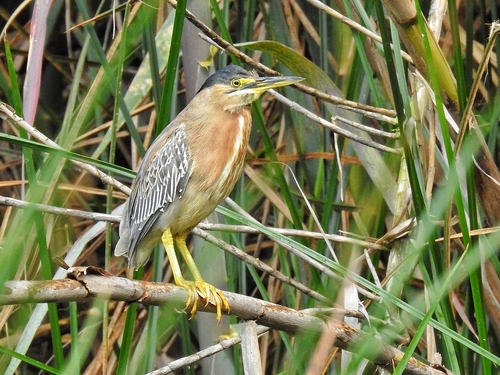 Striated Heron
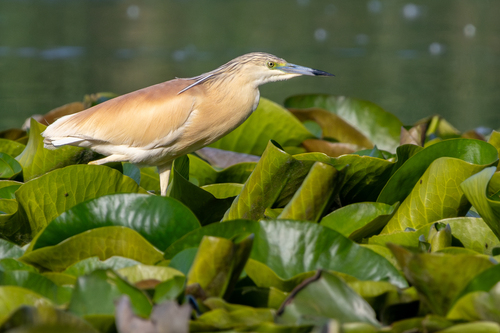 Squacco Heron
In short
The most reliable field mark to separate Striated Heron from Squacco Heron is the overall coloration and wing appearance in flight: Squacco Heron transforms from a streaky, buff-brown bird when perched to strikingly white-winged in flight, while Striated Heron remains dark and blue-grey above with no such white effect. Juveniles of Striated Heron are heavily streaked below and browner above, but never show the white wings of Squacco. Structurally, Squacco Heron is stockier with a shorter, thicker bill and neck, while Striated Heron is more slender and longer-necked. Both are small herons, but Squacco is heavier and broader-winged. Habitat overlap is possible, but Striated Heron is much more tied to mangroves and is largely sedentary, while Squacco is a migrant of marshy wetlands.
Identification tips
- White wings in flight (all ages): Squacco Heron shows bright white wings in flight, contrasting with its buff-brown body. Striated Heron never shows white wings; its upperwing remains blue-grey or dark at all ages.
- Perched coloration (adults): Striated Heron is blue-grey above with a black cap and variable underparts (grey, pinkish, or orangey). Squacco Heron is buff-brown above with a paler, streaked appearance and lacks the dark cap.
- Juvenile plumage: Juvenile Striated Herons are brown above and heavily streaked below, but their wings are not white in flight. Juvenile Squacco Herons are tawny with lighter streaking and still show white wings in flight.
- Bill structure: Squacco Heron has a short, thick bill, while Striated Heron has a longer, slimmer bill. This is most obvious when birds are side by side or at close range.
- Neck and body shape: Squacco Heron is stockier with a shorter neck and more compact jizz. Striated Heron is more slender and often appears longer-necked, especially when alert.
- Leg color: Striated Heron has short yellow legs. Squacco Heron's leg color is less distinctive in the notes, but generally appears paler or duller.
- Cap and face pattern: Striated Heron has a black cap and a dark line from bill to under the eye. Squacco Heron lacks a black cap and has a more uniform head color.
- Underpart color: Striated Heron's underparts are variable but can be mid-grey, pinkish, or orangey. Squacco Heron is paler and less saturated below.
- Behavior when flushed: Squacco Heron often flushes with a burst of white wings and may join small groups. Striated Heron is more secretive, often staying low and close to cover.
- Habitat preference: Striated Heron is more likely in mangroves or wooded water edges; Squacco Heron prefers open marshes and wetlands, especially in the Old World.
- Seasonal context: Squacco Heron is migratory and may appear outside breeding range as a vagrant, especially in Africa and occasionally South America. Striated Heron is resident in its range.
- Colony vs solitary: Squacco Heron often nests in small colonies with other waders; Striated Heron is more solitary or in pairs.
- Breeding plumage: In summer, Squacco Heron develops long neck plumes and a more golden-buff back, but this is subtle compared to the white wings in flight.
- Size impression: Squacco Heron is heavier and broader-winged, but this can be subtle unless birds are side by side.
- Common pitfalls: Immature Striated Herons can look streaky and brown like Squacco, but will never show white wings in flight. Always check the upperwing when the bird takes off.
Size
Squacco Heron is heavier (body mass ~288g) and has a broader wingspan (80–92 cm) compared to Striated Heron (body mass 130–250g, wingspan 52–60 cm). Both are similar in length (Striated: 35–48 cm; Squacco: 44–47 cm), but Squacco appears bulkier and stockier, especially when perched. Striated Heron is more slender and compact overall.
Plumage
Juvenile Striated Herons are brown above and heavily streaked below, but their wings remain blue-grey and never appear white in flight. Adult Striated Herons have a blue-grey back and wings, black cap, and variable underparts (grey to pinkish or orangey). In contrast, Squacco Heron (adult and non-breeding) is buff-brown above with lighter streaking and a paler appearance when perched, but in flight, its wings are bright white, creating a dramatic contrast with the rest of the plumage. This white-winged effect in flight is absent in Striated Heron at all ages. In breeding plumage, Squacco Heron develops long neck plumes and a more golden-buff back, but the white wings remain the key flight mark. Juvenile Squacco Herons are also tawny with lighter streaking, but again, the white wings in flight are diagnostic.
Behaviour
Striated Heron is mostly sedentary, often seen alone or in pairs, and is noted for unusual behaviors like using tools or performing odd nest movements. It may be seen skulking along mangrove roots or quietly hunting at water edges. Squacco Heron is more colonial, breeds in small groups, and is migratory, often seen in marshy wetlands. In flight, Squacco Heron is more likely to flush with a burst of white wings, while Striated Heron tends to stay low and close to cover.
Habitat
Striated Heron is closely associated with mangroves and is largely sedentary in South America and the Caribbean. It prefers dense, reedy, or wooded water edges. Squacco Heron breeds in marshy wetlands across southern Europe and the Middle East, and winters in sub-Saharan Africa. It is a migrant and more likely to be found in open freshwater marshes, often in mixed colonies with other waders. Overlap is possible in some wetland habitats, but Striated is more tied to mangroves and wooded water margins.