
Striated Heron vs Western Cattle-Egret
Butorides striata versus Ardea ibis
Play a quiz with Striated Heron and Western Cattle-Egret
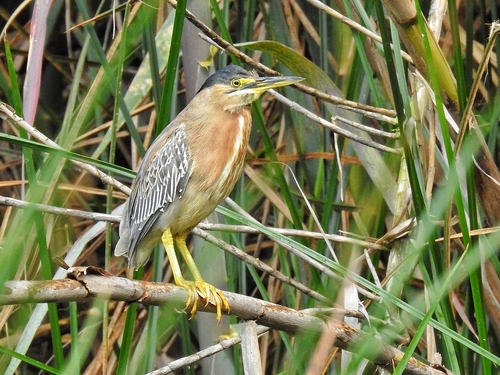 Striated Heron
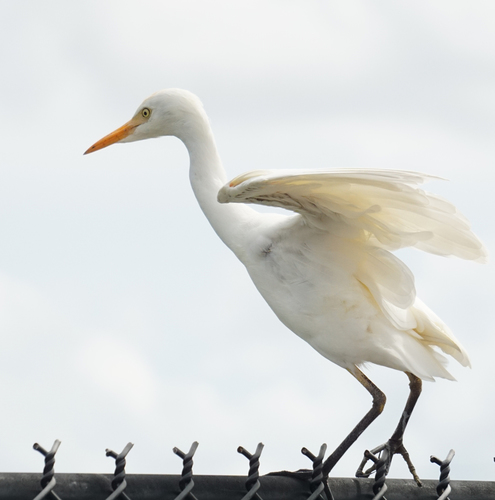 Western Cattle-Egret
In short
The most reliable field mark to separate Striated Heron from Western Cattle-Egret is overall coloration: Striated Heron (adult and juvenile) is always darker, with blue-grey or brown upperparts and variable, often streaked, underparts, while Western Cattle-Egret is mostly white except for buffy plumes in breeding adults. Juvenile Striated Herons are brown above and heavily streaked below, never white, whereas juvenile Cattle-Egrets are plain white with a black bill. Structure also helps: Striated Heron is much smaller and more compact, with a shorter neck and legs, compared to the stocky, long-legged, and thick-necked Cattle-Egret. In flight or at rest, the Cattle-Egret's all-white appearance is distinctive, while Striated Heron always shows darker tones and a black cap.
Identification tips
- Overall Color: Striated Heron is always darker, with blue-grey or brown upperparts and variable, often streaked, underparts; Cattle-Egret is all white except for buffy plumes in breeding adults.
- Juvenile Plumage: Juvenile Striated Heron is brown above and heavily streaked below, never white; juvenile Cattle-Egret is plain white with a black bill.
- Size: Striated Heron is much smaller and lighter (35–48 cm, 130–250 g) than Cattle-Egret (46–56 cm, 270–512 g).
- Neck and Leg Length: Cattle-Egret has a thick, short neck (but still longer than Striated Heron's) and long legs; Striated Heron is compact, with a short neck and short yellow legs.
- Bill: Striated Heron has a dark bill with a dark line extending from bill to under-eye; Cattle-Egret has a yellow bill (breeding adults may briefly show red bill), and juveniles have a black bill.
- Cap and Face: Adult Striated Heron has a black cap and a dark line from bill to under-eye; Cattle-Egret lacks a dark cap or facial line.
- Breeding Plumes: Only Cattle-Egret develops orange-buff plumes on back, breast, and crown in breeding season; Striated Heron does not.
- Flight Appearance: Cattle-Egret appears all white in flight, with broad wings and a hunched neck; Striated Heron is darker and more compact, with no white upperparts.
- Leg Color: Striated Heron has short yellow legs; Cattle-Egret legs are greyish-yellow (breeding adults briefly red).
- Habitat: Striated Heron is found at water edges, mangroves, or dense wetland vegetation; Cattle-Egret is usually in open fields, pastures, or with livestock, often away from water.
- Behavior: Cattle-Egret is gregarious, often in flocks and following cattle; Striated Heron is solitary or in pairs, skulking near water.
- Perched Posture: Striated Heron sits low and compact; Cattle-Egret stands upright and alert.
- Vocalization: Cattle-Egret is mostly silent except at colonies; Striated Heron calls are not described here.
- Sex Differences: Both species are mostly monomorphic, but male Cattle-Egret is marginally larger with longer breeding plumes.
- Seasonal Change: Cattle-Egret's orange-buff plumes and red bill/legs are only present in breeding season; Striated Heron does not change seasonally.
Size
Striated Heron is significantly smaller, measuring 35–48 cm in length and weighing 130–250 g, with a wingspan of 52–60 cm. Western Cattle-Egret is larger and heavier: 46–56 cm long, 270–512 g, and a wingspan of 88–96 cm. The Cattle-Egret's bulk and longer wings make it appear much more robust and prominent, especially in mixed flocks or when seen alongside livestock.
Plumage
For juveniles and immatures, Striated Heron is brown above with heavy streaking below, never showing extensive white. Juvenile Cattle-Egret is plain white overall, with a black bill and no colored plumes. Adult Striated Heron has blue-grey back and wings, white underparts (sometimes tinged pinkish or orange), a black cap, and a dark line from bill to under-eye; legs are short and yellow. Adult Cattle-Egret is all white in non-breeding plumage, with a yellow bill and greyish-yellow legs; in breeding season, it develops orange-buff plumes on back, breast, and crown, and bill/legs/irises briefly become bright red. There is no season when Striated Heron is all white, nor does Cattle-Egret ever show dark or streaked underparts.
Behaviour
Striated Heron is typically solitary or in pairs, often skulking at water edges, moving slowly and deliberately, sometimes using tools or performing odd nest behaviors. Cattle-Egret is highly gregarious, often seen in flocks, especially around cattle or other large mammals, and forages mostly on land, walking upright in open fields. Cattle-Egrets nest colonially, sometimes with other waterbirds, while Striated Heron is more secretive. In flight, Cattle-Egret shows a hunched neck and steady, direct flight; Striated Heron appears more compact and may fly low over water.
Habitat
Striated Heron is found along water edges, mangroves, and dense wetland vegetation, usually close to cover. Cattle-Egret prefers open fields, pastures, and agricultural land, often far from water, and is strongly associated with grazing animals. While both can be found near water, Cattle-Egret is much more likely in dry, grassy, or agricultural settings, and Striated Heron rarely ventures far from dense cover or water margins.
Voice
Cattle-Egret is mostly silent except for a quiet, throaty 'rick-rack' call at breeding colonies. Striated Heron vocalizations are not described in the provided notes, so voice is not a reliable separator in most field situations.