Birdr

Strickland's Woodpecker vs Arizona Woodpecker

Leuconotopicus stricklandi versus Leuconotopicus arizonae

Play a quiz with Strickland's Woodpecker and Arizona Woodpecker
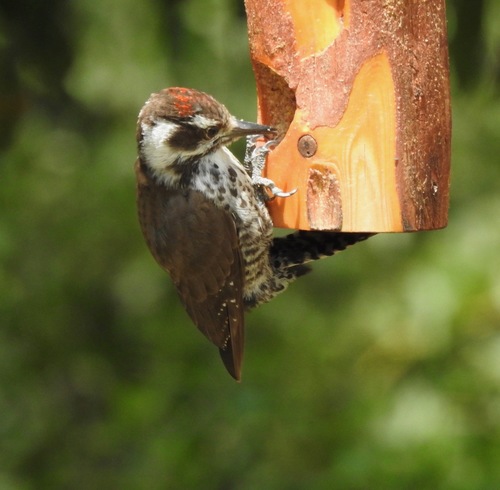
Strickland's Woodpecker (Leuconotopicus stricklandi) Strickland's Woodpecker
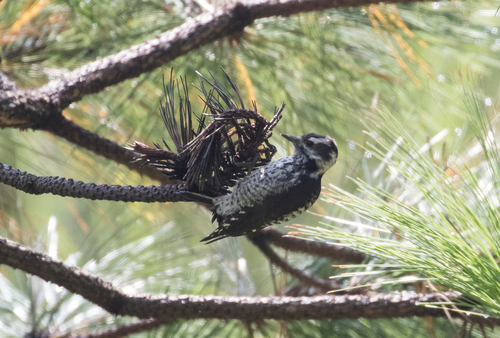
Arizona Woodpecker (Leuconotopicus arizonae) Arizona Woodpecker

Media

Loading…

In short

Strickland's Woodpecker and Arizona Woodpecker are closely related and can be challenging to differentiate in the field. The most reliable field mark is the presence of a red nape patch in male Strickland's Woodpecker, which is absent in Arizona Woodpecker. Both species share similar habitats and behaviors, making plumage details crucial for identification.

Identification tips

Size

Both species are similar in size, with no significant differences noted in field observations.

Plumage

Male Strickland's Woodpecker has a red nape patch, while the Arizona Woodpecker lacks this feature. Females of both species look similar, with no red on the nape. Both have a brownish overall appearance with white spotting on the wings and back.

Behaviour

Both species exhibit typical woodpecker behaviors, such as drumming and cavity excavation, but the Arizona Woodpecker is noted for being more secretive, especially during nesting.

Habitat

Both species inhabit similar environments, often found in mature woodlands with large trees. Habitat overlap makes visual identification more critical.

Voice

Vocalizations are not well-documented for differentiation, and both species have typical woodpecker calls. Observers should focus on visual cues.

Submit a better description

Use the same sections as the comparison. Your text is published immediately.

Strickland's Woodpecker and Arizona Woodpecker are closely related and can be challenging to differentiate in the field. The most reliable field mark is the presence of a red nape patch in male Strickland's Woodpecker, which is absent in Arizona Woodpecker. Both species share similar habitats and behaviors, making plumage details crucial for identification.

  • Look for the red nape patch in males to identify Strickland's Woodpecker.
  • Note the overall brownish coloration and white spotting, which are similar in both species.
  • Pay attention to behavior; Arizona Woodpecker may be more secretive.
  • Use habitat context cautiously, as both species share similar environments.

Both species are similar in size, with no significant differences noted in field observations.

Male Strickland's Woodpecker has a red nape patch, while the Arizona Woodpecker lacks this feature. Females of both species look similar, with no red on the nape. Both have a brownish overall appearance with white spotting on the wings and back.

Both species exhibit typical woodpecker behaviors, such as drumming and cavity excavation, but the Arizona Woodpecker is noted for being more secretive, especially during nesting.

Both species inhabit similar environments, often found in mature woodlands with large trees. Habitat overlap makes visual identification more critical.

Vocalizations are not well-documented for differentiation, and both species have typical woodpecker calls. Observers should focus on visual cues.

Discard your changes?

You have unsaved edits. If you leave now, those changes will be lost.

Strickland's Woodpecker · Arizona Woodpecker · My Tricky Birds