Birdr

Stripe-crowned Spinetail vs Bay-capped Wren-Spinetail

Cranioleuca pyrrhophia versus Spartonoica maluroides

Play a quiz with Stripe-crowned Spinetail and Bay-capped Wren-Spinetail
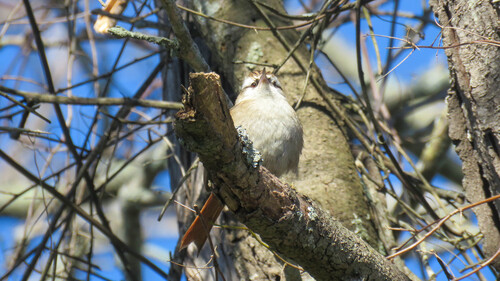
Stripe-crowned Spinetail (Cranioleuca pyrrhophia) Stripe-crowned Spinetail
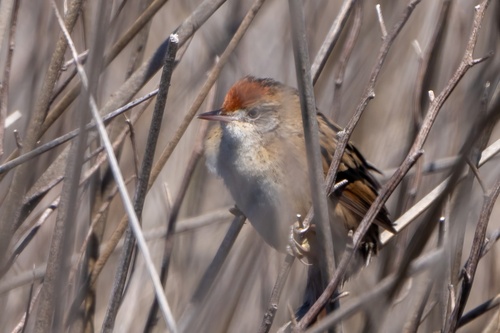
Bay-capped Wren-Spinetail (Spartonoica maluroides) Bay-capped Wren-Spinetail

Media

Loading…

In short

The Stripe-crowned Spinetail and Bay-capped Wren-Spinetail are both small, active birds found in South America, but they can be distinguished by their habitat preferences and vocalizations. The Stripe-crowned Spinetail is often found in dense shrubby trees, while the Bay-capped Wren-Spinetail prefers marshy areas. Listen for the Stripe-crowned's loud, trilled notes, which differ from the Bay-capped's more subdued calls.

Identification tips

1. Habitat: Look for Stripe-crowned Spinetails in dense, shrubby trees and Bay-capped Wren-Spinetails in marshes. 2. Crown Markings: Check for a stripe on the crown of the Stripe-crowned Spinetail. 3. Vocalization: Listen for the loud, trilled notes of the Stripe-crowned Spinetail, which are different from the Bay-capped's calls.

Size

Both species are similar in size, typical of small spinetails.

Plumage

The Stripe-crowned Spinetail has a distinctive stripe on its crown, while the Bay-capped Wren-Spinetail has a more uniform cap with a subtle bay color.

Behaviour

Stripe-crowned Spinetails are often seen in pairs or family groups, foraging in the mid-story of trees. Bay-capped Wren-Spinetails are more likely to be seen alone or in pairs, often skulking in marsh vegetation.

Habitat

Stripe-crowned Spinetails inhabit dense shrubby trees in dry forests, avoiding open areas. In contrast, Bay-capped Wren-Spinetails are found in marshes and wetland areas.

Voice

The Stripe-crowned Spinetail has a loud series of trilled notes, while the Bay-capped Wren-Spinetail's calls are less prominent and not as trilled.

Submit a better description

Use the same sections as the comparison. Your text is published immediately.

The Stripe-crowned Spinetail and Bay-capped Wren-Spinetail are both small, active birds found in South America, but they can be distinguished by their habitat preferences and vocalizations. The Stripe-crowned Spinetail is often found in dense shrubby trees, while the Bay-capped Wren-Spinetail prefers marshy areas. Listen for the Stripe-crowned's loud, trilled notes, which differ from the Bay-capped's more subdued calls.

1. Habitat: Look for Stripe-crowned Spinetails in dense, shrubby trees and Bay-capped Wren-Spinetails in marshes. 2. Crown Markings: Check for a stripe on the crown of the Stripe-crowned Spinetail. 3. Vocalization: Listen for the loud, trilled notes of the Stripe-crowned Spinetail, which are different from the Bay-capped's calls.

Both species are similar in size, typical of small spinetails.

The Stripe-crowned Spinetail has a distinctive stripe on its crown, while the Bay-capped Wren-Spinetail has a more uniform cap with a subtle bay color.

Stripe-crowned Spinetails are often seen in pairs or family groups, foraging in the mid-story of trees. Bay-capped Wren-Spinetails are more likely to be seen alone or in pairs, often skulking in marsh vegetation.

Stripe-crowned Spinetails inhabit dense shrubby trees in dry forests, avoiding open areas. In contrast, Bay-capped Wren-Spinetails are found in marshes and wetland areas.

The Stripe-crowned Spinetail has a loud series of trilled notes, while the Bay-capped Wren-Spinetail's calls are less prominent and not as trilled.

Discard your changes?

You have unsaved edits. If you leave now, those changes will be lost.

Stripe-crowned Spinetail · Bay-capped Wren-Spinetail · My Tricky Birds