
Stripe-throated Jery vs Subdesert Brush-Warbler
Neomixis striatigula versus Nesillas lantzii
Play a quiz with Stripe-throated Jery and Subdesert Brush-Warbler
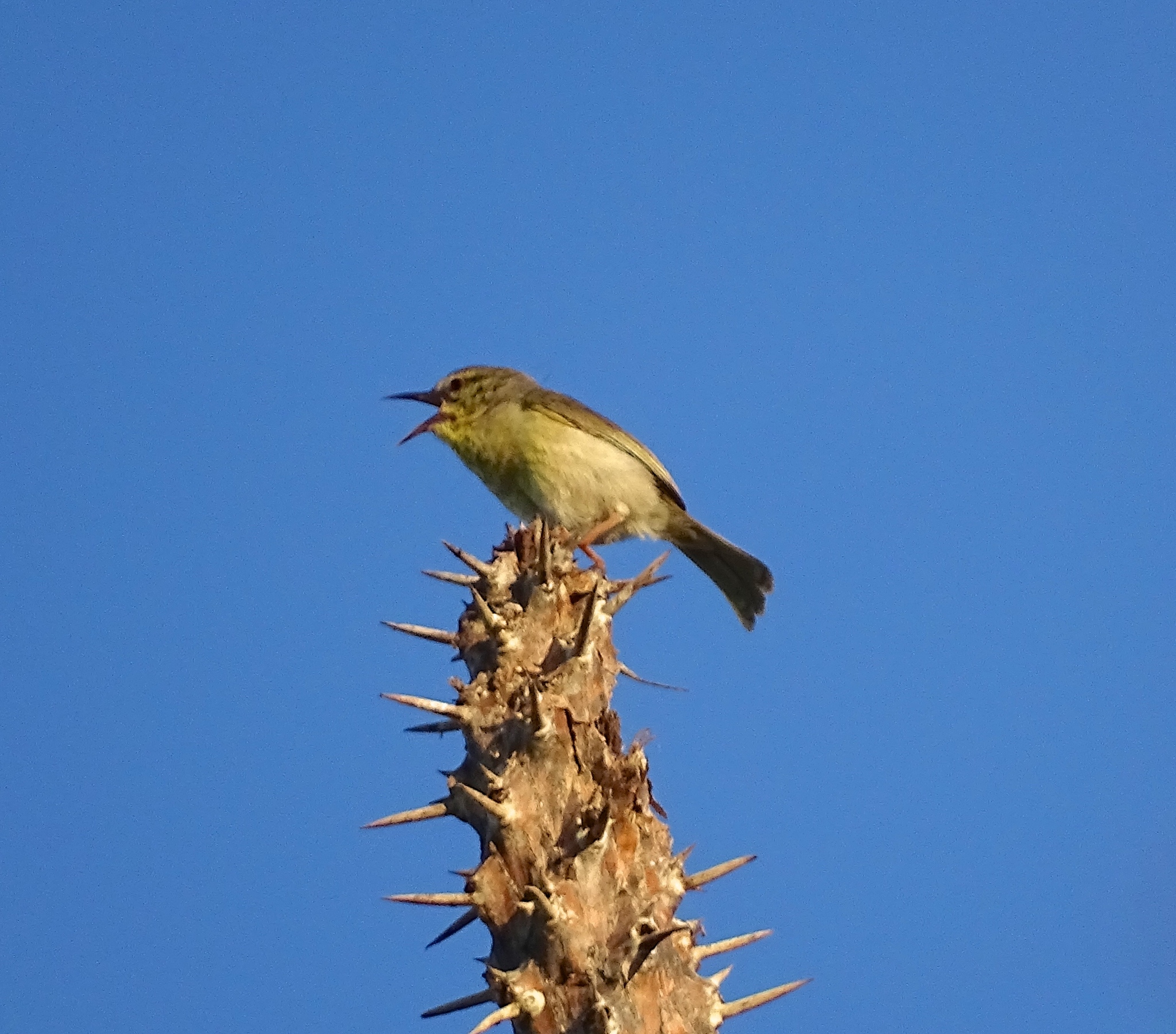 Stripe-throated Jery
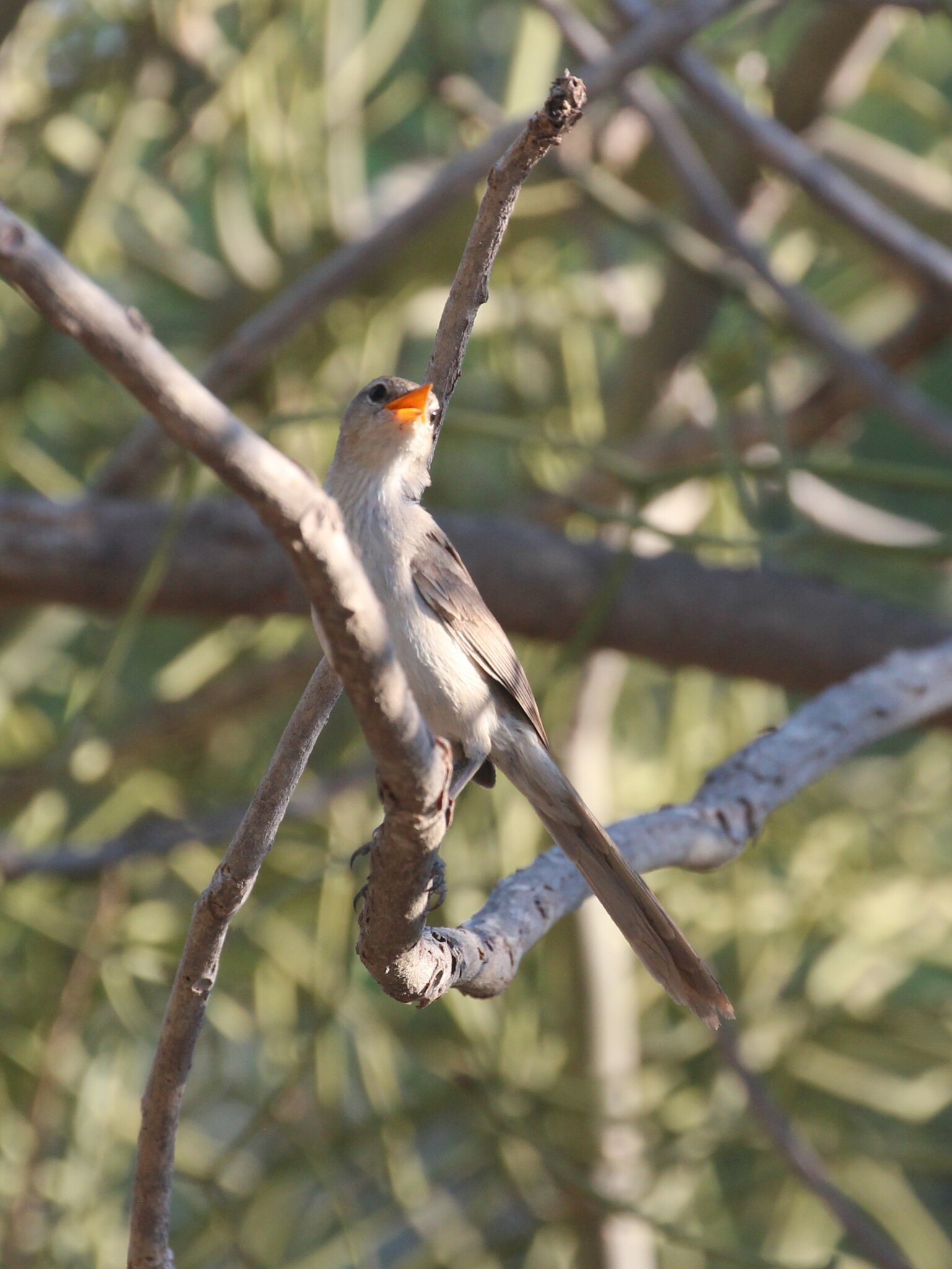 Subdesert Brush-Warbler
In short
The Stripe-throated Jery and the Subdesert Brush-Warbler can be distinguished by their throat markings and habitat preferences. The Jery has distinctive striped throat markings, while the Brush-Warbler lacks these and is generally more uniform in appearance. Habitat is also a key factor, as the Jery is found in more forested areas compared to the arid environments preferred by the Brush-Warbler.
Identification tips
- Look for striped throat markings on the Jery. 2. Note habitat: forested areas suggest Jery, while arid scrub indicates Brush-Warbler. 3. Listen for song differences: musical and varied for Jery, simpler for Brush-Warbler.
Size
Both species are small passerines, but the Stripe-throated Jery is typically more compact than the slightly larger Subdesert Brush-Warbler.
Plumage
The Stripe-throated Jery features a striped throat and a more contrasting plumage with olive tones, whereas the Subdesert Brush-Warbler has a more uniform, plain brown appearance without throat stripes.
Behaviour
The Stripe-throated Jery is often seen actively foraging in the mid to upper levels of forest canopies, while the Subdesert Brush-Warbler tends to stay lower in scrubby, arid habitats.
Habitat
Stripe-throated Jerys are typically found in forested areas, whereas Subdesert Brush-Warblers prefer dry, scrubby environments.
Voice
Vocalizations differ, with the Stripe-throated Jery having a more varied and musical song compared to the simpler, repetitive calls of the Subdesert Brush-Warbler.
Stripe-throated Jery · Subdesert Brush-Warbler · My Tricky Birds