Birdr

Subtropical Pygmy-Owl vs Central American Pygmy-Owl

Glaucidium parkeri versus Glaucidium griseiceps

Play a quiz with Subtropical Pygmy-Owl and Central American Pygmy-Owl
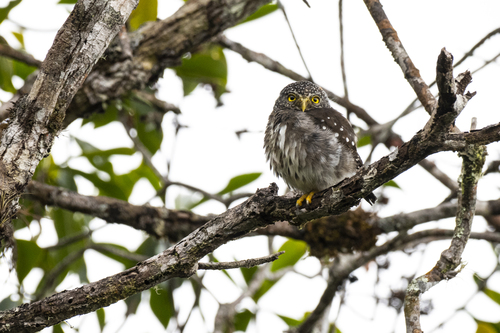
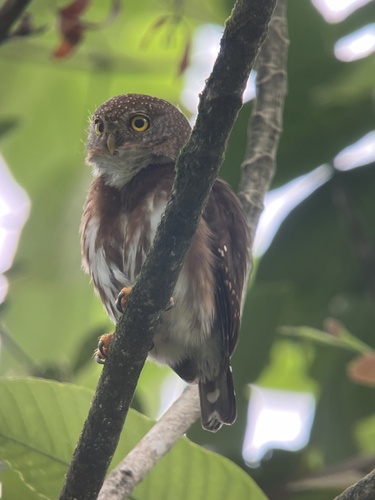
Subtropical Pygmy-Owl (Glaucidium parkeri) Subtropical Pygmy-Owl
Central American Pygmy-Owl (Glaucidium griseiceps) Central American Pygmy-Owl

Media

Loading…

In short

The Subtropical Pygmy-Owl and the Central American Pygmy-Owl are two small owls that can be difficult to distinguish in the field. The most reliable field mark is their vocalization, with the Subtropical Pygmy-Owl having a unique three-noted call. Structurally, both species are similar, but subtle differences in plumage and habitat preferences can aid identification.

Identification tips

  1. Listen for vocalizations: The Subtropical Pygmy-Owl's three-noted call is distinctive. 2. Consider habitat: While not definitive, the Subtropical Pygmy-Owl prefers subtropical forests. 3. Observe plumage: Subtle differences in streaking and tone may help but are unreliable. 4. Note behavior: Both species are diurnal and may be seen perching openly.

Size

Both species are small owls with similar overall size and structure.

Plumage

Plumage differences are subtle; both species have similar coloration with brownish tones and fine streaking. Look for slight variations in the intensity of streaking and overall color tone, but these are not always reliable.

Behaviour

Both species exhibit typical pygmy-owl behavior, such as being active during the day and perching openly.

Habitat

The Subtropical Pygmy-Owl is typically found in subtropical forests, while the Central American Pygmy-Owl is more associated with lowland and foothill forests. Habitat overlap can occur, so this is not a definitive mark.

Voice

The Subtropical Pygmy-Owl has a distinctive three-noted call, which is a key differentiator from the Central American Pygmy-Owl, whose call is different but not specified here.

Submit a better description

Use the same sections as the comparison. Your text is published immediately.

The Subtropical Pygmy-Owl and the Central American Pygmy-Owl are two small owls that can be difficult to distinguish in the field. The most reliable field mark is their vocalization, with the Subtropical Pygmy-Owl having a unique three-noted call. Structurally, both species are similar, but subtle differences in plumage and habitat preferences can aid identification.

  1. Listen for vocalizations: The Subtropical Pygmy-Owl's three-noted call is distinctive. 2. Consider habitat: While not definitive, the Subtropical Pygmy-Owl prefers subtropical forests. 3. Observe plumage: Subtle differences in streaking and tone may help but are unreliable. 4. Note behavior: Both species are diurnal and may be seen perching openly.

Both species are small owls with similar overall size and structure.

Plumage differences are subtle; both species have similar coloration with brownish tones and fine streaking. Look for slight variations in the intensity of streaking and overall color tone, but these are not always reliable.

Both species exhibit typical pygmy-owl behavior, such as being active during the day and perching openly.

The Subtropical Pygmy-Owl is typically found in subtropical forests, while the Central American Pygmy-Owl is more associated with lowland and foothill forests. Habitat overlap can occur, so this is not a definitive mark.

The Subtropical Pygmy-Owl has a distinctive three-noted call, which is a key differentiator from the Central American Pygmy-Owl, whose call is different but not specified here.

Discard your changes?

You have unsaved edits. If you leave now, those changes will be lost.

Subtropical Pygmy-Owl · Central American Pygmy-Owl · My Tricky Birds