Birdr

Sunda Pygmy Woodpecker vs Rufous Woodpecker

Yungipicus moluccensis versus Micropternus brachyurus

Play a quiz with Sunda Pygmy Woodpecker and Rufous Woodpecker
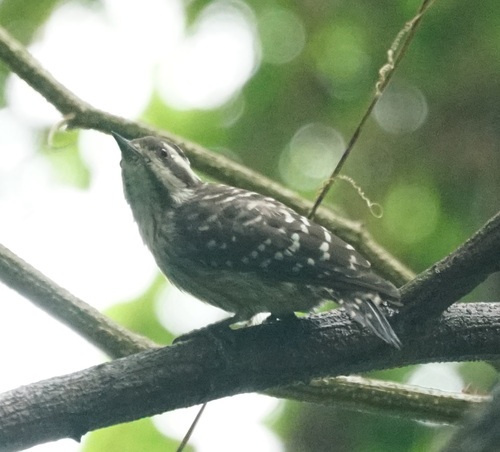
Sunda Pygmy Woodpecker (Yungipicus moluccensis) Sunda Pygmy Woodpecker
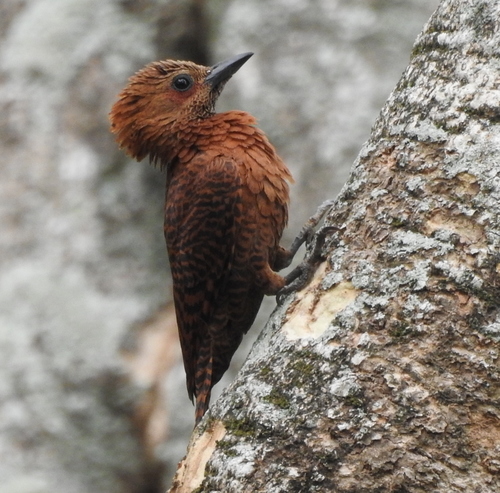
Rufous Woodpecker (Micropternus brachyurus) Rufous Woodpecker

Media

Loading…

In short

The Sunda Pygmy Woodpecker and Rufous Woodpecker differ primarily in size and plumage. The Sunda Pygmy Woodpecker is smaller and has a more contrasting plumage with distinct markings, while the Rufous Woodpecker is larger with a more uniform rufous coloration. These differences are key for identification in the field.

Identification tips

  1. Size: Note the smaller size of the Sunda Pygmy Woodpecker compared to the Rufous Woodpecker. 2. Plumage: Look for the contrasting barred and streaked plumage of the Sunda Pygmy Woodpecker versus the uniform rufous of the Rufous Woodpecker. 3. Habitat: Consider the habitat, with the Sunda Pygmy Woodpecker in more open wooded areas and the Rufous Woodpecker in denser forests. 4. Behavior: Observe foraging behavior, as the Rufous Woodpecker may be seen foraging on the ground more often.

Size

The Sunda Pygmy Woodpecker is notably smaller than the Rufous Woodpecker.

Plumage

The Sunda Pygmy Woodpecker has a more contrasting plumage with a barred back and wings, and a white underside with streaks. In contrast, the Rufous Woodpecker has a more uniform rufous coloration across its body, lacking the distinct barring and streaking.

Behaviour

Both species exhibit typical woodpecker behavior, such as climbing tree trunks and branches, but the Rufous Woodpecker may be more likely to forage on the ground.

Habitat

The Sunda Pygmy Woodpecker is often found in a variety of wooded habitats, including mangroves and plantations, while the Rufous Woodpecker prefers dense forests and bamboo thickets.

Voice

The vocalizations of these species are not well-documented in the notes provided, but they may differ in tone and pattern. Observers should listen for differences in calls if possible.

Submit a better description

Use the same sections as the comparison. Your text is published immediately.

The Sunda Pygmy Woodpecker and Rufous Woodpecker differ primarily in size and plumage. The Sunda Pygmy Woodpecker is smaller and has a more contrasting plumage with distinct markings, while the Rufous Woodpecker is larger with a more uniform rufous coloration. These differences are key for identification in the field.

  1. Size: Note the smaller size of the Sunda Pygmy Woodpecker compared to the Rufous Woodpecker. 2. Plumage: Look for the contrasting barred and streaked plumage of the Sunda Pygmy Woodpecker versus the uniform rufous of the Rufous Woodpecker. 3. Habitat: Consider the habitat, with the Sunda Pygmy Woodpecker in more open wooded areas and the Rufous Woodpecker in denser forests. 4. Behavior: Observe foraging behavior, as the Rufous Woodpecker may be seen foraging on the ground more often.

The Sunda Pygmy Woodpecker is notably smaller than the Rufous Woodpecker.

The Sunda Pygmy Woodpecker has a more contrasting plumage with a barred back and wings, and a white underside with streaks. In contrast, the Rufous Woodpecker has a more uniform rufous coloration across its body, lacking the distinct barring and streaking.

Both species exhibit typical woodpecker behavior, such as climbing tree trunks and branches, but the Rufous Woodpecker may be more likely to forage on the ground.

The Sunda Pygmy Woodpecker is often found in a variety of wooded habitats, including mangroves and plantations, while the Rufous Woodpecker prefers dense forests and bamboo thickets.

The vocalizations of these species are not well-documented in the notes provided, but they may differ in tone and pattern. Observers should listen for differences in calls if possible.

Discard your changes?

You have unsaved edits. If you leave now, those changes will be lost.

Sunda Pygmy Woodpecker · Rufous Woodpecker · My Tricky Birds