Birdr

Swee Waxbill vs Black-faced Waxbill

Coccopygia melanotis versus Brunhilda erythronotos

Play a quiz with Swee Waxbill and Black-faced Waxbill
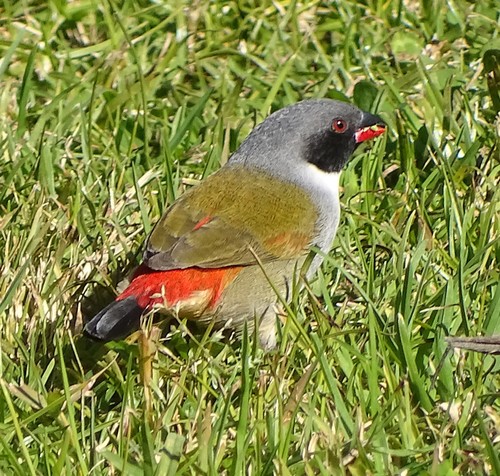
Swee Waxbill (Coccopygia melanotis) Swee Waxbill
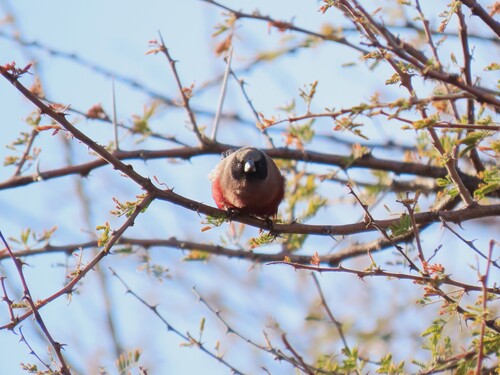
Black-faced Waxbill (Brunhilda erythronotos) Black-faced Waxbill

Media

Loading…

In short

The Swee Waxbill and Black-faced Waxbill are both small, colorful birds of the Estrildidae family, but they differ in size, plumage details, and vocalizations. The Swee Waxbill is smaller and has a distinctive black face with a white throat band, while the Black-faced Waxbill is larger with a more extensive red rump and a finely barred grey body.

Identification tips

  1. Size: Swee Waxbill is noticeably smaller. 2. Face Pattern: Swee Waxbill has a black face with a white throat band; Black-faced Waxbill has a black face with no white band. 3. Rump Color: Both have red rumps, but the Black-faced Waxbill's is more extensive. 4. Body Pattern: Black-faced Waxbill has a finely barred grey body; Swee Waxbill has a more uniform olive-green back. 5. Vocalizations: Listen for the Swee Waxbill's 'swee-swee' versus the Black-faced Waxbill's 'tip-tip'.

Size

The Swee Waxbill is smaller at 9–10 cm, while the Black-faced Waxbill is larger at 11–12 cm.

Plumage

The Swee Waxbill male has a black face with a white band under the throat, olive-green back, and bright red rump. The Black-faced Waxbill male has a dull grey-brown head, black lores to chin, and a deep red rump with a finely barred grey body. Females of both species are duller, but the Swee Waxbill female lacks the black face.

Behaviour

Both species forage in pairs or small groups, but the Black-faced Waxbill may form larger flocks outside the breeding season.

Voice

The Swee Waxbill's call is a soft 'see-see' or 'swee-swee', while the Black-faced Waxbill has a high-pitched 'tip-tip' and a whistled 'tee' or 'tee-eee'.

Submit a better description

Use the same sections as the comparison. Your text is published immediately.

The Swee Waxbill and Black-faced Waxbill are both small, colorful birds of the Estrildidae family, but they differ in size, plumage details, and vocalizations. The Swee Waxbill is smaller and has a distinctive black face with a white throat band, while the Black-faced Waxbill is larger with a more extensive red rump and a finely barred grey body.

  1. Size: Swee Waxbill is noticeably smaller. 2. Face Pattern: Swee Waxbill has a black face with a white throat band; Black-faced Waxbill has a black face with no white band. 3. Rump Color: Both have red rumps, but the Black-faced Waxbill's is more extensive. 4. Body Pattern: Black-faced Waxbill has a finely barred grey body; Swee Waxbill has a more uniform olive-green back. 5. Vocalizations: Listen for the Swee Waxbill's 'swee-swee' versus the Black-faced Waxbill's 'tip-tip'.

The Swee Waxbill is smaller at 9–10 cm, while the Black-faced Waxbill is larger at 11–12 cm.

The Swee Waxbill male has a black face with a white band under the throat, olive-green back, and bright red rump. The Black-faced Waxbill male has a dull grey-brown head, black lores to chin, and a deep red rump with a finely barred grey body. Females of both species are duller, but the Swee Waxbill female lacks the black face.

Both species forage in pairs or small groups, but the Black-faced Waxbill may form larger flocks outside the breeding season.

The Swee Waxbill's call is a soft 'see-see' or 'swee-swee', while the Black-faced Waxbill has a high-pitched 'tip-tip' and a whistled 'tee' or 'tee-eee'.

Discard your changes?

You have unsaved edits. If you leave now, those changes will be lost.

Swee Waxbill · Black-faced Waxbill · My Tricky Birds