Swinhoe's White-eye vs Indian White-eye
Zosterops simplex versus Zosterops palpebrosus
Play a quiz with Swinhoe's White-eye and Indian White-eye
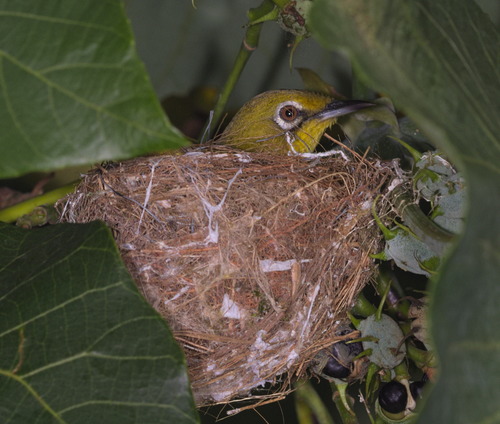
Swinhoe's White-eye
Indian White-eye
In short
Swinhoe's White-eye and Indian White-eye are similar small passerines with overlapping ranges in Southeast Asia. Swinhoe's is generally smaller with a more yellowish head and mantle, while the Indian White-eye has a distinctive bright yellow throat and undertail coverts. Both species are often seen in flocks feeding on nectar and small berries.
Identification tips
- Size: Swinhoe's White-eye is smaller. 2. Plumage: Look for the more yellowish head and mantle in Swinhoe's, and the bright yellow throat and undertail coverts in Indian White-eye. 3. Habitat: Consider the location and habitat type, as Indian White-eye has a broader range. 4. Behavior: Observe feeding behavior at flowering or fruiting trees, common to both species.
Size
Swinhoe's White-eye is distinctly smaller than the Indian White-eye.
Plumage
Swinhoe's White-eye has a slightly more yellowish head and mantle. Indian White-eye is olive yellow above and gray below, with a bright yellow throat and undertail coverts. An all-yellow morph occurs in southern Myanmar and western Thailand.
Behaviour
Both species are frequently observed in flocks, especially at flowering or fruiting trees.
Habitat
Indian White-eye is found in a variety of woodland habitats from mangroves to temperate hill forests across the Indian Subcontinent and Southeast Asia. Swinhoe's White-eye is also found in similar habitats but is less widespread.