Birdr

Tambourine Dove vs Southern Anteater-Chat

Turtur tympanistria versus Myrmecocichla formicivora

Play a quiz with Tambourine Dove and Southern Anteater-Chat
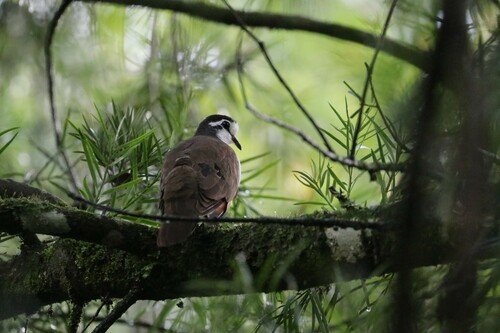
Tambourine Dove (Turtur tympanistria) Tambourine Dove
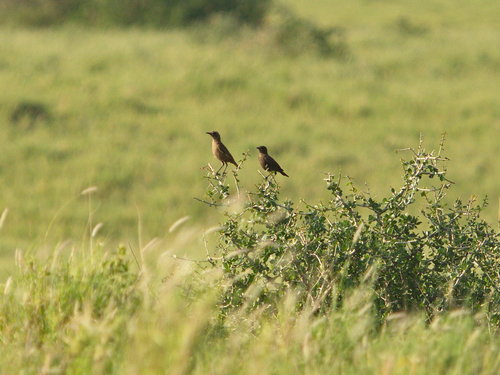
Southern Anteater-Chat (Myrmecocichla formicivora) Southern Anteater-Chat

Media

Loading…

In short

The Tambourine Dove and Southern Anteater-Chat are distinct in both appearance and behavior, with the dove being a small, ground-dwelling bird and the chat a larger, more upright passerine. Key differences include the dove's white underparts and iridescent wing spots versus the chat's dark plumage and terrestrial foraging habits. Observers should focus on habitat and behavior for reliable identification.

Identification tips

  1. Habitat: Check the surrounding environment; doves prefer forested areas, chats are in open spaces. 2. Plumage: Look for the dove's white underparts and iridescent wing spots. 3. Behavior: Note the dove's tendency to walk on trails and the chat's ground-foraging behavior. 4. Size and Shape: Observe the dove's smaller, compact form versus the chat's larger, upright stance.

Size

The Tambourine Dove is smaller and more compact compared to the larger, more upright Southern Anteater-Chat.

Plumage

Tambourine Dove males have white underparts and iridescent wing spots, while females and juveniles have more variegated upperparts. The Southern Anteater-Chat is uniformly dark with no iridescent features.

Behaviour

Tambourine Doves are often seen walking on forest trails, usually alone or in pairs, and may flush quickly when disturbed. Southern Anteater-Chats are more terrestrial, often seen foraging on the ground in open areas.

Habitat

Tambourine Doves are found in forests and adaptable to farmbush and gardens, while Southern Anteater-Chats prefer open habitats like grasslands and savannas.

Submit a better description

Use the same sections as the comparison. Your text is published immediately.

The Tambourine Dove and Southern Anteater-Chat are distinct in both appearance and behavior, with the dove being a small, ground-dwelling bird and the chat a larger, more upright passerine. Key differences include the dove's white underparts and iridescent wing spots versus the chat's dark plumage and terrestrial foraging habits. Observers should focus on habitat and behavior for reliable identification.

  1. Habitat: Check the surrounding environment; doves prefer forested areas, chats are in open spaces. 2. Plumage: Look for the dove's white underparts and iridescent wing spots. 3. Behavior: Note the dove's tendency to walk on trails and the chat's ground-foraging behavior. 4. Size and Shape: Observe the dove's smaller, compact form versus the chat's larger, upright stance.

The Tambourine Dove is smaller and more compact compared to the larger, more upright Southern Anteater-Chat.

Tambourine Dove males have white underparts and iridescent wing spots, while females and juveniles have more variegated upperparts. The Southern Anteater-Chat is uniformly dark with no iridescent features.

Tambourine Doves are often seen walking on forest trails, usually alone or in pairs, and may flush quickly when disturbed. Southern Anteater-Chats are more terrestrial, often seen foraging on the ground in open areas.

Tambourine Doves are found in forests and adaptable to farmbush and gardens, while Southern Anteater-Chats prefer open habitats like grasslands and savannas.

Discard your changes?

You have unsaved edits. If you leave now, those changes will be lost.

Tambourine Dove · Southern Anteater-Chat · My Tricky Birds