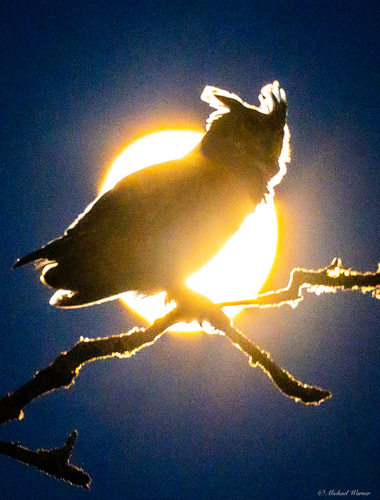
Tawny-browed Owl vs Great Horned Owl
Pulsatrix koeniswaldiana versus Bubo virginianus
Play a quiz with Tawny-browed Owl and Great Horned Owl
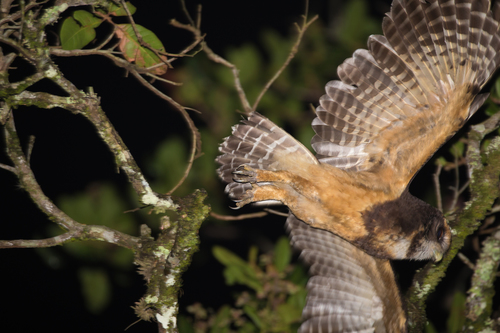
Tawny-browed Owl
Great Horned Owl
In short
The Tawny-browed Owl and Great Horned Owl are both large owls, but they differ significantly in appearance and habitat. The Tawny-browed Owl has distinctive buffish-white facial markings and buffy-orange underparts, while the Great Horned Owl is known for its prominent ear tufts and mottled gray-brown plumage. These differences are most apparent in their respective habitats, with the Tawny-browed Owl found in South American forests and the Great Horned Owl inhabiting a wide range of environments across the Americas.
Identification tips
- Look for the buffish-white facial markings and buffy-orange underparts of the Tawny-browed Owl. 2. Note the prominent ear tufts and mottled gray-brown plumage of the Great Horned Owl. 3. Consider the habitat: Tawny-browed Owls are in South American forests, while Great Horned Owls are found in diverse habitats across the Americas. 4. Listen for vocalizations: Tawny-browed Owls have low, descending calls, whereas Great Horned Owls have deep hoots.
Size
The Great Horned Owl is generally larger and more robust than the Tawny-browed Owl.
Plumage
The Tawny-browed Owl features broad buffish-white facial markings and buffy-orange underparts, contrasting with its dark brown head and upperparts. In contrast, the Great Horned Owl has a mottled gray-brown plumage with prominent ear tufts and lacks the buffy-orange underparts.
Behaviour
The Tawny-browed Owl is primarily nocturnal and often found in pairs that duet. The Great Horned Owl is also nocturnal but is a solitary hunter with a diverse prey base.
Habitat
The Tawny-browed Owl is typically found in South American forests, while the Great Horned Owl inhabits a wide range of environments, from deserts to forests, across the Americas.
Voice
The Tawny-browed Owl produces low, descending calls that accelerate towards the end, often in duets. The Great Horned Owl is known for its deep hooting calls.