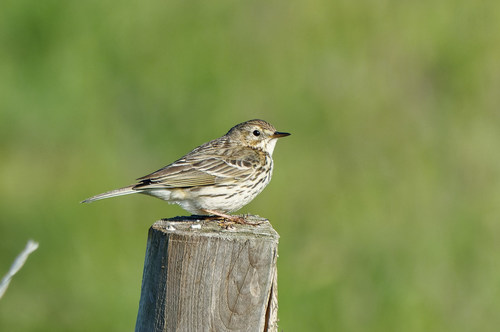
Tawny Pipit vs Meadow Pipit
Anthus campestris versus Anthus pratensis
Play a quiz with Tawny Pipit and Meadow Pipit
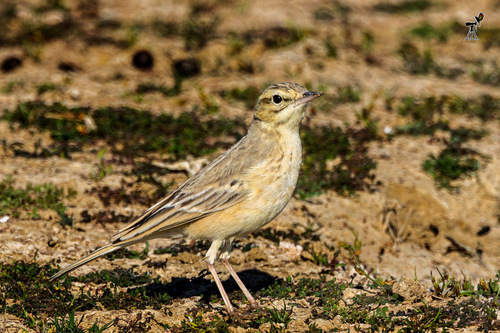
Tawny Pipit
Meadow Pipit
In short
The Meadow Pipit (Anthus pratensis) and the Tawny Pipit (Anthus campestris) are both small, streaked passerines but can be distinguished by their size, plumage patterns, vocalizations, and behavioral traits. The Meadow Pipit is slightly smaller with a more pronounced streaking, while the Tawny Pipit exhibits a more uniform tawny coloration and different vocal characteristics.
Identification tips
- Birds of the World Similar-Species Diagnostics:
-
"Tawny Pipit is more uniformly tawny-brown with less streaking on the underparts and lacks the broad streaks seen in Meadow Pipit. Tawny Pipit also has a more distinct pale eye stripe and generally a bulkier appearance" (source: Birds of the World).
-
AI Field Diagnostics:
- Size and Shape: When observing these pipits, note that the Tawny Pipit may appear bulkier and heavier than the Meadow Pipit. The Meadow Pipit is generally more slender.
- Plumage Patterns: Look for the distinctive streaking on the Meadow Pipit, particularly on the flanks and throat. If the bird appears more uniformly buff or tawny, it is likely a Tawny Pipit. The Meadow Pipit's olive or greenish wing edges and two wingbars are also distinct features.
- Behavior: The Meadow Pipit is more likely to be found in flocks foraging in shorter vegetated areas, while the Tawny Pipit prefers open fields and is often seen alone or in pairs. If the bird exhibits a longer, more dynamic flight display, it is likely a Tawny Pipit.
- Vocalization: If you hear a complex series of notes that rises in pitch, it is likely a Meadow Pipit. In contrast, a simpler, melodic tune or a sharp call may indicate a Tawny Pipit.
By paying attention to these distinguishing characteristics, birdwatchers can effectively differentiate between the Meadow and Tawny Pipits in the field.
Size
- Meadow Pipit: Measures approximately 14.5–15 cm in length and weighs between 14.5–22 g, with males averaging 18.6 g and females averaging 19.5 g.
- Tawny Pipit: Also around 14.5–15 cm but tends to be slightly bulkier and heavier, typically weighing between 20–30 g.
Plumage
- Meadow Pipit: Exhibits a streaked appearance with broad brownish-black streaks on the head, mantle, scapulars, and back. The underparts are whitish to greyish or yellowish-buff with streaking on the throat and flanks. The wings are darker with olive or greenish edges and two wingbars.
- Tawny Pipit: Has a more uniform tawny-brown coloration overall with less pronounced streaking. The underparts are also buffy but often lack the strong streaking found in the Meadow Pipit. The Tawny Pipit has a more distinct pale eye stripe and less contrasting wing markings.
Behaviour
- Meadow Pipit: Tends to be more terrestrial, foraging on the ground in short vegetation. It often forages in flocks and is seen walking or running rather than hopping. It may wade in shallow waters.
- Tawny Pipit: While also foraging on the ground, the Tawny Pipit is more often found in open habitats and is known for its longer, more sustained flight displays. It prefers dry grasslands and is less social than the Meadow Pipit, often seen alone or in pairs.
Habitat
- Meadow Pipit: Prefers wet meadows, grasslands, and areas with short vegetation, typically in more humid environments.
- Tawny Pipit: Favours drier habitats such as open fields, grasslands, and steppes, often in more arid regions compared to the Meadow Pipit.
Voice
- Meadow Pipit: Known for its complex aerial song consisting of a series of uniform notes like “tsip”, “tchip”, and “tee-swia-swia”. Its call is a high-pitched squeak.
- Tawny Pipit: Features a simpler song, often described as a series of short, melodic notes that sound more melodic and less varied than the Meadow Pipit. Its call is also a sharp "pii" sound, which is different from the Meadow Pipit's squeak.