Tawny Pipit vs Rock Pipit
Anthus campestris versus Anthus petrosus
Play a quiz with Tawny Pipit and Rock Pipit
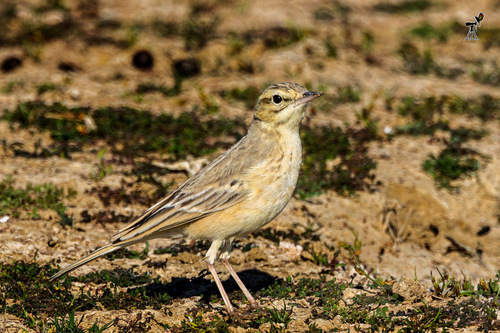
Tawny Pipit
Rock Pipit
In short
The Tawny Pipit and Rock Pipit can be distinguished by habitat preference and subtle plumage differences. Tawny Pipits prefer open, dry habitats, while Rock Pipits are typically found in coastal areas. Look for the Tawny Pipit's paler and less streaked underparts compared to the more heavily streaked Rock Pipit.
Identification tips
- Habitat: Tawny Pipits are found in open, dry areas; Rock Pipits are coastal.
- Plumage: Look for paler, less streaked underparts in Tawny Pipits.
- Behavior: Tawny Pipits walk on open ground; Rock Pipits forage among rocks.
- Vocalization: Listen for the Tawny Pipit's sharp notes with a trill versus the Rock Pipit's metallic 'wiisst'.
Size
Both species are similar in size, measuring around 16.5–17 cm and weighing 18–32.5 g.
Plumage
The Tawny Pipit has paler, less streaked underparts and a more uniform sandy-brown coloration. In contrast, the Rock Pipit has darker, more heavily streaked underparts and a greyer overall appearance, especially on the head and upperparts.
Behaviour
Tawny Pipits are often seen walking on the ground in open areas, while Rock Pipits are more likely to be seen foraging among rocks and seaweed in coastal environments.
Habitat
Tawny Pipits inhabit open, dry areas such as grasslands and steppes, whereas Rock Pipits are found along rocky coastlines and intertidal zones.
Voice
The Tawny Pipit's song is a series of sharp notes with a terminal trill, while the Rock Pipit's call is a sharp 'wiisst' or 'tsup', lower-pitched and more metallic.