Temminck's Stint vs Buff-breasted Sandpiper
Calidris temminckii versus Calidris subruficollis
Play a quiz with Temminck's Stint and Buff-breasted Sandpiper
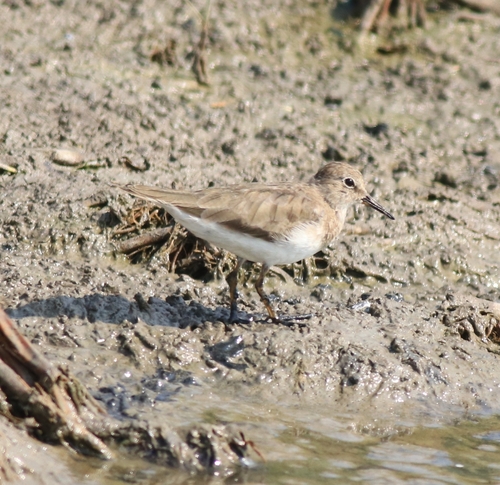
Temminck's Stint
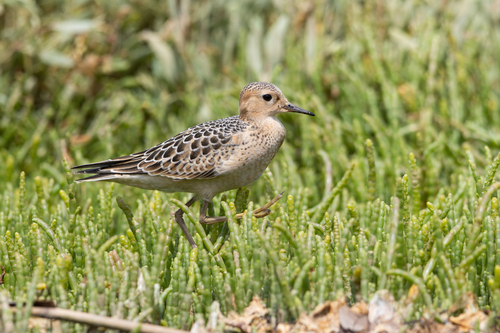
Buff-breasted Sandpiper
In short
Temminck's Stint and Buff-breasted Sandpiper can be distinguished by their tail patterns and plumage tones. Temminck's Stint has a broad white tail and rump, while Buff-breasted Sandpiper shows more uniform buff tones. Their habitats and behaviors also differ significantly.
Identification tips
Look for the broad white tail and rump on Temminck's Stint, especially in flight. Note the uniform buff tones on Buff-breasted Sandpiper, particularly on the face and breast. Consider habitat: wetlands for Temminck's Stint, grasslands for Buff-breasted Sandpiper. Listen for the trilling display song of Temminck's Stint.
Size
Temminck's Stint is smaller, measuring 13–15 cm, compared to the Buff-breasted Sandpiper's slightly larger size.
Plumage
Temminck's Stint has a grey-brown plumage with heavily streaked brown breast and a broad white tail and rump. In contrast, Buff-breasted Sandpiper is more uniformly buff-colored, especially on the breast and face.
Behaviour
Temminck's Stint often performs display flights with a trilling song, while Buff-breasted Sandpiper is known for its lekking behavior during breeding.
Habitat
Temminck's Stint is typically found in wetland habitats, while Buff-breasted Sandpiper prefers open grasslands and tundra.
Voice
Temminck's Stint gives a trilling 'kililililili' during display flights, unlike the Buff-breasted Sandpiper, which is relatively silent.
Temminck's Stint · Buff-breasted Sandpiper · My Tricky Birds