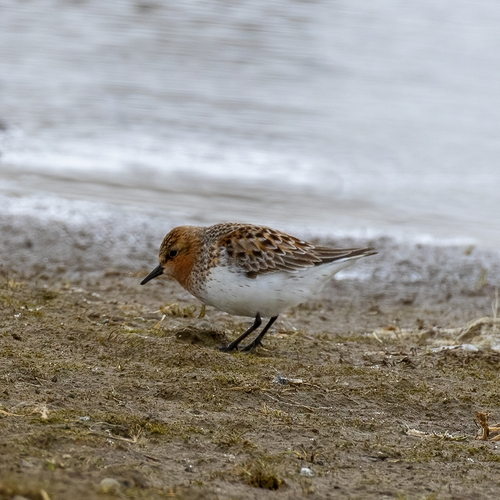
Temminck's Stint vs Red-necked Stint
Calidris temminckii versus Calidris ruficollis
Play a quiz with Temminck's Stint and Red-necked Stint
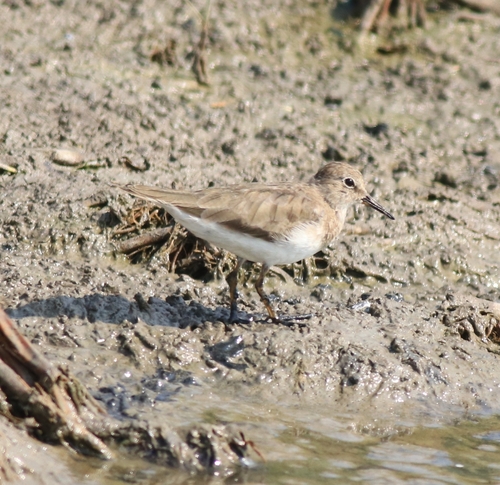
Temminck's Stint
Red-necked Stint
In short
Temminck's Stint and Red-necked Stint can be distinguished by their plumage and vocalizations. Temminck's Stint has broad white sides to the tail and rump, while Red-necked Stint shows a reddish neck during breeding. Their calls also differ, with Temminck's having a distinctive trilling display song.
Identification tips
- Tail and Rump: Look for the broad white sides on Temminck's Stint.
- Breeding Plumage: Note the reddish neck on Red-necked Stint.
- Vocalization: Listen for the trilling display song of Temminck's Stint.
- Migration Behavior: Red-necked Stint undertakes long migrations, often staying in Australasia during the first year.
Size
Both species are similar in size, with Temminck's Stint measuring 13–15 cm and Red-necked Stint slightly similar in dimensions.
Plumage
Temminck's Stint has broad white sides to the tail and rump, and in breeding plumage, it has a heavily streaked brown breast. Red-necked Stint, in breeding plumage, displays a reddish neck and chestnut highlights on the scapulars.
Behaviour
Temminck's Stint performs a display flight with a trilling song, while Red-necked Stint undertakes long migrations and often remains on nonbreeding grounds during its first year.
Habitat
Both species can be found in similar habitats during migration, but Red-necked Stint breeds in the Russian Arctic, while Temminck's Stint breeds in northern Europe and Asia.
Voice
Temminck's Stint gives a trilling 'kililililili...' or 'sirrrrrrrr...' during display flights, while Red-necked Stint's vocalizations are less documented in the provided sources.