Birdr

Temminck's Stint vs White-starred Robin

Calidris temminckii versus Pogonocichla stellata

Play a quiz with Temminck's Stint and White-starred Robin
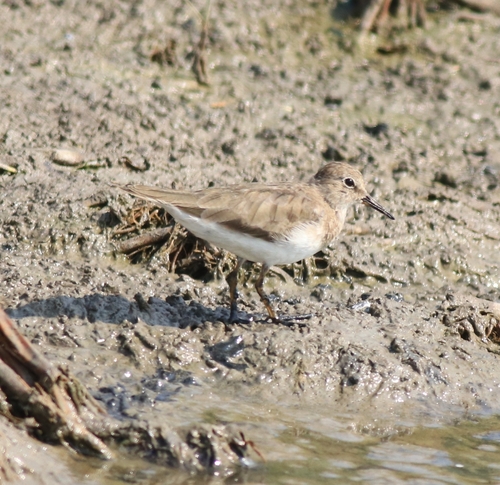
Temminck's Stint (Calidris temminckii) Temminck's Stint
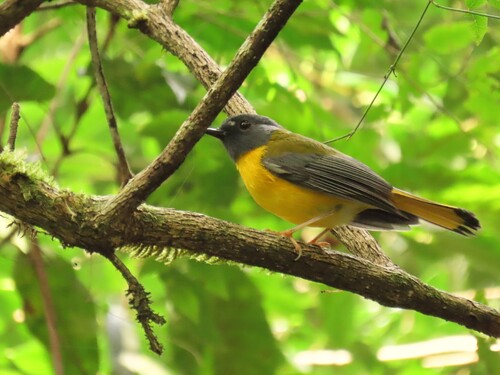
White-starred Robin (Pogonocichla stellata) White-starred Robin

Media

Loading…

In short

Temminck's Stint and White-starred Robin are easily distinguished by their habitat and plumage. Temminck's Stint is a small wader with a distinctive white rump and tail sides, while the White-starred Robin is a forest-dwelling songbird with a striking white star pattern on its face.

Identification tips

1. Habitat: Temminck's Stint is found in open wetland areas, while the White-starred Robin is in forests. 2. Plumage: Look for the white rump and tail sides in Temminck's Stint, and the white star pattern on the face of the White-starred Robin. 3. Behavior: Temminck's Stint is often in small groups on mudflats; the White-starred Robin is more solitary in forest undergrowth.

Size

Temminck's Stint is smaller, measuring 13–15 cm, whereas the White-starred Robin is slightly larger, typically around 14–15 cm.

Plumage

Temminck's Stint has a grey-brown plumage with a heavily streaked breast and a unique white rump and tail sides. In contrast, the White-starred Robin features a dark plumage with a prominent white star pattern on its face.

Behaviour

Temminck's Stint is often seen in small groups, foraging on mudflats or shorelines. The White-starred Robin is more solitary, often found flitting through forest undergrowth.

Habitat

Temminck's Stint inhabits wetlands and coastal areas, while the White-starred Robin is found in forested regions.

Voice

Temminck's Stint gives a short, hard 'tirr' or 'trrrrit', while the White-starred Robin's song is not detailed here but is known to be more melodious.

Submit a better description

Use the same sections as the comparison. Your text is published immediately.

Temminck's Stint and White-starred Robin are easily distinguished by their habitat and plumage. Temminck's Stint is a small wader with a distinctive white rump and tail sides, while the White-starred Robin is a forest-dwelling songbird with a striking white star pattern on its face.

1. Habitat: Temminck's Stint is found in open wetland areas, while the White-starred Robin is in forests. 2. Plumage: Look for the white rump and tail sides in Temminck's Stint, and the white star pattern on the face of the White-starred Robin. 3. Behavior: Temminck's Stint is often in small groups on mudflats; the White-starred Robin is more solitary in forest undergrowth.

Temminck's Stint is smaller, measuring 13–15 cm, whereas the White-starred Robin is slightly larger, typically around 14–15 cm.

Temminck's Stint has a grey-brown plumage with a heavily streaked breast and a unique white rump and tail sides. In contrast, the White-starred Robin features a dark plumage with a prominent white star pattern on its face.

Temminck's Stint is often seen in small groups, foraging on mudflats or shorelines. The White-starred Robin is more solitary, often found flitting through forest undergrowth.

Temminck's Stint inhabits wetlands and coastal areas, while the White-starred Robin is found in forested regions.

Temminck's Stint gives a short, hard 'tirr' or 'trrrrit', while the White-starred Robin's song is not detailed here but is known to be more melodious.

Discard your changes?

You have unsaved edits. If you leave now, those changes will be lost.

Temminck's Stint · White-starred Robin · My Tricky Birds