Terek Sandpiper vs Common Sandpiper
Xenus cinereus versus Actitis hypoleucos
Play a quiz with Terek Sandpiper and Common Sandpiper
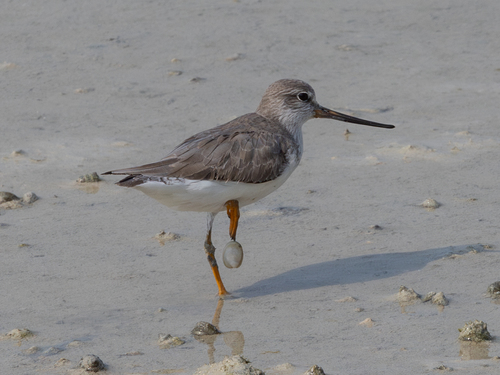
Terek Sandpiper
Common Sandpiper
In short
The Terek Sandpiper is best identified by its unique upcurved bill and frenetic feeding behavior, while the Common Sandpiper has a straight bill and a distinctive white wingbar in flight. Both species are small, short-legged sandpipers but differ in structure and behavior.
Identification tips
- Bill shape: Terek Sandpiper has a long, upcurved bill; Common Sandpiper has a straight bill.
- Flight pattern: Look for the white wingbar on the Common Sandpiper in flight.
- Behavior: Terek Sandpiper's frenetic feeding style is distinctive.
- Plumage: Common Sandpiper shows dark lateral breast patches and a longer tail at rest.
- Call: Listen for the Common Sandpiper's 'swee-wee-wee' call when flushed.
Size
Both species are small sandpipers, but the Common Sandpiper is slightly larger with a wingspan of 38–41 cm compared to the Terek Sandpiper's more compact appearance.
Plumage
The Terek Sandpiper has a more uniform greyish-brown plumage, while the Common Sandpiper shows greenish-brown upperparts with dark lateral breast patches and a white wingbar in flight.
Behaviour
The Terek Sandpiper is noted for its frenetic, dashing feeding style, often scything its bill across the surface. In contrast, the Common Sandpiper is more deliberate in its movements and often bobs its tail.
Habitat
The Terek Sandpiper is adaptable, found in diverse habitats from intertidal flats to open woodlands, while the Common Sandpiper prefers freshwater and coastal habitats, often seen along riverbanks and lakeshores.
Voice
The Common Sandpiper has a distinctive, rapid 'swee-wee-wee' call often heard when flushed, while the Terek Sandpiper's vocalizations are less frequently described in the field.