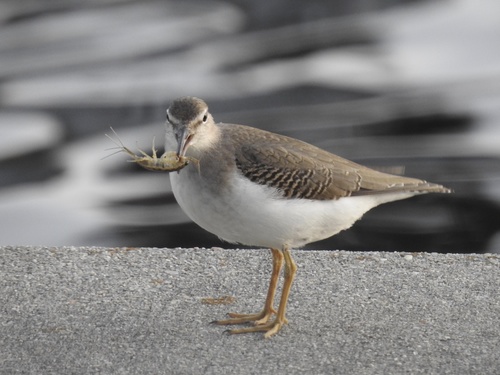
Terek Sandpiper vs Spotted Sandpiper
Xenus cinereus versus Actitis macularius
Play a quiz with Terek Sandpiper and Spotted Sandpiper
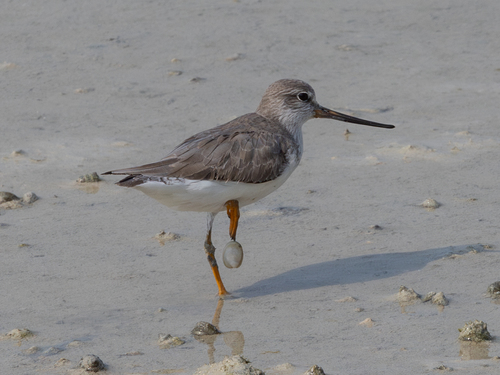
Terek Sandpiper
Spotted Sandpiper
In short
The Terek Sandpiper and Spotted Sandpiper can be distinguished by their bill shape and behavior. The Terek Sandpiper has a unique upcurved bill and a frenetic feeding style, while the Spotted Sandpiper is known for its distinctive teetering behavior and spotted underparts in breeding plumage.
Identification tips
- Bill shape: Terek Sandpiper has a long, upcurved bill; Spotted Sandpiper has a straight, shorter bill.
- Behavior: Look for the Terek Sandpiper's frenetic feeding and the Spotted Sandpiper's teetering motion.
- Plumage: Spotted Sandpiper shows bold black spots on white underparts in breeding season.
- Flight pattern: Spotted Sandpiper has stiff, shallow wing-beats and a distinctive flight call.
- Habitat: Consider the habitat; Terek Sandpipers are more coastal, while Spotted Sandpipers are often near freshwater.
Size
Both species are medium-sized sandpipers, but the Spotted Sandpiper is slightly smaller, with a length of 18–20 cm compared to the Terek Sandpiper's longer appearance due to its bill.
Plumage
The Terek Sandpiper has a plain grayish-brown plumage, while the Spotted Sandpiper is notable for its bold black spotting on white underparts during the breeding season. In non-breeding plumage, the Spotted Sandpiper's upperparts are grayer with less distinct markings.
Behaviour
The Terek Sandpiper is often seen dashing across mudflats or wading in shallow water with a scything motion of its bill. In contrast, the Spotted Sandpiper is characterized by its constant teetering motion and stiff, shallow wing-beats during flight.
Habitat
Terek Sandpipers are found in diverse habitats, from coastal intertidal flats near mangroves to open woodlands. Spotted Sandpipers prefer freshwater habitats like rivers and lakeshores but can also be found along coastlines.
Voice
The Spotted Sandpiper's flight call is a shrill 'peet-weet' or 'weet-weet-weet', while the Terek Sandpiper's vocalizations are less documented in the provided notes.