Birdr

Thrush-like Wren vs Chalk-browed Mockingbird

Campylorhynchus turdinus versus Mimus saturninus

Play a quiz with Thrush-like Wren and Chalk-browed Mockingbird
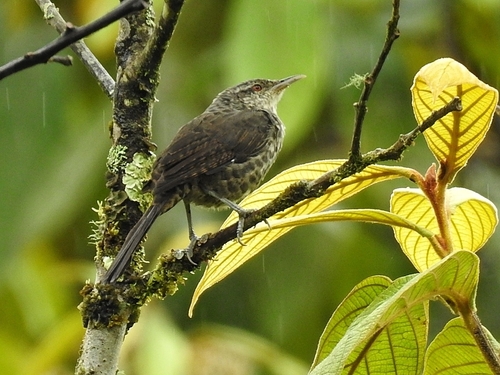
Thrush-like Wren (Campylorhynchus turdinus) Thrush-like Wren
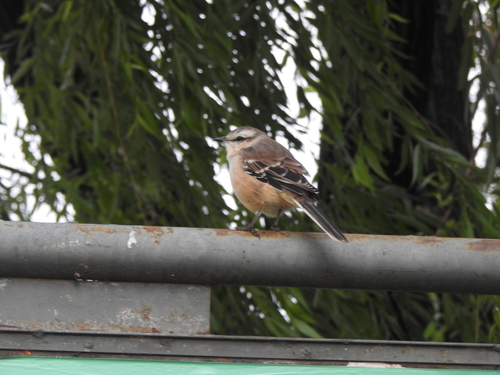
Chalk-browed Mockingbird (Mimus saturninus) Chalk-browed Mockingbird

Media

Loading…

In short

The Thrush-like Wren and Chalk-browed Mockingbird can be distinguished by their supercilium and plumage pattern. The wren has a white supercilium and brown spots on a white belly, while the mockingbird has a more uniform grayish-brown appearance with a distinct white eyebrow. Both species are vocal, but their songs differ.

Identification tips

1. Supercilium: Look for the white supercilium on both, but note the Thrush-like Wren's is more pronounced. 2. Underparts: Thrush-like Wren has brown spots on white underparts; the Chalk-browed Mockingbird is more uniform. 3. Behavior: Observe foraging habits; the mockingbird often forages on the ground. 4. Habitat: Consider the habitat; the wren prefers more forested areas, while the mockingbird is found in more open, human-altered landscapes.

Size

Both species are similar in size, but the Chalk-browed Mockingbird may appear slightly larger and more robust.

Plumage

Thrush-like Wren is brown above with dark barring on the wings and white below with brown spots. The Chalk-browed Mockingbird is more uniformly grayish-brown with a distinct white supercilium.

Behaviour

Thrush-like Wren is often seen in pairs or small groups, while the Chalk-browed Mockingbird is more solitary and often forages on the ground.

Habitat

Thrush-like Wren prefers forested areas, while the Chalk-browed Mockingbird is adaptable, found in parks, gardens, and open areas with trees.

Voice

Both species have varied songs, but the Thrush-like Wren's song is more abrupt, while the Chalk-browed Mockingbird's song is loud and melodic.

Submit a better description

Use the same sections as the comparison. Your text is published immediately.

The Thrush-like Wren and Chalk-browed Mockingbird can be distinguished by their supercilium and plumage pattern. The wren has a white supercilium and brown spots on a white belly, while the mockingbird has a more uniform grayish-brown appearance with a distinct white eyebrow. Both species are vocal, but their songs differ.

1. Supercilium: Look for the white supercilium on both, but note the Thrush-like Wren's is more pronounced. 2. Underparts: Thrush-like Wren has brown spots on white underparts; the Chalk-browed Mockingbird is more uniform. 3. Behavior: Observe foraging habits; the mockingbird often forages on the ground. 4. Habitat: Consider the habitat; the wren prefers more forested areas, while the mockingbird is found in more open, human-altered landscapes.

Both species are similar in size, but the Chalk-browed Mockingbird may appear slightly larger and more robust.

Thrush-like Wren is brown above with dark barring on the wings and white below with brown spots. The Chalk-browed Mockingbird is more uniformly grayish-brown with a distinct white supercilium.

Thrush-like Wren is often seen in pairs or small groups, while the Chalk-browed Mockingbird is more solitary and often forages on the ground.

Thrush-like Wren prefers forested areas, while the Chalk-browed Mockingbird is adaptable, found in parks, gardens, and open areas with trees.

Both species have varied songs, but the Thrush-like Wren's song is more abrupt, while the Chalk-browed Mockingbird's song is loud and melodic.

Discard your changes?

You have unsaved edits. If you leave now, those changes will be lost.

Thrush-like Wren · Chalk-browed Mockingbird · My Tricky Birds