Birdr

Thrush-like Wren vs Patagonian Mockingbird

Campylorhynchus turdinus versus Mimus patagonicus

Play a quiz with Thrush-like Wren and Patagonian Mockingbird
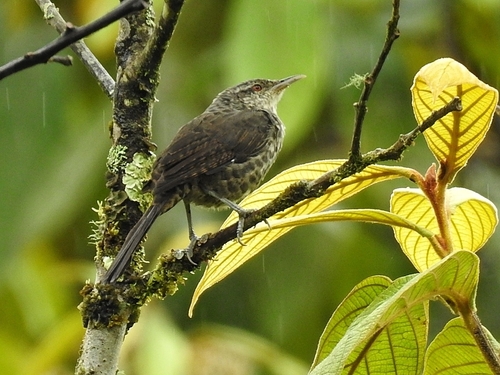
Thrush-like Wren (Campylorhynchus turdinus) Thrush-like Wren
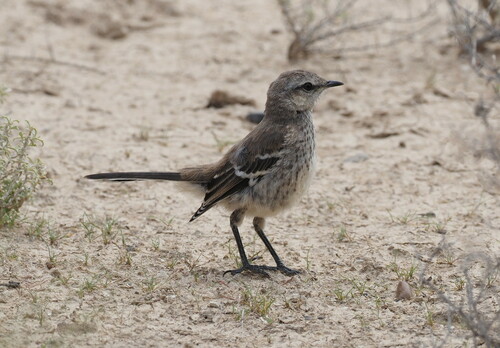
Patagonian Mockingbird (Mimus patagonicus) Patagonian Mockingbird

Media

Loading…

In short

The Thrush-like Wren and Patagonian Mockingbird can be distinguished by their tail and bill structure, as well as their vocalizations. The wren has a longer bill and tail, with distinct brown spotting on a white underside, while the mockingbird is slimmer, with a dark tail featuring white outer corners and a jumbled song that may include mimicry.

Identification tips

  1. Look for the longer bill and tail of the Thrush-like Wren. 2. Note the brown spots on a white underside for the wren. 3. Observe the dark tail with white outer corners on the Patagonian Mockingbird. 4. Listen for the abrupt song of the wren versus the jumbled, mimicking song of the mockingbird. 5. Consider habitat: forested areas for the wren, open areas for the mockingbird.

Size

The Thrush-like Wren is generally more robust with a longer tail and bill compared to the slimmer Patagonian Mockingbird.

Plumage

The Thrush-like Wren is brown above with dark barring on the wings and white below with brown spots. The Patagonian Mockingbird is gray with a white supercilium, dark wings, and buffy flanks, featuring a dark tail with white outer corners.

Behaviour

The Thrush-like Wren is often detected by its vocalizations, while the Patagonian Mockingbird is frequently seen perched in the open or running on the ground.

Habitat

Thrush-like Wrens are typically found in forested areas, while Patagonian Mockingbirds inhabit shrubland, agricultural areas, and towns.

Voice

The Thrush-like Wren has a varied, abrupt song, whereas the Patagonian Mockingbird's song is jumbled and repetitive, often including mimicry.

Submit a better description

Use the same sections as the comparison. Your text is published immediately.

The Thrush-like Wren and Patagonian Mockingbird can be distinguished by their tail and bill structure, as well as their vocalizations. The wren has a longer bill and tail, with distinct brown spotting on a white underside, while the mockingbird is slimmer, with a dark tail featuring white outer corners and a jumbled song that may include mimicry.

  1. Look for the longer bill and tail of the Thrush-like Wren. 2. Note the brown spots on a white underside for the wren. 3. Observe the dark tail with white outer corners on the Patagonian Mockingbird. 4. Listen for the abrupt song of the wren versus the jumbled, mimicking song of the mockingbird. 5. Consider habitat: forested areas for the wren, open areas for the mockingbird.

The Thrush-like Wren is generally more robust with a longer tail and bill compared to the slimmer Patagonian Mockingbird.

The Thrush-like Wren is brown above with dark barring on the wings and white below with brown spots. The Patagonian Mockingbird is gray with a white supercilium, dark wings, and buffy flanks, featuring a dark tail with white outer corners.

The Thrush-like Wren is often detected by its vocalizations, while the Patagonian Mockingbird is frequently seen perched in the open or running on the ground.

Thrush-like Wrens are typically found in forested areas, while Patagonian Mockingbirds inhabit shrubland, agricultural areas, and towns.

The Thrush-like Wren has a varied, abrupt song, whereas the Patagonian Mockingbird's song is jumbled and repetitive, often including mimicry.

Discard your changes?

You have unsaved edits. If you leave now, those changes will be lost.

Thrush-like Wren · Patagonian Mockingbird · My Tricky Birds