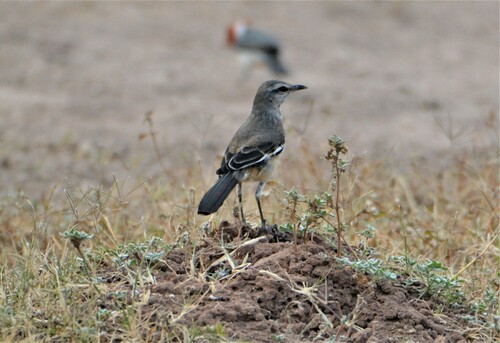
Thrush-like Wren vs White-banded Mockingbird
Campylorhynchus turdinus versus Mimus triurus
Play a quiz with Thrush-like Wren and White-banded Mockingbird
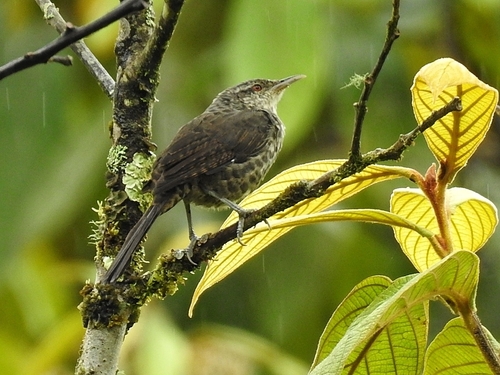
Thrush-like Wren
White-banded Mockingbird
In short
To distinguish between the Thrush-like Wren and the White-banded Mockingbird, focus on the bill shape and plumage patterns. The Thrush-like Wren has a long, slightly curved bill and a white supercilium with brown spots on its underparts, while the White-banded Mockingbird has a straighter bill and a distinctive white wing band visible in flight.
Identification tips
- Look for the white wing band in the White-banded Mockingbird, especially in flight. 2. Note the bill shape: slightly curved in the Thrush-like Wren, straighter in the White-banded Mockingbird. 3. Check the underparts: spotted in the Thrush-like Wren, plain in the White-banded Mockingbird. 4. Listen for vocalizations: abrupt in the Thrush-like Wren, melodic in the White-banded Mockingbird. 5. Consider the habitat: forested for Thrush-like Wren, open areas for White-banded Mockingbird.
Size
Both species are similar in size, but the White-banded Mockingbird may appear slightly larger due to its longer tail.
Plumage
The Thrush-like Wren is brown above with dark barring on the wings and white below with brown spots. In contrast, the White-banded Mockingbird is generally grayish with a prominent white wing band and lacks the spotted underparts.
Behaviour
The Thrush-like Wren is often seen in pairs or small groups, whereas the White-banded Mockingbird is more solitary or found in pairs.
Habitat
Thrush-like Wrens are typically found in forested areas, while White-banded Mockingbirds prefer open habitats like grasslands and scrub.
Voice
The Thrush-like Wren is known for its varied and abrupt song, while the White-banded Mockingbird has a more melodic and repetitive song.
Thrush-like Wren · White-banded Mockingbird · My Tricky Birds