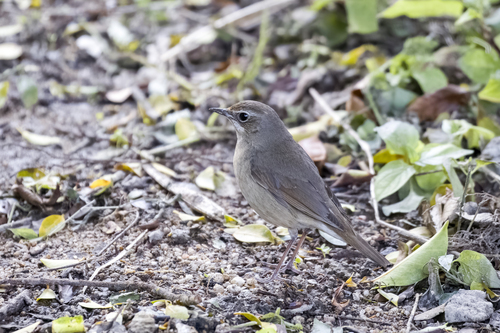
Thrush Nightingale vs Siberian Rubythroat
Luscinia luscinia versus Calliope calliope
Play a quiz with Thrush Nightingale and Siberian Rubythroat
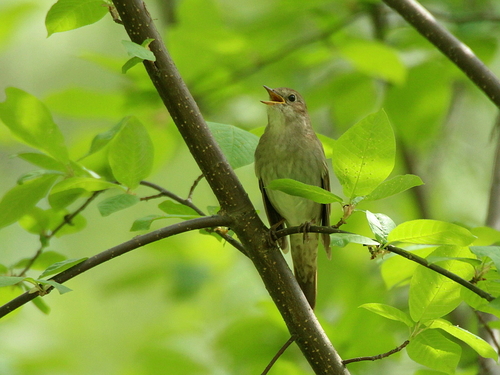
Thrush Nightingale
Siberian Rubythroat
In short
The Thrush Nightingale and Siberian Rubythroat can be distinguished primarily by their plumage: the Thrush Nightingale is more uniformly brown, while the Siberian Rubythroat features a striking red throat patch in males. Both species are similar in structure, but the Siberian Rubythroat often has a more pronounced supercilium.
Identification tips
1. Look for the red throat patch in male Siberian Rubythroats; females and immatures may show a faint supercilium. 2. Note the uniform brown plumage of the Thrush Nightingale. 3. Listen for differences in song: melodious for Thrush Nightingale, varied for Siberian Rubythroat. 4. Consider habitat: Thrush Nightingale prefers denser, moist areas, while Siberian Rubythroat can be in more open spaces during migration.
Size
Both species are similar in size, typical of small passerines, with no significant difference in overall body length.
Plumage
The Thrush Nightingale is mostly brown with a slightly paler underbelly, lacking any distinctive color patches. In contrast, male Siberian Rubythroats have a vivid red throat bordered by a white line, and females and immatures have a more subdued appearance but may still show a faint supercilium.
Behaviour
Both species are often secretive and skulking, but the Siberian Rubythroat may be more likely to be seen hopping on the ground or low in vegetation.
Habitat
Thrush Nightingales prefer dense, moist woodland and thickets, often near water. Siberian Rubythroats are found in similar habitats but can also inhabit more open areas with scattered shrubs during migration.
Voice
The Thrush Nightingale's song is a rich, melodious series of whistles and trills, while the Siberian Rubythroat's song is more varied and includes harsher notes. Calls are less distinct but can be used with experience.