Birdr

Tibetan Sand Plover vs Kentish Plover

Anarhynchus atrifrons versus Anarhynchus alexandrinus

Play a quiz with Tibetan Sand Plover and Kentish Plover
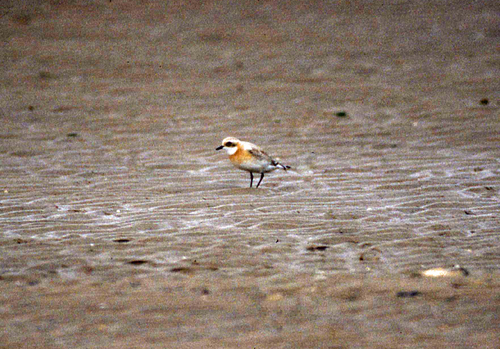
Tibetan Sand Plover (Anarhynchus atrifrons) Tibetan Sand Plover
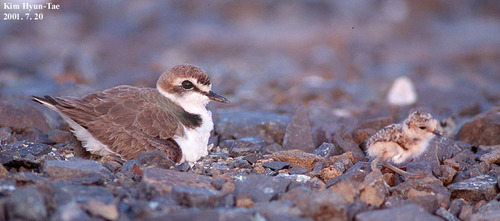
Kentish Plover (Anarhynchus alexandrinus) Kentish Plover

Media

Loading…

In short

The Kentish Plover (Anarhynchus alexandrinus) and the Tibetan Sand Plover (Anarhynchus atrifrons) can be distinguished by their size, plumage patterns, and habitat preferences. The Kentish Plover is generally smaller with distinctive black and white markings, while the Tibetan Sand Plover has a more uniform pale appearance with a notable orange chest in breeding males. Their behaviors and preferred habitats also differ, with the Kentish Plover favoring coastal regions and the Tibetan Sand Plover often found in more inland areas.

Identification tips

  1. Birds of the World Similar-Species Diagnostics:
  2. The Tibetan Sand-Plover looks very much like the Kentish Plover but can be distinguished by its larger size (18–21 cm vs. 15–17.5 cm) and paler overall appearance with an orange chest in breeding males.
  3. The Kentish Plover has distinctive black markings, particularly a black bar across the forecrown and black patches on the sides, which are absent in the Tibetan Sand Plover.

  4. AI Field Diagnostics:

  5. Size & Shape: Always note the size difference; the Kentish Plover is smaller and more compact. The bill of the Kentish Plover is also generally shorter and more delicate compared to the slightly thicker and longer bill of the Tibetan Sand Plover.
  6. Plumage Patterns: Focus on the distinctive markings; look for the black and white contrast on the Kentish Plover, specifically the black patches and collar. In contrast, the Tibetan Sand Plover will appear more uniform and lack these sharp markings, exhibiting a paler overall color.
  7. Behavior: Pay attention to flocking behavior. Kentish Plovers often forage in small groups, while Tibetan Sand Plovers may be more solitary or in smaller, less organized groups.
  8. Habitat Preference: If observing near the coast, the likelihood is higher that you are seeing Kentish Plovers. However, in more inland or sandy terrains, it is probably the Tibetan Sand Plover.
  9. Vocalizations: The calls can help; if you hear a sharp, high-pitched call, it’s likely a Kentish Plover.

By focusing on these distinguishing features, birdwatchers can effectively differentiate between the Kentish Plover and Tibetan Sand Plover in their natural habitats.

Size

Plumage

Behaviour

Habitat

Voice

Submit a better description

Use the same sections as the comparison. Your text is published immediately.

The Kentish Plover (Anarhynchus alexandrinus) and the Tibetan Sand Plover (Anarhynchus atrifrons) can be distinguished by their size, plumage patterns, and habitat preferences. The Kentish Plover is generally smaller with distinctive black and white markings, while the Tibetan Sand Plover has a more uniform pale appearance with a notable orange chest in breeding males. Their behaviors and preferred habitats also differ, with the Kentish Plover favoring coastal regions and the Tibetan Sand Plover often found in more inland areas.

  1. Birds of the World Similar-Species Diagnostics:
  2. The Tibetan Sand-Plover looks very much like the Kentish Plover but can be distinguished by its larger size (18–21 cm vs. 15–17.5 cm) and paler overall appearance with an orange chest in breeding males.
  3. The Kentish Plover has distinctive black markings, particularly a black bar across the forecrown and black patches on the sides, which are absent in the Tibetan Sand Plover.

  4. AI Field Diagnostics:

  5. Size & Shape: Always note the size difference; the Kentish Plover is smaller and more compact. The bill of the Kentish Plover is also generally shorter and more delicate compared to the slightly thicker and longer bill of the Tibetan Sand Plover.
  6. Plumage Patterns: Focus on the distinctive markings; look for the black and white contrast on the Kentish Plover, specifically the black patches and collar. In contrast, the Tibetan Sand Plover will appear more uniform and lack these sharp markings, exhibiting a paler overall color.
  7. Behavior: Pay attention to flocking behavior. Kentish Plovers often forage in small groups, while Tibetan Sand Plovers may be more solitary or in smaller, less organized groups.
  8. Habitat Preference: If observing near the coast, the likelihood is higher that you are seeing Kentish Plovers. However, in more inland or sandy terrains, it is probably the Tibetan Sand Plover.
  9. Vocalizations: The calls can help; if you hear a sharp, high-pitched call, it’s likely a Kentish Plover.

By focusing on these distinguishing features, birdwatchers can effectively differentiate between the Kentish Plover and Tibetan Sand Plover in their natural habitats.

  • Kentish Plover: Measures 15–17.5 cm in length, with a wingspan of 42–45 cm and weighs between 32–56 g.
  • Tibetan Sand Plover: Slightly larger, measuring 18–21 cm long, with a wingspan of 45–58 cm, and weighing 55–79 g.
  • Kentish Plover: Features a white collar on its hind neck, distinct black patches on the sides, and a variable rufous cap. The males can exhibit a complete breast band, particularly in East Asia, while non-breeding adults resemble breeding females but are paler.
  • Tibetan Sand Plover: Exhibits a more uniform pale appearance with an orange chest in breeding males. The adult females and juveniles have similar plumage, often lacking the distinct markings of the Kentish Plover. The Tibetan Sand Plover’s basic plumage can be confused with the Siberian Sand Plover, especially due to similarities in color and markings.
  • Kentish Plover: Typically forages in small flocks, using foot-trembling to uncover crustaceans and insects. They are often seen along coastlines and mudflats during low tide.
  • Tibetan Sand Plover: Also forages for insects and crustaceans but can be found in more varied habitats, including sandy and gravelly areas inland. They may not form as cohesive flocks as Kentish Plovers.
  • Kentish Plover: Prefers coastal habitats, such as sandy beaches, mudflats, and estuaries, often nesting in open areas close to water.
  • Tibetan Sand Plover: Commonly found in a variety of habitats including riverbanks, sandy deserts, and salt flats, often at higher elevations compared to the Kentish Plover.
  • Kentish Plover: Typically produces a high-pitched "pee pee" call.
  • Tibetan Sand Plover: Vocalizations are less documented, but they are likely to have similar calls to other plovers.

Discard your changes?

You have unsaved edits. If you leave now, those changes will be lost.

Tibetan Sand Plover · Kentish Plover · My Tricky Birds