Birdr

Tibetan Sand Plover vs Upland Sandpiper

Anarhynchus atrifrons versus Bartramia longicauda

Play a quiz with Tibetan Sand Plover and Upland Sandpiper
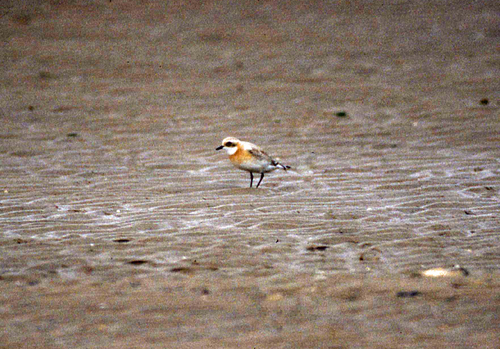
Tibetan Sand Plover (Anarhynchus atrifrons) Tibetan Sand Plover
Upland Sandpiper (Bartramia longicauda) Upland Sandpiper

Media

Loading…

In short

The Tibetan Sand Plover and Upland Sandpiper differ significantly in structure and habitat. The Tibetan Sand Plover is a small, pale plover with a distinct orange chest in alternate plumage, while the Upland Sandpiper is a larger, more slender bird with a long neck and tail, often found in grasslands. Observers should focus on body shape and habitat to distinguish these species.

Identification tips

Size

The Tibetan Sand Plover is smaller (18–21 cm) and more compact compared to the larger and more slender Upland Sandpiper.

Plumage

Tibetan Sand Plover males in alternate plumage have an orange chest, whereas the Upland Sandpiper has a more uniform brownish plumage with distinctive streaking.

Behaviour

Tibetan Sand Plovers are typically seen on mudflats or sandy shores, while Upland Sandpipers are often found in open grasslands, displaying a more upright posture.

Habitat

Tibetan Sand Plovers inhabit coastal and inland wetlands, whereas Upland Sandpipers prefer grasslands, including airfields and agricultural fields.

Voice

The sources do not provide specific vocalization details for these species.

Submit a better description

Use the same sections as the comparison. Your text is published immediately.

The Tibetan Sand Plover and Upland Sandpiper differ significantly in structure and habitat. The Tibetan Sand Plover is a small, pale plover with a distinct orange chest in alternate plumage, while the Upland Sandpiper is a larger, more slender bird with a long neck and tail, often found in grasslands. Observers should focus on body shape and habitat to distinguish these species.

  • Body Shape: Look for the more compact body and shorter legs of the Tibetan Sand Plover versus the slender, long-necked Upland Sandpiper.
  • Habitat: Observe the habitat; Tibetan Sand Plovers are more likely near water, while Upland Sandpipers are in grassy areas.
  • Plumage: In breeding season, note the orange chest of the Tibetan Sand Plover males.
  • Flight: Tibetan Sand Plovers' feet often protrude beyond the tail in flight, unlike the Upland Sandpiper.

The Tibetan Sand Plover is smaller (18–21 cm) and more compact compared to the larger and more slender Upland Sandpiper.

Tibetan Sand Plover males in alternate plumage have an orange chest, whereas the Upland Sandpiper has a more uniform brownish plumage with distinctive streaking.

Tibetan Sand Plovers are typically seen on mudflats or sandy shores, while Upland Sandpipers are often found in open grasslands, displaying a more upright posture.

Tibetan Sand Plovers inhabit coastal and inland wetlands, whereas Upland Sandpipers prefer grasslands, including airfields and agricultural fields.

The sources do not provide specific vocalization details for these species.

Discard your changes?

You have unsaved edits. If you leave now, those changes will be lost.

Tibetan Sand Plover · Upland Sandpiper · My Tricky Birds