Birdr

Tree Pipit vs Olive-backed Pipit

Anthus trivialis versus Anthus hodgsoni

Play a quiz with Tree Pipit and Olive-backed Pipit
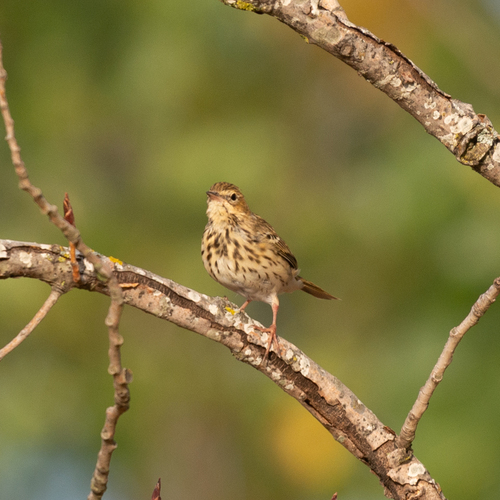
Tree Pipit (Anthus trivialis) Tree Pipit
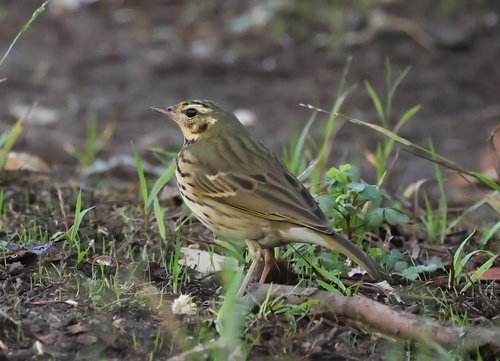
Olive-backed Pipit (Anthus hodgsoni) Olive-backed Pipit

Media

Loading…

In short

The most reliable field mark between Tree Pipit and Olive-backed Pipit is the back color and head pattern: Olive-backed Pipit shows a distinctly olive-toned, less streaked back and a strong, well-marked pale supercilium, while Tree Pipit has a browner, more streaked back and a less prominent supercilium. Both species are similar in size and can be confusing in the field, especially when seen perched or on the ground. Tree Pipit tends to show a heavier bill and a sharper contrast between its buff breast and white belly, whereas Olive-backed Pipit is more uniformly buff below with streaking extending onto the flanks. In flight, both can look similar, but habitat and behavior can help: Tree Pipit is more likely in open woodland or edge habitats, Olive-backed Pipit in denser, more forested areas. Calls and song are similar but Olive-backed Pipit’s is faster and higher-pitched.

Identification tips

  1. Back color: Olive-backed Pipit has a distinctly olive-toned back with fewer, finer streaks; Tree Pipit’s back is browner and more heavily streaked. This is often the quickest visual clue, especially in good light.
  2. Supercilium: Olive-backed Pipit shows a strong, well-defined pale supercilium (eyebrow) that extends behind the eye, giving the face a more marked appearance. Tree Pipit’s supercilium is less prominent and less sharply defined.
  3. Wingbars: Olive-backed Pipit usually has two clear whitish wingbars, visible both perched and in flight. Tree Pipit’s wingbars are less obvious and may be hard to see unless at close range.
  4. Underpart contrast: Tree Pipit shows a sharp contrast between a buff breast and a much whiter belly. Olive-backed Pipit is more evenly buff or whitish below, with streaking extending onto the flanks, making the contrast less striking.
  5. Bill structure: Tree Pipit has a heavier, slightly broader bill compared to the finer bill of Olive-backed Pipit. This can be subtle and best judged with side-by-side comparison or good photos.
  6. Tail pattern: Both species have whitish outer tail feathers, but Olive-backed Pipit’s are often brighter and more contrasting, especially in flight.
  7. Head pattern: The combination of olive back, strong supercilium, and more marked face makes Olive-backed Pipit look more 'clean-faced' and contrasting than Tree Pipit.
  8. Perching behavior: Tree Pipit is more likely to perch openly on trees or wires, especially during display flights. Olive-backed Pipit tends to stay lower and more hidden in denser cover.
  9. Flight display: Tree Pipit performs a distinctive song flight, rising from a perch and parachuting down with stiff wings. Olive-backed Pipit’s flight is more jerky and undulating, and it does not display in the same way.
  10. Habitat: In mixed or edge habitats, Tree Pipit is more likely; in dense woodland, especially in Asia, Olive-backed Pipit is favored.
  11. Voice: Tree Pipit’s call is a strong "spek"; Olive-backed Pipit’s is a higher-pitched, faster "tseep" or "spek". Song differences are subtle but Olive-backed Pipit’s is faster and higher.
  12. Season and range: Both are long-distance migrants, but Tree Pipit is widespread in Europe and western Palearctic, Olive-backed Pipit mainly in Asia and far northeastern Europe. Vagrants can occur, so always check all features.
  13. Sex and age: Sexes are alike in both species. Juvenile and immature plumages are not described in detail for upperwing pattern, so rely on back color, supercilium, and underpart contrast for all ages.
  14. Pitfalls: Poor light can obscure the olive tones of Olive-backed Pipit, making it look browner and more like Tree Pipit. Likewise, a fluffed-up Tree Pipit can look bulkier than it is. Always use a combination of marks.
  15. When in doubt: Focus on the head pattern (supercilium and face), back color, and underpart contrast as the most reliable field marks, and consider habitat and behavior as supporting clues.

Size

Both species are very close in size, with Tree Pipit averaging 23.5g and Olive-backed Pipit 22.0g [wikidata]. Visually, they are both small, sparrow-sized pipits, and size alone is not a reliable separator in the field. If anything, Tree Pipit may appear very slightly bulkier, but this is subtle and easily masked by posture or feather fluffing.

Plumage

For all ages, Olive-backed Pipit stands out by its olive-toned back with fewer and finer streaks, while Tree Pipit’s back is browner and more heavily streaked. Olive-backed Pipit also has a prominent pale supercilium (eyebrow) and two clear whitish wingbars, which are less obvious on Tree Pipit. Underparts are streaked in both, but Tree Pipit typically shows a strong contrast between a buff breast and a much whiter belly, whereas Olive-backed Pipit is more evenly buffish below with streaking extending onto the flanks. Juvenile and immature upperwing patterns are not described in detail for either species in the provided sources, so focus on back color, supercilium, and underpart contrast for all ages. In flight, both species show whitish outer tail feathers, but Olive-backed Pipit’s are often brighter and more contrasting.

Behaviour

Both species walk or run on the ground and will fly up into trees when disturbed. However, Tree Pipit is more likely to be seen perching openly on trees or shrubs, especially during its display flight, which involves rising from a perch and parachuting down with stiff wings. Olive-backed Pipit is more secretive, often keeping to denser cover and moving with a jerky, undulating flight. Both species may be seen singly or in pairs, but Olive-backed Pipit is less likely to perch prominently.

Habitat

Tree Pipit prefers open woodland, forest edges, and areas with scattered trees and low scrub, often avoiding dense forest. It is common in habitats with a mix of grass, bracken, and moderate grazing, and is rarely found in closed-canopy woodland. Olive-backed Pipit, by contrast, breeds in denser, more continuous woodland, especially in Asia, and is more likely to be found in forested or well-treed habitats. In areas of overlap, Tree Pipit is more associated with open or edge habitats, Olive-backed Pipit with denser forest.

Voice

Both species have similar calls and songs, but there are subtle differences. Tree Pipit’s call is a strong "spek", while Olive-backed Pipit’s is a single "tseep" or "spek" that is higher-pitched and delivered more rapidly. The song of both is lark-like and given in flight, but Olive-backed Pipit’s is faster and higher overall. These differences are subtle and may not be diagnostic unless you are very familiar with both species.

Submit a better description

Use the same sections as the comparison. Your text is published immediately.

The most reliable field mark between Tree Pipit and Olive-backed Pipit is the back color and head pattern: Olive-backed Pipit shows a distinctly olive-toned, less streaked back and a strong, well-marked pale supercilium, while Tree Pipit has a browner, more streaked back and a less prominent supercilium. Both species are similar in size and can be confusing in the field, especially when seen perched or on the ground. Tree Pipit tends to show a heavier bill and a sharper contrast between its buff breast and white belly, whereas Olive-backed Pipit is more uniformly buff below with streaking extending onto the flanks. In flight, both can look similar, but habitat and behavior can help: Tree Pipit is more likely in open woodland or edge habitats, Olive-backed Pipit in denser, more forested areas. Calls and song are similar but Olive-backed Pipit’s is faster and higher-pitched.

  1. Back color: Olive-backed Pipit has a distinctly olive-toned back with fewer, finer streaks; Tree Pipit’s back is browner and more heavily streaked. This is often the quickest visual clue, especially in good light.
  2. Supercilium: Olive-backed Pipit shows a strong, well-defined pale supercilium (eyebrow) that extends behind the eye, giving the face a more marked appearance. Tree Pipit’s supercilium is less prominent and less sharply defined.
  3. Wingbars: Olive-backed Pipit usually has two clear whitish wingbars, visible both perched and in flight. Tree Pipit’s wingbars are less obvious and may be hard to see unless at close range.
  4. Underpart contrast: Tree Pipit shows a sharp contrast between a buff breast and a much whiter belly. Olive-backed Pipit is more evenly buff or whitish below, with streaking extending onto the flanks, making the contrast less striking.
  5. Bill structure: Tree Pipit has a heavier, slightly broader bill compared to the finer bill of Olive-backed Pipit. This can be subtle and best judged with side-by-side comparison or good photos.
  6. Tail pattern: Both species have whitish outer tail feathers, but Olive-backed Pipit’s are often brighter and more contrasting, especially in flight.
  7. Head pattern: The combination of olive back, strong supercilium, and more marked face makes Olive-backed Pipit look more 'clean-faced' and contrasting than Tree Pipit.
  8. Perching behavior: Tree Pipit is more likely to perch openly on trees or wires, especially during display flights. Olive-backed Pipit tends to stay lower and more hidden in denser cover.
  9. Flight display: Tree Pipit performs a distinctive song flight, rising from a perch and parachuting down with stiff wings. Olive-backed Pipit’s flight is more jerky and undulating, and it does not display in the same way.
  10. Habitat: In mixed or edge habitats, Tree Pipit is more likely; in dense woodland, especially in Asia, Olive-backed Pipit is favored.
  11. Voice: Tree Pipit’s call is a strong "spek"; Olive-backed Pipit’s is a higher-pitched, faster "tseep" or "spek". Song differences are subtle but Olive-backed Pipit’s is faster and higher.
  12. Season and range: Both are long-distance migrants, but Tree Pipit is widespread in Europe and western Palearctic, Olive-backed Pipit mainly in Asia and far northeastern Europe. Vagrants can occur, so always check all features.
  13. Sex and age: Sexes are alike in both species. Juvenile and immature plumages are not described in detail for upperwing pattern, so rely on back color, supercilium, and underpart contrast for all ages.
  14. Pitfalls: Poor light can obscure the olive tones of Olive-backed Pipit, making it look browner and more like Tree Pipit. Likewise, a fluffed-up Tree Pipit can look bulkier than it is. Always use a combination of marks.
  15. When in doubt: Focus on the head pattern (supercilium and face), back color, and underpart contrast as the most reliable field marks, and consider habitat and behavior as supporting clues.

Both species are very close in size, with Tree Pipit averaging 23.5g and Olive-backed Pipit 22.0g [wikidata]. Visually, they are both small, sparrow-sized pipits, and size alone is not a reliable separator in the field. If anything, Tree Pipit may appear very slightly bulkier, but this is subtle and easily masked by posture or feather fluffing.

For all ages, Olive-backed Pipit stands out by its olive-toned back with fewer and finer streaks, while Tree Pipit’s back is browner and more heavily streaked. Olive-backed Pipit also has a prominent pale supercilium (eyebrow) and two clear whitish wingbars, which are less obvious on Tree Pipit. Underparts are streaked in both, but Tree Pipit typically shows a strong contrast between a buff breast and a much whiter belly, whereas Olive-backed Pipit is more evenly buffish below with streaking extending onto the flanks. Juvenile and immature upperwing patterns are not described in detail for either species in the provided sources, so focus on back color, supercilium, and underpart contrast for all ages. In flight, both species show whitish outer tail feathers, but Olive-backed Pipit’s are often brighter and more contrasting.

Both species walk or run on the ground and will fly up into trees when disturbed. However, Tree Pipit is more likely to be seen perching openly on trees or shrubs, especially during its display flight, which involves rising from a perch and parachuting down with stiff wings. Olive-backed Pipit is more secretive, often keeping to denser cover and moving with a jerky, undulating flight. Both species may be seen singly or in pairs, but Olive-backed Pipit is less likely to perch prominently.

Tree Pipit prefers open woodland, forest edges, and areas with scattered trees and low scrub, often avoiding dense forest. It is common in habitats with a mix of grass, bracken, and moderate grazing, and is rarely found in closed-canopy woodland. Olive-backed Pipit, by contrast, breeds in denser, more continuous woodland, especially in Asia, and is more likely to be found in forested or well-treed habitats. In areas of overlap, Tree Pipit is more associated with open or edge habitats, Olive-backed Pipit with denser forest.

Both species have similar calls and songs, but there are subtle differences. Tree Pipit’s call is a strong "spek", while Olive-backed Pipit’s is a single "tseep" or "spek" that is higher-pitched and delivered more rapidly. The song of both is lark-like and given in flight, but Olive-backed Pipit’s is faster and higher overall. These differences are subtle and may not be diagnostic unless you are very familiar with both species.

Discard your changes?

You have unsaved edits. If you leave now, those changes will be lost.

Tree Pipit · Olive-backed Pipit · My Tricky Birds