Birdr

Tree Pipit vs Rock Pipit

Anthus trivialis versus Anthus petrosus

Play a quiz with Tree Pipit and Rock Pipit
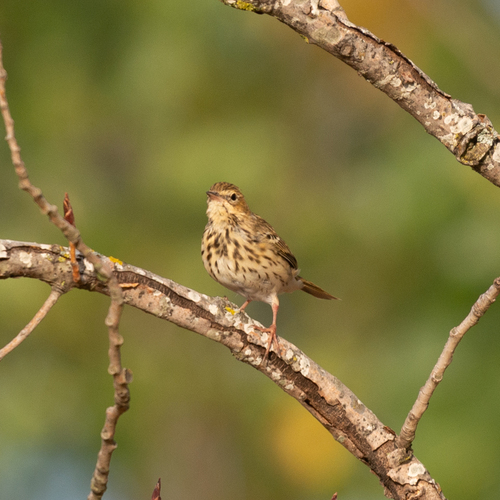
Tree Pipit (Anthus trivialis) Tree Pipit
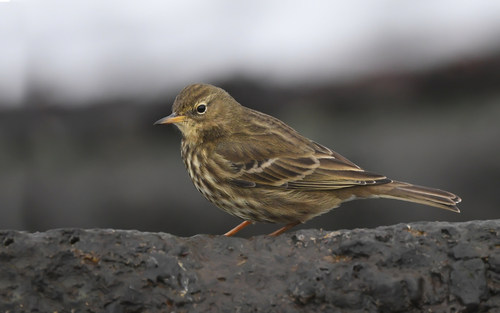
Rock Pipit (Anthus petrosus) Rock Pipit

Media

Loading…

In short

Tree Pipit and Rock Pipit can be tricky to differentiate, but the Tree Pipit has a shorter hind claw and a more olive tone above, while the Rock Pipit is larger and often found in coastal habitats. Vocalizations differ, with the Tree Pipit having a more musical song compared to the Rock Pipit's harsher calls.

Identification tips

  1. Check habitat: Tree Pipit in woodlands, Rock Pipit on coasts. 2. Look at size: Rock Pipit is larger. 3. Examine plumage: Tree Pipit has a bolder supercilium and olive tones; Rock Pipit has a broken eyering and darker tones. 4. Listen for song: Tree Pipit has a musical trill, Rock Pipit a harsher call. 5. Observe behavior: Tree Pipit may perform aerial displays, Rock Pipit forages on rocks.

Size

Tree Pipit is smaller (14–15 cm) compared to the larger Rock Pipit (16.5–17 cm).

Plumage

Tree Pipit has a bolder supercilium and more olive tones above with thinner flank streaks, while Rock Pipit shows a narrow, broken whitish eyering and darker olive-grey plumage with diffuse streaking.

Behaviour

Tree Pipit often performs aerial song displays, while Rock Pipit is more likely to be seen foraging along rocky shores.

Habitat

Tree Pipit prefers open woodlands and heathlands, whereas Rock Pipit is typically found in coastal and rocky shore environments.

Voice

Tree Pipit's song is a series of trills ending with 'seee-er' notes, while Rock Pipit's call is a sharp 'wiisst' or 'tsup', more metallic and lower-pitched.

Submit a better description

Use the same sections as the comparison. Your text is published immediately.

Tree Pipit and Rock Pipit can be tricky to differentiate, but the Tree Pipit has a shorter hind claw and a more olive tone above, while the Rock Pipit is larger and often found in coastal habitats. Vocalizations differ, with the Tree Pipit having a more musical song compared to the Rock Pipit's harsher calls.

  1. Check habitat: Tree Pipit in woodlands, Rock Pipit on coasts. 2. Look at size: Rock Pipit is larger. 3. Examine plumage: Tree Pipit has a bolder supercilium and olive tones; Rock Pipit has a broken eyering and darker tones. 4. Listen for song: Tree Pipit has a musical trill, Rock Pipit a harsher call. 5. Observe behavior: Tree Pipit may perform aerial displays, Rock Pipit forages on rocks.

Tree Pipit is smaller (14–15 cm) compared to the larger Rock Pipit (16.5–17 cm).

Tree Pipit has a bolder supercilium and more olive tones above with thinner flank streaks, while Rock Pipit shows a narrow, broken whitish eyering and darker olive-grey plumage with diffuse streaking.

Tree Pipit often performs aerial song displays, while Rock Pipit is more likely to be seen foraging along rocky shores.

Tree Pipit prefers open woodlands and heathlands, whereas Rock Pipit is typically found in coastal and rocky shore environments.

Tree Pipit's song is a series of trills ending with 'seee-er' notes, while Rock Pipit's call is a sharp 'wiisst' or 'tsup', more metallic and lower-pitched.

Discard your changes?

You have unsaved edits. If you leave now, those changes will be lost.

Tree Pipit · Rock Pipit · My Tricky Birds