Birdr

Tree Swallow vs Barn Swallow

Tachycineta bicolor versus Hirundo rustica

Play a quiz with Tree Swallow and Barn Swallow
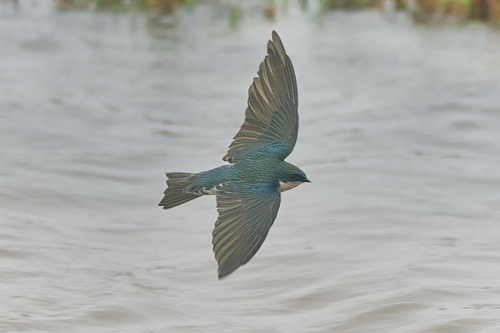
Tree Swallow (Tachycineta bicolor) Tree Swallow
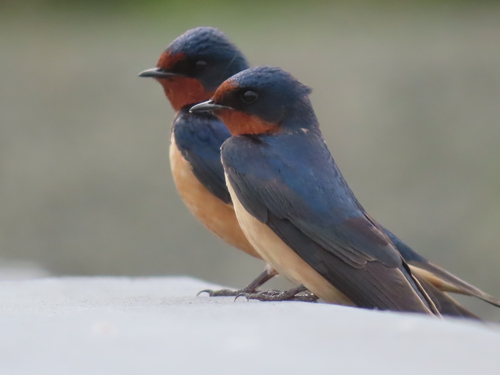
Barn Swallow (Hirundo rustica) Barn Swallow

Media

Loading…

In short

Tree Swallows and Barn Swallows are both small, agile swallows, but they can be distinguished by tail shape and plumage. The Tree Swallow has a short, slightly forked tail and iridescent blue-green upperparts, while the Barn Swallow features a long, deeply forked tail and glossy steel-blue upperparts with a rufous-chestnut throat.

Identification tips

  1. Look for the tail shape: Tree Swallows have a short, slightly forked tail, while Barn Swallows have a long, deeply forked tail with elongated streamers. 2. Check the throat color: Barn Swallows have a distinctive rufous-chestnut throat, absent in Tree Swallows. 3. Observe the upperparts: Tree Swallows display iridescent blue-green, whereas Barn Swallows show glossy steel-blue. 4. Consider the habitat: Tree Swallows are more likely near water, Barn Swallows near human structures.

Size

Both species are similar in size, but the Barn Swallow is slightly larger with a more elongated appearance due to its long tail streamers.

Plumage

Tree Swallows have iridescent blue-green upperparts and white underparts. Barn Swallows have glossy steel-blue upperparts, a rufous-chestnut forehead and throat, and creamy or buffy white underparts with a broad steel-blue breastband.

Behaviour

Both species are aerial insectivores, often seen flying over open areas. Tree Swallows are known for their early spring arrival and use of nest boxes, while Barn Swallows are more commonly seen nesting on human-made structures.

Habitat

Tree Swallows are often found near water bodies and open fields, while Barn Swallows are more likely to be seen in rural and urban areas, often around barns and bridges.

Voice

Both species have a variety of calls, but the Barn Swallow's song is a more musical series of twitters and warbles compared to the Tree Swallow's more mechanical-sounding calls.

Submit a better description

Use the same sections as the comparison. Your text is published immediately.

Tree Swallows and Barn Swallows are both small, agile swallows, but they can be distinguished by tail shape and plumage. The Tree Swallow has a short, slightly forked tail and iridescent blue-green upperparts, while the Barn Swallow features a long, deeply forked tail and glossy steel-blue upperparts with a rufous-chestnut throat.

  1. Look for the tail shape: Tree Swallows have a short, slightly forked tail, while Barn Swallows have a long, deeply forked tail with elongated streamers. 2. Check the throat color: Barn Swallows have a distinctive rufous-chestnut throat, absent in Tree Swallows. 3. Observe the upperparts: Tree Swallows display iridescent blue-green, whereas Barn Swallows show glossy steel-blue. 4. Consider the habitat: Tree Swallows are more likely near water, Barn Swallows near human structures.

Both species are similar in size, but the Barn Swallow is slightly larger with a more elongated appearance due to its long tail streamers.

Tree Swallows have iridescent blue-green upperparts and white underparts. Barn Swallows have glossy steel-blue upperparts, a rufous-chestnut forehead and throat, and creamy or buffy white underparts with a broad steel-blue breastband.

Both species are aerial insectivores, often seen flying over open areas. Tree Swallows are known for their early spring arrival and use of nest boxes, while Barn Swallows are more commonly seen nesting on human-made structures.

Tree Swallows are often found near water bodies and open fields, while Barn Swallows are more likely to be seen in rural and urban areas, often around barns and bridges.

Both species have a variety of calls, but the Barn Swallow's song is a more musical series of twitters and warbles compared to the Tree Swallow's more mechanical-sounding calls.

Discard your changes?

You have unsaved edits. If you leave now, those changes will be lost.

Tree Swallow · Barn Swallow · My Tricky Birds