Birdr

Tree Swallow vs Mangrove Swallow

Tachycineta bicolor versus Tachycineta albilinea

Play a quiz with Tree Swallow and Mangrove Swallow
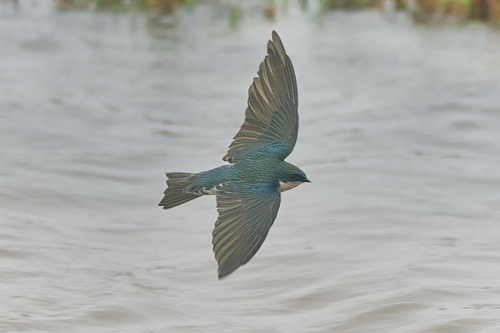
Tree Swallow (Tachycineta bicolor) Tree Swallow
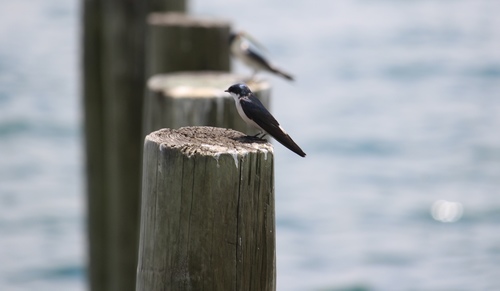
Mangrove Swallow (Tachycineta albilinea) Mangrove Swallow

Media

Loading…

In short

Tree Swallows and Mangrove Swallows are both small, glossy swallows, but they can be distinguished by key plumage details. The Tree Swallow has a clean white underbody and lacks the white supraloral streak that is a distinctive feature of the Mangrove Swallow. Both species are similar in size and structure.

Identification tips

  1. Look for the white supraloral streak on the Mangrove Swallow, absent in the Tree Swallow. 2. Note the pure white underparts of the Tree Swallow compared to the gray-washed underparts of the Mangrove Swallow. 3. Consider habitat: Mangrove Swallows are more likely in coastal and mangrove areas, while Tree Swallows are found in open areas near water.

Size

Both species are similar in size, typical of small swallows, with no significant differences in structure or proportions.

Plumage

Tree Swallows have iridescent blue-green upperparts and pure white underparts, while Mangrove Swallows have nearly black upperparts with a green-blue gloss that wears to steel-blue, white underparts with a gray wash, and a distinctive white supraloral streak.

Behaviour

Both species exhibit typical swallow behaviors such as aerial foraging and cavity nesting. Tree Swallows are known for their early spring arrival and intense nest defense.

Habitat

Tree Swallows are often found in open areas near water and readily use nest boxes, while Mangrove Swallows are typically associated with mangrove habitats and coastal regions.

Voice

Vocalizations are not distinctly different in the field, and both species produce typical swallow calls.

Submit a better description

Use the same sections as the comparison. Your text is published immediately.

Tree Swallows and Mangrove Swallows are both small, glossy swallows, but they can be distinguished by key plumage details. The Tree Swallow has a clean white underbody and lacks the white supraloral streak that is a distinctive feature of the Mangrove Swallow. Both species are similar in size and structure.

  1. Look for the white supraloral streak on the Mangrove Swallow, absent in the Tree Swallow. 2. Note the pure white underparts of the Tree Swallow compared to the gray-washed underparts of the Mangrove Swallow. 3. Consider habitat: Mangrove Swallows are more likely in coastal and mangrove areas, while Tree Swallows are found in open areas near water.

Both species are similar in size, typical of small swallows, with no significant differences in structure or proportions.

Tree Swallows have iridescent blue-green upperparts and pure white underparts, while Mangrove Swallows have nearly black upperparts with a green-blue gloss that wears to steel-blue, white underparts with a gray wash, and a distinctive white supraloral streak.

Both species exhibit typical swallow behaviors such as aerial foraging and cavity nesting. Tree Swallows are known for their early spring arrival and intense nest defense.

Tree Swallows are often found in open areas near water and readily use nest boxes, while Mangrove Swallows are typically associated with mangrove habitats and coastal regions.

Vocalizations are not distinctly different in the field, and both species produce typical swallow calls.

Discard your changes?

You have unsaved edits. If you leave now, those changes will be lost.

Tree Swallow · Mangrove Swallow · My Tricky Birds