Birdr

Tropical Parula vs Red-faced Warbler

Setophaga pitiayumi versus Cardellina rubrifrons

Play a quiz with Tropical Parula and Red-faced Warbler
Tropical Parula (Setophaga pitiayumi) Tropical Parula
Red-faced Warbler (Cardellina rubrifrons) Red-faced Warbler

Media

Loading…

In short

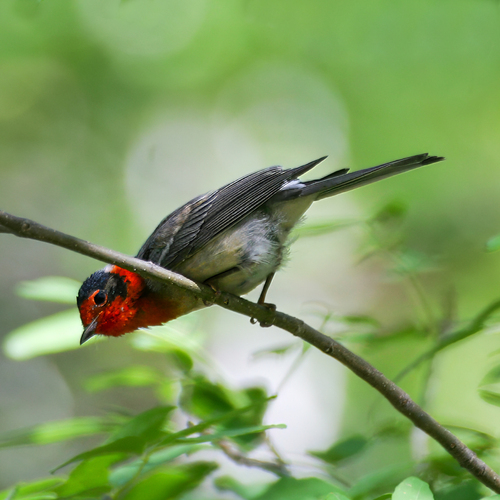
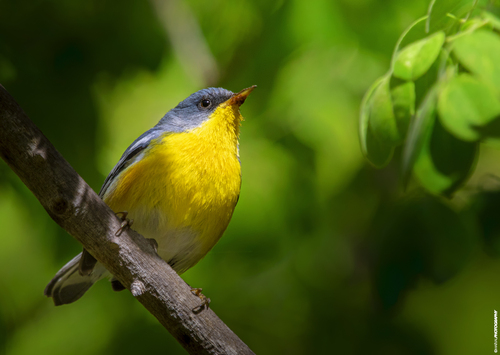
The Tropical Parula and Red-faced Warbler can be distinguished by their facial and plumage patterns. The Tropical Parula has a yellow throat and chest with a blue-gray back, while the Red-faced Warbler is notable for its bright red face and breast, contrasting with its black, gray, and white body. Both species are small warblers, but their distinct colorations are key identifiers.

Identification tips

1. Facial and breast coloration: Look for the bright red face and breast of the Red-faced Warbler versus the yellow throat and chest of the Tropical Parula. 2. Habitat: Consider the habitat; Red-faced Warblers are more likely found in montane forests. 3. Nesting behavior: If observed, the ground-nesting habit of the Red-faced Warbler is distinctive.

Size

Both species are small warblers, similar in size, making size an unreliable distinguishing feature.

Plumage

The Tropical Parula features a yellow throat and chest with a blue-gray back and white belly. In contrast, the Red-faced Warbler has a striking bright red face and breast, with a black, gray, and white body. These color differences are the most reliable field marks.

Behaviour

Both species are active foragers, but the Red-faced Warbler is known to nest on the ground, often under cover, which is unusual for warblers.

Habitat

Tropical Parulas are typically found in tropical and subtropical forests, while Red-faced Warblers prefer montane forests, often at higher elevations.

Voice

Vocalizations are not a primary distinguishing feature as both species have typical warbler songs and calls, though they may differ in tone and pattern.

Submit a better description

Use the same sections as the comparison. Your text is published immediately.

The Tropical Parula and Red-faced Warbler can be distinguished by their facial and plumage patterns. The Tropical Parula has a yellow throat and chest with a blue-gray back, while the Red-faced Warbler is notable for its bright red face and breast, contrasting with its black, gray, and white body. Both species are small warblers, but their distinct colorations are key identifiers.

1. Facial and breast coloration: Look for the bright red face and breast of the Red-faced Warbler versus the yellow throat and chest of the Tropical Parula. 2. Habitat: Consider the habitat; Red-faced Warblers are more likely found in montane forests. 3. Nesting behavior: If observed, the ground-nesting habit of the Red-faced Warbler is distinctive.

Both species are small warblers, similar in size, making size an unreliable distinguishing feature.

The Tropical Parula features a yellow throat and chest with a blue-gray back and white belly. In contrast, the Red-faced Warbler has a striking bright red face and breast, with a black, gray, and white body. These color differences are the most reliable field marks.

Both species are active foragers, but the Red-faced Warbler is known to nest on the ground, often under cover, which is unusual for warblers.

Tropical Parulas are typically found in tropical and subtropical forests, while Red-faced Warblers prefer montane forests, often at higher elevations.

Vocalizations are not a primary distinguishing feature as both species have typical warbler songs and calls, though they may differ in tone and pattern.

Discard your changes?

You have unsaved edits. If you leave now, those changes will be lost.

Tropical Parula · Red-faced Warbler · My Tricky Birds